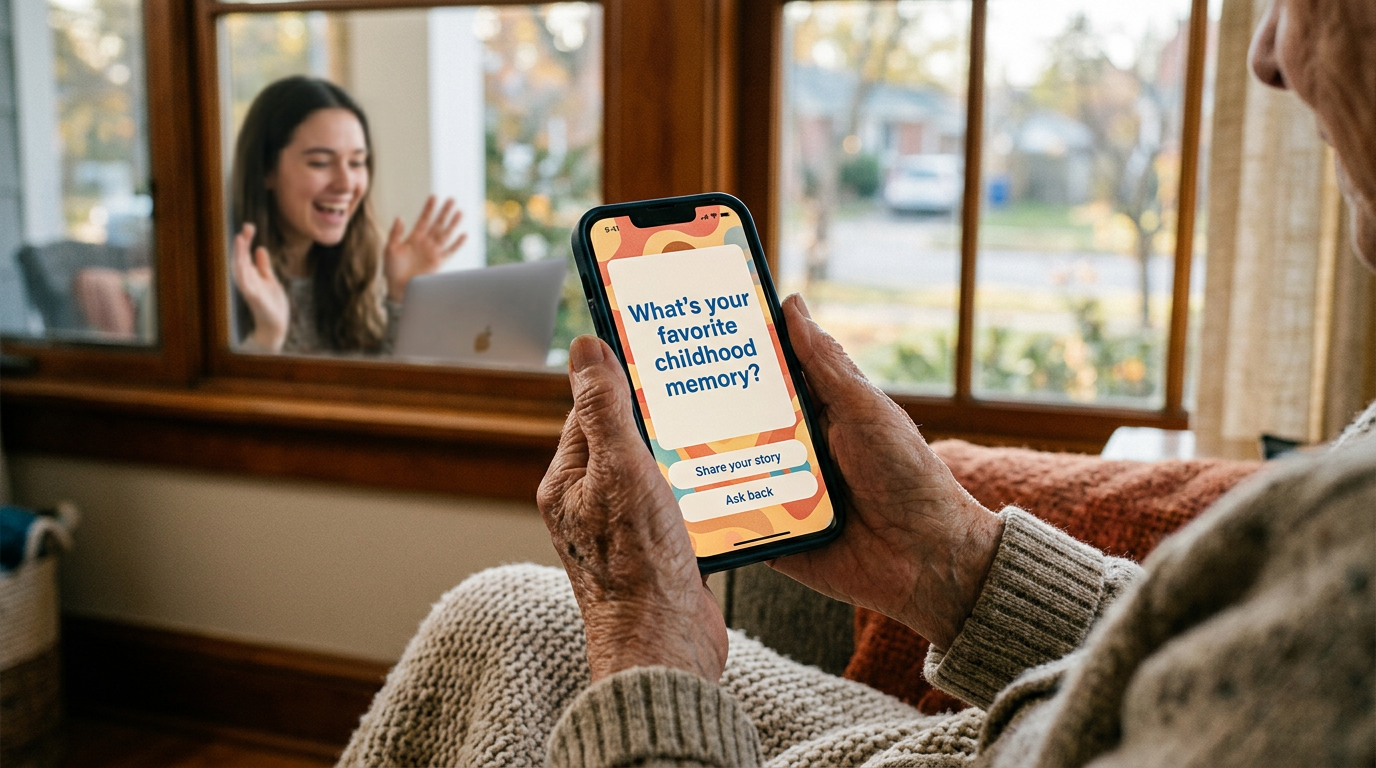
Deep Conversation Topics That Build Emotional Intimacy in Relationships
What if 36 specific questions could make two strangers fall in love? In a landmark study, researchers at the University of Florida paired strangers to discuss a carefully selected list of "deep questions"—and that’s exactly what happened. Meanwhile, another group of strangers engaged in casual small talk and felt no closer whatsoever. This wasn’t magic; it was the power of deep conversation starters to create rapid emotional intimacy.
Most couples start their relationships sharing dreams, vulnerabilities, and late-night talks about everything. Yet as months and years pass, those conversations gradually shift. Dinner planning, errand coordination, and Netflix selections dominate the dialogue, while meaningful dialogue fades into the background. It’s a subtle drift that can leave even committed couples feeling disconnected despite sharing a life together.
The University of Florida’s SMART Couples project found that as relationships progress, couples often focus conversations on logistics instead of deeper topics, which can make partners feel taken for granted rather than truly known. With nearly 50% of couples seeking counseling at some point—often citing loss of connection—learning to prioritize vulnerable dialogue becomes essential for relationship longevity.
The solution isn’t dramatic gestures or expensive date nights. Research consistently shows that the right deep conversation starters, used consistently, can rebuild emotional intimacy and create lasting connection.
Why Surface-Level Conversations Leave Us Feeling Disconnected
The shift toward logistics-focused conversation is so gradual that most couples don’t notice it happening. One week you’re discussing your deepest fears; five years later, you’re debating which grocery store has better prices. Both conversations matter, but only one builds emotional intimacy.
When practical matters dominate your dialogue, you may efficiently manage your household, but you miss opportunities to truly know each other. Your partner becomes a reliable co-manager rather than a cherished intimate. This isn’t about failure—it’s about the natural entropy of relationships that require intentional energy to reverse.
The foundation for reversing this pattern is emotional safety. As Empathi defines it:
"Emotional safety; the felt sense that you can be vulnerable, imperfect, and fully yourself without fear of rejection or punishment; is the foundation upon which every other aspect of a healthy relationship is built."
Without this foundation, attempts at deeper conversation can feel risky. With it, vulnerability becomes an invitation for connection rather than a test of courage.
The Science of Vulnerability: How Deep Conversations Build Intimacy
The research on vulnerable conversations is compelling and consistent. What happens in therapy rooms and university labs translates directly to your living room: meaningful dialogue creates measurable improvements in relationship satisfaction.
The University of Florida study on strangers and deep questions is particularly revealing. As their SMART Couples Project reports:
"In one study, researchers found that strangers who were brought together to discuss a specially selected list of intense, ‘deep questions’ felt much closer afterwards, with one pair in the study even falling in love. Such effects were not found when the strangers were asked to carry on small talk with each other."
Small talk produces no measurable closeness effects. Deep questions create connection, sometimes rapidly and profoundly.
This isn’t isolated to strangers meeting for the first time. A 2024 study found that established couples who regularly share vulnerabilities report 30% higher relationship satisfaction. The mechanism is clear: self-disclosure—sharing personal feelings and talking about ourselves—is directly tied to increased relationship satisfaction according to University of Florida research.
Emotionally Focused Therapy (EFT) research demonstrates similar patterns. When couples move beyond surface-level arguments about behavior to address the vulnerable emotions underneath, they experience stronger improvements in intimacy than couples who stay at the level of logistics and problem-solving. A 2025 BMC Psychology study found that Emotionally Focused Couples Therapy led to particularly strong improvements in sexual intimacy compared to other therapeutic approaches.
The research conclusion is unambiguous: deep conversation starters and meaningful conversation topics aren’t optional enhancements to relationships—they’re essential infrastructure for thriving partnerships.
Creating Emotional Safety: The Foundation for Meaningful Dialogue
Before diving into vulnerable topics, couples need a foundation of safety. Emotional safety isn’t a feeling that simply exists; it’s built through consistent interactions where vulnerability is met with appreciation rather than judgment.
The Gottman Institute emphasizes that building emotional intimacy requires creating a relationship culture where curiosity about each other’s inner world is valued. As they explain:
"Building emotional intimacy isn’t about having perfect conversations or asking all the right questions. It’s about creating a relationship culture where curiosity about each other’s inner world is valued, where vulnerability is met with appreciation, and where you both feel seen and cherished for exactly who you are."
Note the sequence: curiosity first, appreciation second, being seen and cherished as the outcome. When you approach conversations with genuine interest in your partner’s inner experience, rather than an agenda to fix or evaluate, you create the conditions for safety.
Be Bold Psychology & Consulting notes that vulnerability requires reciprocity:
"When both partners embrace vulnerability, they build a foundation of trust, emotional safety, and genuine connection."
One partner sharing while the other remains guarded creates imbalance. Both choosing vulnerability creates trust.
Practical First Steps for Building Safety
Building emotional safety doesn’t require dramatic changes. Start with these foundational practices:
Establish conversation guidelines: Agreement that nothing shared will be used as ammunition in future conflicts
Practice active listening: Focus on understanding rather than preparing your response
Start with lower-stakes topics: Build your vulnerability muscles gradually before tackling your deepest fears
Meet disclosures with appreciation: "Thank you for trusting me with that" rather than immediate analysis
Remember, you can’t rush safety. If your relationship has experienced breaches of trust, consider working with a therapist to rebuild safety before attempting highly vulnerable conversations.
Deep Conversation Starters About Values and Core Beliefs
Values conversations explore the fundamental principles that guide your partner’s decisions and reactions. Understanding these core beliefs creates a roadmap for navigating life together and preventing conflicts rooted in misunderstood motivations.
Thriving Minds Therapy identifies values and beliefs as one of five core areas couples should explore for vulnerable conversations. These discussions reveal why your partner reacts certain ways to situations, building empathy and patience when you disagree.
Sample Conversation Starters for Values and Beliefs
"What principles guide your biggest life decisions?"
"What does ‘living a good life’ mean to you?"
"How has your definition of success changed over time?"
"What belief have you held that has significantly shifted in recent years?"
"What values do you hope we transmit to any children or younger family members?"
"What does integrity mean to you, and when do you find it hardest to maintain?"
Values conversations often uncover shared priorities that strengthen your shared vision. You might discover that you both value financial security—but one achieves it through saving while the other prioritizes earning. Neither approach is wrong, but understanding the difference prevents conflicts.
The Gottman Institute emphasizes that it’s not about asking perfect questions but valuing curiosity about each other’s inner world. Follow-up questions like "Tell me more about what that means to you" or "What experiences shaped that belief?" demonstrate the curiosity that builds intimacy.
Exploring Fears and Insecurities with Your Partner
Fear is perhaps the most vulnerable emotion to share. Admitting insecurity requires trusting that your partner won’t use your vulnerability against you or see you as less capable. Yet these conversations are precisely what create the deepest bonds.
Thriving Minds Therapy identifies personal fears and insecurities as a core area for vulnerable conversations. Emotionally Focused Therapy specifically helps couples move beyond surface-level arguments about behavior to address the vulnerable feelings underneath—who hasn’t had an argument about dishes that was actually about feeling unappreciated?
Sample Deep Conversation Starters for Fears and Insecurities
"What insecurity do you rarely share with anyone?"
"What situation triggers your anxiety most in our relationship?"
"What do you most fear losing?"
"When do you feel most inadequate, and what do you need in those moments?"
"What fear from childhood still affects you today?"
"What makes you feel safest with me, and what threatens that safety?"
These conversations require established emotional safety. Don’t rush into them if your relationship has recent breaches of trust or if one partner is experiencing significant stress from outside sources.
When fears are met with validation rather than judgment, partners feel seen and cherished. The 30% higher relationship satisfaction reported by couples who share vulnerabilities demonstrates the payoff of these difficult conversations.
The key is how you respond. "That doesn’t make sense, you shouldn’t feel that way" shuts down vulnerability. "I can see why that would be frightening—thank you for trusting me with it" opens the door for deeper connection.
Dreams and Goals: Couples Conversation Starters for Your Shared Future
Goals and dreams represent the fifth core area Thriving Minds Therapy recommends for vulnerable conversations. These discussions serve dual purposes: they help you understand your partner’s aspirations, and they create alignment for your shared future.
Regular check-ins about goals, ambitions, and how partners can support each other are essential for maintaining connection. These conversations prevent the logistic-focused drift that University of Florida researchers identified as particularly damaging to long-term relationships.
Sample Conversation Starters for Dreams and Goals
"What dream have you been hesitant to pursue?"
"How can I better support your personal goals?"
"What does our ideal future look like in 5 years? 10 years?"
"What’s one adventure or experience you hope we share together?"
"What personal growth goal feels most important to you right now?"
"What kind of partner do you want to be, and how can I help you get there?"
Understanding each other’s dreams helps partners become cheerleaders rather than obstacles. When you know what your partner most values, you can allocate resources—time, money, energy—in ways that support those priorities rather than inadvertently undermining them.
These conversations also surface misalignments before they become major conflicts. Discovering that you envision very different futures allows you to work through differences collaboratively rather than discovering them through accumulated resentments.
The Stress-Reducing Conversation: Gottman’s Daily Trust-Building Habit
Among all the relationship habits researchers have studied, one stands out for its effectiveness: the Gottman Institute’s "stress-reducing conversation." They identify this daily practice as the single most effective trust-building habit couples can develop.
The concept is simple yet powerful: set aside 20-30 minutes daily for a conversation about stress from your day, with one explicit rule—no problem-solving.
How the Stress-Reducing Conversation Works
The structure:
One partner shares about their day and stressors
The listening partner offers empathy, validation, and emotional support
No advice, no problem-solving, no fixing
Switch roles and repeat
The key elements:
No problem-solving: The goal is understanding, not solutions
Validate feelings: "That sounds frustrating" rather than "Here’s what you should do"
Express understanding: Demonstrate that you hear and care
Turn toward each other emotionally: Choose connection over efficiency
The logistics:
Duration: 20-30 minutes of uninterrupted conversation
Environment: Phones away, full attention present
Frequency: Daily, ideally at the same time each day
Couples who practice this habit show better outcomes in relationship satisfaction and stability. Why? Because this simple practice builds the emotional safety that makes all deeper conversations possible. When you know your partner will listen to your daily stress without judgment or immediate advice, you develop trust that extends to more vulnerable topics.
The stress-reducing conversation is particularly powerful because it’s low-stakes. You’re not discussing core values or deepest fears—just the ordinary frustrations of daily life. But the pattern of being heard and validated creates a foundation for more vulnerable discussions.
Moving Beyond Logistics: Making Deep Conversations a Regular Practice
The University of Florida research on the drift toward logistics highlights a crucial truth: deep conversations don’t happen by accident. Intentionality is required to prioritize meaningful dialogue amid the demands of work, family, and daily life.
Practical Strategies for Regular Connection
Schedule conversation time like you schedule other priorities:
Weekly relationship check-ins (15-30 minutes)
Monthly goal discussions (45-60 minutes)
Quarterly relationship reviews (2-3 hours, perhaps over a special meal)
Create conversation rituals that fit your lifestyle:
Sunday morning coffee talks
Evening walks after dinner
Bedtime reflections before sleep
Commute conversations during drives together
Rotate through conversation categories:
Week 1: Values and beliefs
Week 2: Fears and insecurities
Week 3: Dreams and goals
Week 4: The relationship itself—what’s working, what needs attention
Use conversation tools to reduce planning pressure:
Curated question packs designed for different occasions
Apps that offer themed deep conversation starters on demand
Progress tracking to celebrate meaningful conversations over time
The ability to save favorite questions that sparked particularly rich discussions
The goal isn’t that every conversation must be deep—logistics and planning conversations are necessary for managing life together. The goal is ensuring deep conversations happen regularly alongside logistics, not replaced by them.
Consider the conversation category rotation as a starting point. If values conversations feel particularly rich for your relationship, spend more time there. If one topic area feels too vulnerable initially, start where you feel safer and build your vulnerability muscles gradually.
Deep Conversation Starters: Where to Begin Your Journey
The hardest part of deep conversations is often knowing where to start. Having couples conversation starters organized by vulnerability level and topic area removes the pressure of coming up with the perfect question in the moment.
Entry-Level Conversation Starters
These lighter questions build the vulnerability muscle without requiring intense emotional exposure:
"What’s your favorite memory of us together?"
"What made you smile today?"
"What are you looking forward to this week?"
"What’s something you’ve learned recently that excited you?"
"When do you feel most proud of our relationship?"
"What’s a small moment from our past that you still think about?"
Medium-Depth Conversation Starters
These questions require more vulnerability but don’t demand exposure of your deepest fears:
"What do you wish I understood about you?"
"When do you feel most loved by me?"
"What childhood experience shaped who you are today?"
"What’s the best advice you ever received, and did you follow it?"
"What role do you think I play in your life that you appreciate most?"
"What’s something about our relationship that you want to make sure we never lose?"
Deep Conversation Starters for Emotional Intimacy
These questions explore the most vulnerable territory and should be approached after you’ve built safety through easier conversations:
"What’s the hardest thing you’ve ever had to overcome?"
"What do you need from me during difficult times?"
"What does emotional safety feel like to you?"
"What vulnerability scares you most to share?"
"What experience from your past still affects you today?"
"What does it feel like to be truly known by me?"
Practical Tips for Using Conversation Starters
Progress gradually: Build trust through smaller conversations before tackling the most vulnerable topics
Follow the emotional energy: If a particular question sparks rich discussion, stay with it rather than rushing to the next question
Reciprocity matters: Both partners should share, not one person doing all the emotional work
Timing matters: Choose moments when you’re both rested and free from immediate stressors
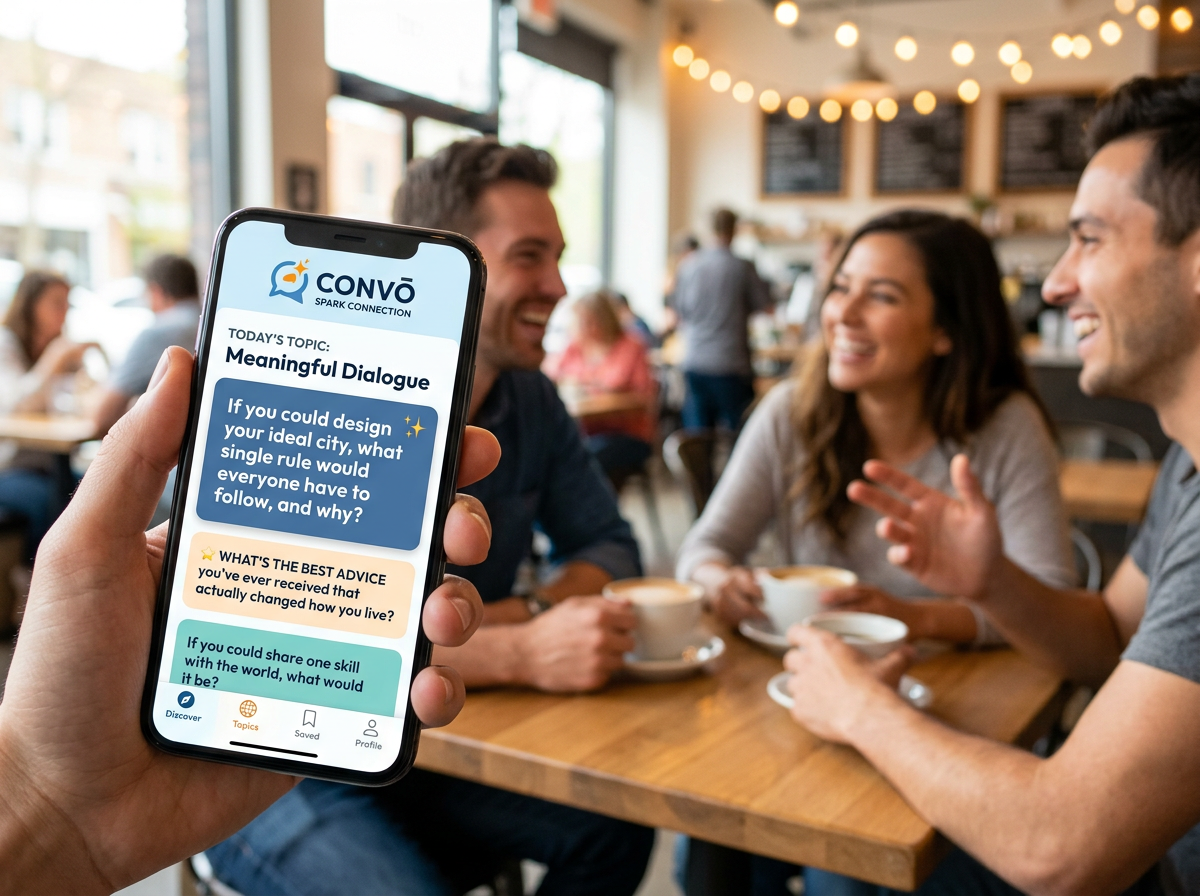
Consider conversation tools: Digital platforms like Convo Cards offer themed question packs designed for different relationship moments—date nights, relationship check-ins, emotional connection—along with progress tracking and the ability to save favorite conversations
Remember the Gottman Institute’s wisdom: focus on curiosity about each other’s inner world rather than perfect questions. The question is just the door—what matters is walking through it with genuine interest and care.
Conclusion: Your Path to Deeper Connection Starts Here
The science is clear and compelling. Strangers fall in love through deep questions while small talk produces no measurable connection. Couples who share vulnerabilities report 30% higher relationship satisfaction. The daily stress-reducing conversation is the single most effective trust-building habit couples can develop.
Deep conversation starters and relationship building questions aren’t magic, but they create the conditions where emotional intimacy flourishes.
Emotional safety—the felt sense that you can be vulnerable, imperfect, and fully yourself without fear of rejection—makes all these conversations possible. Without safety, vulnerability feels like a risk. With safety, vulnerability becomes an invitation for deeper connection.
These conversation tools aren’t the destination; they’re the path. The goal isn’t perfect conversations or asking all the right questions. The goal is feeling seen, cherished, and truly known by your partner. Meaningful conversation topics simply create the structure for that knowing to happen.
Start small this week. Choose one conversation type—the stress-reducing conversation, a values discussion, or an entry-level question about favorite memories. Remember the University of Florida finding: small talk produces no closeness effects, but deep questions create measurable connection.
Your relationship deserves more than logistics and Netflix discussions. Make vulnerable dialogue a regular practice and watch your emotional intimacy grow—not through grand gestures, but through the daily choice to show up, be curious, and truly see each other.
Whether you use curated conversation packs, question apps, or simply set aside time to ask and listen, the path to deeper connection starts with a single question and the courage to ask it.
Why Conversation Starters Are Essential for Modern Mental Health
Every hour, 100 people die worldwide from a condition that receives far less attention than it deserves—not a virus, not a chronic disease, but loneliness. According to the World Health Organization, social isolation contributes to approximately 871,000 deaths annually, a staggering toll that positions loneliness as one of the most urgent public health crises of our time. As we navigate an increasingly digital yet disconnected world, conversation starters have emerged not merely as social tools, but as essential instruments for preserving mental health and building the meaningful relationships that sustain human well-being.
The Hidden Health Crisis: 871,000 Deaths Annually from Loneliness
The data presents a stark reality that demands our attention. Recent findings from the World Health Organization reveal that 1 in 6 people worldwide is affected by loneliness, with significant and measurable impacts on health and well-being. The mortality statistics are particularly alarming—loneliness is linked to an estimated 100 deaths every hour, totaling more than 871,000 deaths annually.
The United States faces an equally concerning situation. The U.S. Surgeon General’s 2023 advisory found that approximately 50% of U.S. adults experience measurable levels of loneliness. What makes these numbers particularly sobering is the comparable mortality impact: the health risks associated with social disconnection are equivalent to smoking 15 cigarettes daily.
The physical consequences are well-documented and severe:
60% increased risk of premature death from chronic loneliness
29% higher risk of heart disease among socially isolated individuals
32% increased risk of stroke linked to lack of social connection
50% higher likelihood of developing dementia among older adults experiencing chronic loneliness
"Loneliness is far more than ‘just a bad feeling’ and represents a major public health risk for both individuals and society." — Dr. Vivek Murthy, U.S. Surgeon General
This framing matters immensely. When we understand conversation starters not as optional social accessories but as interventions in a genuine public health emergency, their value becomes clear. We are facing a crisis that claims nearly a million lives annually—conversation starters represent one practical, accessible tool for combating this epidemic.
Why We’re More Connected Yet More Alone Than Ever
The paradox of our time is that unprecedented digital connectivity has coincided with worsening social isolation. Oregon State University’s 2025 study of more than 1,500 adults uncovered a troubling pattern: those in the top 25% of social media usage frequency were more than twice as likely to experience loneliness than those in the bottom 25%.
The trajectory is concerning across all demographics. AARP’s 2025 research reveals that 4 in 10 U.S. adults aged 45 and older report loneliness—a significant increase from 35% in both 2010 and 2018. The trend lines are moving in the wrong direction even as our technological capacity for connection expands.
Why this disconnect? Social media platforms excel at creating the illusion of connection while consistently failing to deliver the depth and authenticity required for genuine social fulfillment. The algorithms prioritize engagement over meaning, quantity over quality, and surface-level interactions over vulnerable exchanges. More than half of U.S. adults report feeling less connected with their closest friends and family than they did five years ago—a period during which social media usage has dramatically increased.
Perhaps most concerning is the behavioral response to loneliness. The Mental Health Coalition reports that when feeling lonely, only 38% of Americans will reach out to friends or family. This self-perpetuating cycle means that loneliness begets withdrawal, which begets deeper loneliness.
Teenagers and young adults face particular vulnerability. Current data indicates that teens experience more loneliness than any other age group, with 17-21% of individuals aged 13-29 reporting persistent feelings of isolation. This developmental period, crucial for establishing social skills and relationship patterns, is increasingly mediated by screens rather than face-to-face interaction.
The Harvard Study Proof: Relationships Outrank Genetics and IQ
If the health risks of loneliness establish urgency, the Harvard Study of Adult Development provides the scientific foundation for hope. Spanning nearly 80 years and tracking 724 participants, this represents the longest study of human life ever conducted. Its findings deliver a clear verdict: close relationships are more predictive of long and happy lives than social class, IQ, or even genetics.
The study’s most compelling finding emerges from its longitudinal data: people who were most satisfied in their relationships at age 50 were the healthiest at age 80. This relationship satisfaction at midlife proved to be a better predictor of physical health than cholesterol levels.
The implications are profound. While we obsess over fitness regimens, diet plans, and productivity hacks, the single most impactful factor for our long-term health and happiness remains our relationships. Yet we invest remarkably little intentional effort into building and maintaining these connections.
"Loneliness kills. It’s as powerful as smoking or alcoholism." — Robert Waldinger, psychiatrist and director of the Harvard Study of Adult Development
"The surprising finding is that our relationships and how happy we are in our relationships has a powerful influence on our health. Taking care of your body is important, but tending to your relationships is a form of self-care too." — Robert Waldinger, Director of Harvard Study of Adult Development
The Harvard study reframes conversation starters entirely. These are not merely social lubricants for awkward gatherings—they are instruments for building the very relationships that determine our longevity and life satisfaction. When we use conversation starters effectively, we are not just making conversation; we are engaging in evidence-based health behavior.
The Mental Health Cost of Social Disconnection
The psychological toll of loneliness demands specific attention, particularly as mental health concerns reach crisis levels globally. Research consistently demonstrates that lack of social connection increases the risk of depression, anxiety, and stress by up to 60%. This is not merely correlation—the causal pathways are well-established.
Social isolation accelerates cognitive decline in measurable ways. Among older adults, chronic loneliness correlates with a 50% higher risk of developing dementia. The mechanisms include both the direct neurological effects of stress hormones and the indirect effects of reduced cognitive stimulation that social interaction provides.
The cardiovascular impact is equally significant:
29% increase in heart disease risk
32% increase in stroke risk
30% overall increase in cardiovascular disease mortality
For younger populations, the mental health consequences manifest differently. Teens experiencing loneliness show higher rates of depressive symptoms, anxiety disorders, and suicidal ideation. The absence of meaningful peer connection during crucial developmental windows can alter social skill acquisition and emotional regulation capacities for decades.
The economic costs are staggering as well. Healthcare expenditures for socially isolated individuals are significantly higher than for well-connected peers, driven by increased acute care utilization, longer hospital stays, and more frequent readmissions. The workplace impacts include reduced productivity, higher absenteeism, and elevated healthcare costs.
Understanding these consequences clarifies why conversation starters matter as mental health tools. By facilitating meaningful social interaction, they function as preventive interventions—reducing the incidence of loneliness before it manifests as clinical mental health conditions. The modest investment in a conversation starter app or card set represents a fraction of the cost associated with treating the mental and physical health consequences of chronic isolation.
How Conversation Starters Combat the Loneliness Epidemic
Conversation starters work by addressing the specific behavioral barriers that prevent meaningful social interaction. The fundamental challenge facing lonely individuals is not the absence of people in their lives, but rather the absence of depth and vulnerability in their existing connections.
Consider the barrier of initiation anxiety. That same Mental Health Coalition data revealing that only 38% of Americans reach out when lonely points directly to the problem: people want connection but don’t know how to initiate it. Conversation starters remove this friction by providing structured, tested prompts that eliminate the uncertainty of "what do I say?"
The psychological mechanism is straightforward but powerful. When you use a prepared question rather than improvising, you:
Reduce cognitive load—no mental energy expended on question formulation
Lower social anxiety—the prompt has been "pre-validated" as acceptable conversation
Signal intentionality—your conversational partner recognizes thoughtful preparation
This approach has gained validation from unexpected quarters. Mental health apps like Wysa now offer CBT-based conversation practice tools, acknowledging that structured social interaction is a learnable skill rather than an innate talent. Anxiety apps increasingly feature conversation preparation features, recognizing that social anxiety responds well to rehearsal and framework provision.
The shift from small talk to meaningful conversation represents a crucial distinction. Surface-level exchange about weather or work often reinforces feelings of superficiality rather than alleviating loneliness. Deep conversation starters, by contrast, create opportunities for the emotional resonance that genuine connection requires.
Consider a practical example: A team struggling with collaboration and trust uses conversation starter questions during weekly meetings. Rather than the usual status updates, they explore questions like "What’s a challenge you’re facing where you could use support?" or "What part of your work feels most meaningful right now?" Over weeks, these exchanges build the psychological safety that enables better collaboration, reduced conflict, and improved team cohesion.
From Small Talk to Deep Talk: The Psychology of Meaningful Conversation Topics
The quality of our relationships depends fundamentally on the depth of our interactions, not merely their frequency. This reality explains why meaningful conversation topics and deep conversation starters prove more effective at building connection than casual chat.
Social psychology research identifies a crucial mechanism: reciprocal self-disclosure. When one person shares something authentic and vulnerable, it creates psychological space for the other to do the same. This reciprocal exchange builds trust rapidly, creating the foundation for genuine relationship depth. Meaningful conversation topics naturally invite this type of exchange.
The problem with unstructured social interaction is that most people default to small talk out of fear. Fear of judgment, fear of over-sharing, fear of rejection—these concerns keep conversations safely superficial. Deep conversation starters function as permission structures, signaling that vulnerability is not only acceptable but expected.
Consider the difference in these two approaches:
Traditional small talk:
"How was your weekend?"
"What do you do for work?"
"Have you lived here long?"
Meaningful conversation topics:
"What’s something that happened this week that made you feel proud?"
"What part of your work brings you the most satisfaction?"
"What brought you to this city, and do you feel connected to a community here?"
The second set of questions invites genuine sharing rather than fact exchange. They create opportunities for emotional resonance—for the conversation partner to reveal values, emotions, and experiences that actually matter to them. This is the material from which real connections form.
Structured questions help people bypass the fear that typically constrains vulnerability. When a question comes from a conversation starter app or card deck rather than your own mind, the psychological risk of asking it feels lower. "This might be too personal" becomes "I’m just asking the question on the card; they can choose how deeply to answer."
This de-risking of vulnerability explains why conversation starters prove effective even among people who consider themselves socially skilled. The barrier isn’t always capability—sometimes it’s simply the comfort to move past surface level into the territory where real connection happens.
Conversation Starters as Emotional Resilience Tools
Positioning conversation starters as emotional resilience tools represents an important conceptual shift. Rather than viewing them as occasional conversation aids, we can understand them as instruments for building the relationship satisfaction that the Harvard study identified as crucial for long-term health.
Emotional resilience operates through multiple mechanisms:
Preventive capacity: Regular meaningful conversations create support networks before crisis hits. When difficult times come, the infrastructure for support already exists because relationships have been maintained through consistent meaningful interaction.
Habit formation: Conversation starter apps make relationship-building a habit rather than relying on spontaneous connection. The people most satisfied in their relationships at midlife (the ones healthiest at 80, according to Harvard) didn’t achieve that satisfaction through occasional intensity—they built it through consistent attention.
Context adaptation: Different life domains require different conversation approaches. What works for deepening romantic intimacy differs from what strengthens family bonds or builds team trust. Conversation starter platforms like Convo Cards offer diverse packs designed for specific contexts, increasing their effectiveness as relationship-building tools.
Accessibility and affordability: The freemium model common to conversation starter apps (with premium tiers around $4.99/year) makes these mental health tools accessible to broad populations. This democratization represents an important advance—making evidence-based relationship tools available beyond those who can afford traditional therapy.
Progress reinforcement: Features like favorites tracking and progress logging, common in conversation starter apps, provide positive reinforcement that encourages consistent practice. The habit loop of selecting a question, having a meaningful exchange, and saving particularly resonant questions creates momentum for ongoing relationship investment.
Consider a practical application: A couple commits to using conversation starter cards three evenings per week. Over months, these structured conversations create the emotional intimacy and communication patterns that buffer against relationship stress. When challenges arise (job loss, parenting struggles, health issues), the foundation built through these regular conversations provides resilience. The Harvard study’s findings suggest this investment pays measurable health dividends decades later.
The Digital Solution: How Conversation Starter Apps Bridge the Gap
Digital conversation starter platforms occupy a unique position in solving the isolation paradox—they use the very technology that often contributes to loneliness as a vehicle for facilitating meaningful connection. This dual nature explains why conversation starter apps have seen rapid adoption as mental health tools.
The advantages of digital conversation platforms include:
Accessibility: Mobile-first platforms accessible on any device remove barriers to starting meaningful conversations. No physical products to carry, no need to remember questions in the moment—the tool is always available in your pocket.
Contextual relevance: Curated themed question packs provide context-appropriate conversation starters. Date night questions differ from family dinner prompts, which differ from team-building exercises. This specialization increases effectiveness by matching the conversation framework to the specific relationship and situation.
Curated quality: Digital platforms offer professionally curated content rather than random question generation. The best conversation starter apps employ relationship experts, therapists, and social psychologists to design questions that actually work—prompts that invite vulnerability without demanding excessive disclosure too quickly.
Affordability: Digital conversation tools typically cost $4.99-9.99/year, compared to $20-30 for physical card sets. This lower cost barrier increases accessibility and enables users to access multiple themed packs without significant investment.
Dynamic content: Unlike static physical cards, digital platforms can introduce new questions regularly, keeping conversations fresh. Premium members often get early access to new content, providing ongoing value.
Progress tracking: Features that track favorite questions, mark conversations completed, and suggest new directions encourage consistent practice and provide satisfaction metrics.
Hybrid utility: Digital conversation starters can prompt real-world conversations, combining the convenience of digital access with the depth of in-person interaction. This hybrid approach leverages technology without substituting for genuine connection.
Consider the user journey: A person downloads a conversation starter app, selects the "Family Dinner" pack, and screenshares with siblings across the country during a weekly video call. The structured questions transform the usual catch-up into meaningful exchanges about values, memories, and aspirations. Over months, these conversations rebuild family connection that had atrophied through distance and busy schedules. The digital tool becomes the bridge to real-world relationship depth.
This pattern—technology facilitating rather than replacing human connection—represents the promising frontier of digital mental health tools. Conversation starter apps demonstrate that our devices can isolate us or connect us, depending entirely on how we deploy them.
Taking Action: Your First Step Toward Better Mental Health
The evidence is clear: conversation starters represent an accessible, affordable, and evidence-based tool for building the meaningful connections that are essential to mental health and longevity. The question becomes not whether conversation starters work, but how to integrate them effectively into daily life across different relationship contexts.
Practical Implementation Strategies
Start with frequency over intensity: Commit to one meaningful conversation per day using conversation starter prompts. This consistency builds the habit more effectively than occasional marathon conversations. The Harvard study’s participants didn’t achieve relationship satisfaction through sporadic intensity—they built it through sustained attention over decades.
Prepare for scheduled interactions: Use conversation starter apps to prepare for existing commitments—date nights, family dinners, team meetings. The preparation shows intentionality and ensures conversation depth even when energy is low. Having questions ready removes the "I’m too tired to think of something to say" barrier that often prevents meaningful exchange.
Match content to context: Leverage themed question packs designed for specific situations:
Couples: Use intimacy-building questions for emotional connection
Families: Select bonding prompts that bridge generational gaps
Teams: Choose trust-building questions that improve collaboration
Friends: Explore fun, thought-provoking prompts that deepen friendship
Build your collection: Save favorite conversation starters that resonate with your relationships and revisit them periodically. Questions that generate especially meaningful exchanges can become relationship touchstones—prompts that you return to as relationships evolve and deepen over time.
Treat conversation as mental health hygiene: Approach conversation starters with the same regularity you apply to brushing your teeth or exercising. This is preventive medicine, not crisis intervention. Regular practice prevents isolation before it becomes chronic, just as regular dental care prevents cavities before they develop.
Start low-stakes: Begin with environments where you feel secure—close friends or family—before using conversation starters in new relationships or higher-pressure social situations. The comfort with the format will transfer as you gain confidence.
Measuring Impact
The effects of consistent conversation starter use become measurable over time:
Relationship satisfaction: Track improvements in connection quality with partners, family members, and friends
Social confidence: Notice reduced anxiety when initiating conversations
Emotional resilience: Observe how relationship support networks buffer against stress
Mental health indicators: Monitor improvements in mood, anxiety levels, and overall well-being
The U.S. Surgeon General’s advisory frames social connection as a public health priority requiring "intentional rebuilding of social fabric." Conversation starters provide precisely the tool for that intentional rebuilding—one conversation at a time.
The evidence is overwhelming. We face a loneliness epidemic claiming nearly a million lives annually. We know from the Harvard study that relationship satisfaction determines our health and happiness more powerfully than genetics or wealth. We have accessible tools that facilitate the meaningful conversations required to build those relationships.
The remaining question is whether we will prioritize conversation as the essential health behavior that research clearly demonstrates it to be. Conversation starters are no longer optional social accessories—they are essential instruments for mental health in an age of unprecedented disconnection.
Your Next Step: Choose one conversation starter from a curated pack today. Reach out to someone you care about. Ask a question that invites vulnerability. Begin building the relationships that will determine not just the quality of your life, but the length of it.
"1 in 6 people worldwide is affected by loneliness, with significant impacts on health and well-being. Loneliness is linked to an estimated 100 deaths every hour—more than 871,000 deaths annually." — World Health Organization Commission on Social Connection, June 2025
Conversation Starter Activities for Road Trips and Family Travel
Why Family Conversation Starters Transform Road Trips from Boring to Bonding
An estimated 1.95 billion road trips were taken across the United States in 2024—that’s billions of hours of potential family bonding time either wasted or maximized, depending on how families choose to spend it. Road trips remain the most popular form of travel, with 40% of travelers choosing driving over other transportation methods, according to recent Club Wyndham survey data.
Yet without structured conversation activities, long car rides often become isolating experiences dominated by screens and silence. The opportunity cost is enormous: families miss out on what could be their most meaningful connection time of the entire year.
Family conversation starters transform passive travel time into active relationship-building opportunities. The right conversation games can turn mundane highway hours into the most memorable part of your vacation. With families and groups comprising 75% of all road trip participants, conversation activities aren’t just optional entertainment—they’re essential for the majority of travelers seeking to maximize their journey together.
How Road Trip Conversations Boost Children’s Development and Family Connections
The benefits of structured family conversation during travel extend far beyond passing the time. Research from the American Academy of Pediatrics confirms that family engagement in car games and discussions significantly improves children’s cognitive and social skills while fostering strong parent-child bonds.
"A study by the American Academy of Pediatrics found that family engagement in car games and discussions significantly improves children’s cognitive and social skills while it fosters a strong bond between parents and children." — Dr. Andrea Towers Scott, Effective Communication During Family Road Trips
The developmental advantages are particularly relevant during travel. The car’s confined space creates a unique environment where conversation flourishes—there’s nowhere else to focus, making it easier for reluctant talkers to engage. Active listening during road trip conversations builds stronger parent-child relationships that last beyond the journey itself.
University of Illinois research shows that structured conversations improve relationship satisfaction and conflict resolution skills among family members. Road trip discussions provide a low-pressure environment where children feel comfortable opening up about their lives, sharing concerns, and connecting with parents in ways daily routines often prevent.
Perhaps most importantly, regular family conversation during travel creates positive associations with communication that children carry into adulthood. When kids associate meaningful dialogue with enjoyable experiences like road trips, they’re more likely to continue those communication patterns as they grow older.
The Classic Mistake: Why ‘How Was Your Day?’ Fails on Road Trips
Every parent knows the frustration: you ask what seems like a perfectly reasonable question—"How was your day?"—and receive a monosyllabic response: "Fine" or "Okay" or the dreaded "I don’t know."
Generic questions fail because they don’t tap into children’s actual interests or spark genuine curiosity. They invite superficial responses rather than meaningful dialogue. The problem compounds during road trips, where hours in the car can feel interminable when conversation stalls.
The difference between a boring road trip and a memorable one often comes down to asking better questions. Research shows kids respond 3-5x more frequently to specific, creative prompts compared to generic questions. Open-ended questions about hypothetical scenarios, personal preferences, and imaginative thinking generate real responses and authentic engagement.
Creative, interest-based conversation starters can genuinely engage children who typically clam up. Instead of "How was your day?", try questions that invite storytelling, imagination, and personal expression. The shift from interrogation-style questioning to playful curiosity transforms the dynamic entirely.
Conquer Teen Tech Distraction: Engaging Conversation Games That Actually Work
Teens present the greatest challenge for road trip engagement. Without intentional structure, adolescents default to phone use, checking social media or texting friends rather than interacting with family members. The smartphone becomes a barrier to connection rather than a tool for it.
"If you don’t keep your teens engaged in a discussion or game, they’ll likely just focus on their phone the whole time. The entire point of a road trip is to have a fun time as a family, and road trip games are an amazing way to bond." — Your Teen Magazine
Conversation games designed specifically for teens compete successfully with digital distractions. Would you rather scenarios, this-or-that choices, and hypothetical questions capture teenage interest because they’re genuinely engaging—not just "more things parents want me to talk about."
The entire point of a road trip is family bonding, and engaging conversation games are essential for keeping teens connected. Multi-generational trips now represent 21% of all travel, making teen engagement even more critical for family harmony across age groups.
Teens actually crave meaningful connection with parents, but need the right conversation prompts to bridge the generational gap. When activities feel age-appropriate and genuinely interesting rather than forced or childish, teens willingly participate—and often surprise parents with their thoughtfulness and humor.
Family Conversation Starters for Every Age: From Toddlers to Grandparents
The multigenerational travel trend has accelerated dramatically, with 47% of travelers now choosing multigenerational family trips—a 17% increase from 2024. This shift requires conversation activities that work across diverse age groups, from toddlers to grandparents.
Effective family conversation starters scale in complexity while remaining accessible to everyone present in the vehicle:
For Young Children (Ages 3-7)
Simple "would you rather" questions work best for this age group, along with color and animal spotting games and "what’s your favorite" prompts. Young children respond well to concrete questions about immediate experiences: "What color car do you hope we see next?" or "What’s your favorite snack we’ve brought?"
For Elementary Kids (Ages 8-12)
School-age children enjoy travel-themed questions, hypothetical scenarios, and memory-sharing prompts about past trips. Their developing abstract thinking skills make imaginative questions engaging: "If you could design a perfect rest stop, what would it have?"
For Teenagers (Ages 13-19)
Teens appreciate deeper discussion questions, opinion-based topics, and music and pop culture conversations. They respond well to questions that respect their developing autonomy and worldview: "What’s your opinion on [relevant current topic]?" or "If you could choose our road trip playlist, what would you include?"
For Adults
Parents and other adults often enjoy nostalgia questions, future planning discussions, and relationship-building prompts. Road trips provide rare uninterrupted time for adult conversation: "What’s your favorite travel memory from before we had kids?" or "Where would you like to travel in the next five years?"
For Grandparents
Older generations often appreciate story prompts about their childhood travels, wisdom-sharing questions, and family history conversations. Their perspective adds richness to family dialogue: "What was road trip travel like when you were young?" or "What’s the most memorable trip you’ve ever taken?"
The best family conversation starters create multiple entry points, allowing different age groups to engage at their own level while participating in a shared conversation.
20 Essential Road Trip Questions That Create Lasting Family Memories
Effective conversation starters combine accessibility with genuine interest. These 20 questions cover multiple conversation styles, ensuring something resonates with every family member:
Travel Memories
"What’s your favorite road trip memory from when you were little?"
"What’s the weirdest thing we’ve seen on a trip so far?"
"What’s the most memorable rest stop we’ve ever visited?"
Imagination Prompts
"If you could teleport anywhere right now, where would you go?"
"What superpower would be most useful on a road trip?"
"If our car could talk, what would it complain about?"
Food Talk
"What’s the best road trip snack you’ve ever had?"
"If you could only eat one food for the entire trip, what would it be?"
"If you were a road trip snack, what would you be and why?"
Would You Rather Scenarios
"Would you rather have no AC or no music?"
"Would you rather drive through mountains or along the coast?"
"Would you rather have unlimited snacks or unlimited music choices?"
Future Dreaming
"Where’s your dream destination for our next family road trip?"
"What’s one adventure you want to have this trip?"
"If you could design your perfect road trip, where would you go?"
Connection Builders
"What’s something you’re excited to do when we arrive?"
"What’s your favorite thing about traveling together as a family?"
"What’s something you’ve learned about a family member on this trip?"
Funny Hypotheticals
"If animals could talk, which species would be the worst backseat driver?"
"What would happen if all highway signs were replaced with emojis?"
"If road trips were an Olympic sport, what would be the events?"
"These questions set the stage for some great conversations, and as the kids get older, they can see them becoming a more important and meaningful part of our road trips." — Kids Are A Trip
Digital Conversation Cards: The Modern Solution for Road Trip Entertainment
Physical conversation card sets have long been popular for road trips, but they present practical challenges: they’re easy to forget, require packing space, and offer limited variety before becoming repetitive. Digital conversation cards eliminate these friction points while adding significant benefits.
Convo Cards offers a web-based platform that costs $4.99/year compared to physical card sets at $20-30, making it accessible for budget-conscious families. With middle-income earners ($50,000-$99,000 annually) representing 45% of road trippers, this affordability matters.
The platform’s design advantages include:
No app downloads required: Simply pull up the site on any device with cellular or WiFi connection
Google sign-in integration: Instant access without account creation hassles—perfect for spontaneous road trip activities
18+ themed question packs: Travel-specific topics, family conversations, and age-appropriate content for everyone in the car
Favorites and progress tracking: Save questions that resonate and track your family’s conversation journey
No ads experience: Focus remains on family bonding rather than distractions and interruptions
Digital conversation cards work seamlessly across devices—parents can access questions from their phone while teens engage from their tablets. The platform scales from casual use to premium features, with a genuinely generous free tier that provides real value.
"Whether it’s during meals, road trips, or relaxed evenings, having a dedicated time for conversation can significantly enhance your family’s communication. It’s not just about getting your kids talking; it’s about connecting on a deeper level and showing genuine interest in their lives." — Global Munchkins
How to Keep Conversations Flowing During Long Car Rides: Pro Tips
Having quality questions is only the first step—implementation determines whether road trip conversations become cherished traditions or forgotten attempts. These practical strategies help families maximize their conversation starter activities:
Strategic Timing
Time conversation starters intentionally rather than randomly. Use them during meal breaks when everyone’s already together, when energy naturally lags mid-afternoon, or when tensions start to rise from travel fatigue. Thoughtful timing prevents conversation from feeling forced.
Rotate Question Ownership
Prevent parent-child interrogation dynamics by rotating who asks the questions. Letting children and teens take turns as the question-creator gives them ownership of the conversation and shifts the power dynamic. Younger family members often surprise everyone with their creativity when given the chance to lead.
Create Conversation Rituals
Build anticipation through consistency. Establish rituals like "question of the hour" or "rest stop reflection" that create predictable moments for connection. Rituals transform conversation starters from random activities into cherished family traditions.
Balance Depth and Lightness
Maintain engagement without overwhelming by mixing light, funny questions with deeper conversation prompts. Heavy questions fatigue younger participants; constant humor prevents meaningful connection. The best road trip conversations balance laughter with substance.
Connect to Experience
Use scenery and trip milestones as conversation springboards. Link questions to what you’re experiencing together: passing landmarks, changing landscapes, weather patterns. These contextual connections make conversations more memorable and relevant.
Prepare Backup Options
Have a variety of conversation games ready for different scenarios—traffic jams, rainy weather, late-night driving when energy flags. Different road trip conditions call for different conversation styles.
The goal is connection, not perfection. Even brief, meaningful exchanges strengthen family bonds during travel. Some of the best conversations happen spontaneously, unplanned and unstructured, precisely because the foundation of intentional dialogue has already been established.
Start Your Road Trip Conversation Tradition Today
With 1.95 billion road trips happening annually, your family has countless opportunities to transform travel time into bonding time. The research is clear: family conversation starters during road trips improve cognitive development, social skills, and parent-child relationships.
The numbers demonstrate the scale of this opportunity: road trips represent 40% of all travel, with family groups comprising 75% of participants. Multigenerational travel has increased 17% in just one year. Yet without intentional structure, these hours become lost opportunities rather than relationship-building experiences.
Whether facing a cross-country adventure or a weekend getaway, conversation starters turn boring car rides into memorable experiences. Digital conversation cards offer the perfect blend of convenience, variety, and affordability for modern families on the go—at $4.99/year, Convo Cards costs less than a single fast-food meal yet provides value across countless family journeys.
The questions your family asks today become the memories you cherish tomorrow. When children reflect on their childhood years from now, they won’t remember the highway miles or gas station stops—but they will remember the conversations, the laughter, and the feeling that their family truly knew them.
Your next road trip doesn’t have to be just about the destination. Make the journey itself unforgettable with meaningful family conversations. Sign up for Convo Cards’ free tier to test the platform, or upgrade to premium for full access to all question packs. Either way, start building your road trip conversation tradition now—the miles will fly by, and the connections will last long after the trip ends.
Best Conversation Starter Apps Compared: Features, Pricing, and Value
Last Friday evening, Sarah and Mike sat across from each other at their favorite restaurant, anniversary dinner plates arranged between them, when the familiar silence settled in—phones on the table, minds still spinning from work emails and childcare logistics, both searching for something meaningful to say that wasn’t about logistics or schedules. They aren’t alone. In 2026, millions of couples, families, and friends face this same paradox: we’re more connected than ever digitally, yet increasingly starved for authentic face-to-face connection. Conversation starter apps have emerged as an unexpected solution to this modern dilemma—using digital tools to facilitate screen-free, meaningful interaction. This comprehensive analysis compares the best conversation starter apps across features, pricing, and real-world value to help you find the right tool for your connection goals.
What Are Conversation Starter Apps and Why Do You Need One?
Conversation starter apps are digital platforms providing curated questions specifically designed to spark meaningful dialogue and authentic connections between people. They represent a fascinating modern paradox: using digital tools to facilitate real-world conversation and screen-free interaction. These apps bridge the gap between digital convenience and the fundamental human need for face-to-face connection.
The core value proposition is straightforward: these platforms transform awkward silences into engaging discussions during date nights, family dinners, friend gatherings, and team building events. By providing ready-made prompts, they help users overcome social anxiety and conversation fatigue—particularly valuable in an era where many people have lost the art of unstructured dialogue amid constant digital distraction.
The range of use cases extends far beyond romantic relationships:
Couples: Deepening emotional intimacy and rediscovering shared connection beyond logistics
Families: Creating bonding rituals across generations and navigating difficult topics
Friend groups: Breaking party ice and moving beyond surface-level catch-up conversations
Workplace teams: Building psychological safety and authentic connection in professional settings
Market growth reflects a compelling societal shift—increased desire for authentic connection in an age of digital isolation and superficial social media interaction. As screens increasingly dominate our attention, conversation starter apps offer a structured pathway back to meaningful face-to-face engagement.
The Best Conversation Starter Apps: A Comprehensive Market Overview
The conversation starter app landscape spans four distinct market categories, each serving different user segments and price points:
Category
Examples
Price Range
Target User
Freemium Mobile Apps
Party Qs
Free + premium packs
Casual users, variety seekers
Premium Couples Apps
Couply, Deeper Talks
$18-70/year
Relationship-focused users
Affordable Digital Platforms
Convo Cards
$4.99/year
Multi-occasion users
Physical Card Sets
TableTopics, Talking Point Cards
$18.75-30 one-time
Gift buyers, tangible product enthusiasts
Market Leaders by Category
Party Qs dominates the freemium category as the #1 conversation starter app with over 2,150 hand-selected questions across 46+ categories. With more than 1M downloads and a 4.7/5 rating on both iOS and Android, Party Qs has established itself as the volume leader in question variety and category breadth.
Premium couples apps occupy the high end of the market: Couply ($69.99/year) offers comprehensive relationship features including personality quizzes, curated date ideas, and expert advice, while Deeper Talks ($18-30/year) specializes in guided conversation paths with daily questions designed to progressively deepen relationship intimacy.
Convo Cards ($4.99/year) occupies an unique "affordable digital middle ground" position, providing broad multi-occasion appeal (couples, families, friends, and team building) with minimal financial commitment—essentially impulse-purchase pricing for a versatile digital platform.
Physical card sets like TableTopics ($18.75-25) and Talking Point Cards ($29.95) remain popular for their tangible gift appeal and permanence, though they lack digital advantages like progress tracking, content updates, and cross-device accessibility.
Team building tools including Donut (Slack integration for automated coffee chats), Icebreaker Questions apps, and workplace-focused platforms address professional use cases with real-time features like polling and quiz formats tailored for virtual meeting environments.
The pricing spectrum ranges from completely free with in-app purchases to $70/year premium subscriptions, addressing different user segments from casual users testing the waters to committed couples investing in relationship development tools.
Best Apps for Couples: Relationship-Focused Conversation Tools Compared
Couples represent the largest and most lucrative segment of the conversation starter market, with specialized apps offering features far beyond simple question prompts. The category divides into three distinct tiers based on feature depth and pricing.
Couply positions itself as a comprehensive relationship platform rather than a simple conversation starter app. Beyond curated questions, it offers:
Personality quizzes designed to uncover compatibility insights
Curated date ideas tailored to relationship stage and shared interests
Expert advice from relationship therapists and coaches
Relationship milestone tracking to celebrate growth over time
This comprehensive approach justifies premium pricing for couples seeking a relationship development tool rather than occasional conversation prompts. However, the $69.99/year price point represents a significant commitment compared to simpler alternatives.
Deeper Talks focuses specifically on conversation design rather than comprehensive relationship features. Its key differentiator is guided conversation paths—daily questions structured to progressively deepen intimacy over time. Rather than random question access, Deeper Talks creates conversation journeys designed for relationship milestones:
Early dating questions focused on values discovery
Conflict resolution conversation frameworks for established couples
Reconnection scripts for couples experiencing drift
Ultra-Affordable Option: Convo Cards ($4.99/year)
Convo Cards offers dedicated couples question packs within a broader multi-occasion platform at impulse-purchase pricing. The value proposition differs fundamentally from premium couples apps:
"If you use it properly, you’ll get lost in a good conversation. That’s why we don’t want anything written… Would we profit if we get more user retention? Yes, but we don’t want to include comments."
This philosophy—prioritizing the conversation itself over app engagement—distinguishes conversation-focused platforms from feature-heavy relationship apps. For couples primarily seeking conversation prompts rather than comprehensive relationship tools, Convo Cards provides adequate functionality at a fraction of the cost.
Couples-Specific Feature Comparison
Feature
Couply
Deeper Talks
Convo Cards
Guided conversation paths
✓
✓✓
✓
Relationship tracking
✓✓
✓
✗
Progress tracking
✓
✓
✓
Multi-occasion use
Limited
Limited
✓✓
Offline access
✓
✓
✓
Ad-free experience
✓
✓
✓
The value analysis depends on relationship goals: couples seeking comprehensive relationship development tools may find premium features justify higher costs, while couples primarily wanting conversation starters may achieve equivalent connection quality with simpler, more affordable options.
Digital Conversation Cards for Families and Friends: Group Connection Tools
Conversation dynamics shift significantly when moving from couples to groups—family gatherings require multi-generational appropriateness, while friend groups demand humor and variety to maintain energy across diverse personalities.
Party Qs: Group Settings Leader
Party Qs excels specifically in group environments through category variety designed for party dynamics:
Pop culture categories: Current events, celebrity culture, and entertainment discussions
Deep topics: Philosophy questions, ethical dilemmas, and vulnerability-inducing prompts
Would-you-rather scenarios: Lighthearted hypotheticals that reveal values and preferences
Party-friendly formats: Quick-fire questions suitable for large groups and mixed company
The app’s 46+ categories ensure that groups can shift conversation tone based on group energy and comfort levels—moving from icebreaker questions to deeper discussions as the gathering progresses.
Family-Focused Features
Family conversation apps face unique challenges: content must engage both children and adults without alienating either group. Key features include:
Multi-generational appropriateness filters that screen questions for adult content or complex concepts
Kid-friendly question packs designed for younger participants while still engaging adults
Family bonding themes addressing shared experiences and memories rather than abstract concepts
Convo Cards addresses family needs through dedicated family question packs within its broader platform, eliminating the need for separate specialized apps. This multi-occasion versatility allows families to use the same platform for regular family dinners, holiday gatherings, and road trips without purchasing multiple subscription products.
Friend Group Considerations
Friend group conversation tools require different features than family or couples apps:
Humor-focused categories that leverage inside jokes and cultural references
Party game modes with competitive elements or point systems to maintain engagement
Rapid-fire formats suitable for high-energy environments like bars or parties
Physical conversation cards like TableTopics remain popular for gift-giving and tangible party experiences, particularly among users who appreciate the ritual of drawing cards from physical decks. However, they lack digital advantages like searchability and variety:
"My husband and I took these on a road trip and not only did it make the time together fly by, it rekindled the romance in my marriage. I’m a psychologist and I recommend them to all the couples I work with."
While this testimonial references physical cards, the portability advantage increasingly favors digital platforms for travel and spontaneous gatherings.
Key Differentiators for Group Use
Feature
Party Qs
Convo Cards
Physical Cards
Category variety
46+ categories
18+ themed packs
Single theme per deck
Group size accommodation
✓✓
✓
Limited by deck size
Favorites saving
✓
✓
✗
Portability
✓✓
✓✓
Limited
Gift appeal
Low
Low
✓✓
Team Building Conversation Starters: Workplace Icebreaker Tools
Professional environments require distinct conversation approaches—questions must balance authenticity with workplace-appropriate boundaries while accommodating diverse team dynamics from new employee onboarding to established team connection rituals.
Specialized Team Building Platforms
Donut has emerged as a leading workplace conversation tool through Slack integration for automated random coffee chats between team members. The platform removes organizational friction by:
Automatically pairing team members for scheduled conversation time
Providing conversation starter prompts tailored to remote or in-person meetings
Tracking connection patterns to ensure broad team interaction across organizational silos
Icebreaker Questions apps and workplace-specific conversation tools focus on real-time features particularly valuable for virtual teams:
Polling formats that allow anonymous participation and aggregate result sharing
Quiz formats combining trivia with personal disclosure for lower-vulnerability entry points
Virtual break room integration that creates structured conversation opportunities within video meeting platforms
Consumer Apps for Team Building
While specialized workplace tools offer enterprise features, consumer conversation apps often provide equivalent question content at significantly lower cost:
Convo Cards ($4.99/year) provides team building question packs accessible to small teams without enterprise budgets
Party Qs offers business-appropriate categories among its 46+ options
The corporate vs. consumer pricing gap creates an interesting arbitrage opportunity: many organizations pay hundreds or thousands annually for specialized team building platforms when consumer apps with similar question content cost less than $10 per year per person.
Workplace-Appropriate Content Considerations
Professional conversation starters require careful curation:
Professional boundary considerations that avoid overly personal disclosure while still enabling authentic connection
Inclusion-focused questions that respect diverse backgrounds and avoid assumptions about shared cultural references
Icebreaker difficulty scaling that accommodates new teams (surface-level questions) versus established teams (deeper vulnerability appropriate)
Business Use Cases
Use Case
Tool Type
Key Features
Virtual meetings
Consumer apps (Convo Cards)
Quick icebreaker questions, minimal setup
Retreat facilitation
Physical cards (TableTopics)
Tangible experience, no technical barriers
Onboarding
Specialized (Donut)
Automated pairing, conversation tracking
Regular team rituals
Consumer apps or physical
Low-barrier questions, repeatable formats
Small businesses and self-employed teams increasingly use consumer conversation apps rather than enterprise tools, finding that question quality matters more than specialized workplace features for most team building scenarios.
Physical vs. Digital Conversation Cards: Which Format Works Best?
The choice between physical card decks and digital apps involves fundamental trade-offs between tangibility and convenience, permanence and variety. Understanding these differences helps users select formats matching their lifestyle and preferences.
Physical Cards Advantages
Tangible gift appeal distinguishes physical cards—TableTopics and Talking Point Cards have become popular gift items precisely because they offer something digital platforms cannot replicate: the ritual of opening a beautifully designed box, handling substantial cards with quality printing, and placing a permanent conversation artifact on the coffee table.
No screen distraction during use represents a significant advantage for users specifically seeking to reduce screen time. While digital apps facilitate screen-free conversation, the initial device interaction can disrupt the analog atmosphere physical cards create from the first moment.
Battery-free operation matters for camping, travel, and outdoor gatherings where device charging creates logistical challenges. Physical cards never run out of power at inopportune moments.
Collectibility and aesthetic presence appeal to users who enjoy displaying conversation tools as part of their home décor—physical cards become permanent fixtures rather than hidden within apps.
Digital Platform Advantages
Instant accessibility on any device eliminates planning friction—users can access conversation prompts spontaneously during car rides, restaurant waits, or unexpected downtime without carrying specialized materials.
Regular content updates address a fundamental limitation of physical card sets: once users exhaust a deck’s 100-200 questions, the product offers diminishing returns. Digital platforms add new questions monthly or quarterly, creating ongoing novelty.
Progress tracking and favorites saving enable users to save particularly good questions for future use and track conversation history—features impossible with static physical cards.
No physical storage required appeals to minimalists and users who already manage clutter in small living spaces. Digital conversation tools occupy zero physical footprint.
Cost efficiency emerges through subscription models: a $4.99/year subscription provides access to hundreds of questions across multiple categories, whereas physical decks cost $20-30 for a single-use theme.
Cost Comparison Analysis
Format
Initial Cost
Ongoing Cost
Question Variety
Portability
Digital Subscription (Convo Cards)
$4.99/year
$4.99/year
1,000+ across 18+ packs
✓✓ (any device)
Freemium App (Party Qs)
Free
$0-20/pack
2,150+ across 46+ categories
✓✓ (app required)
Physical Deck (TableTopics)
$18.75-25
$0
100-135 single theme
Limited (carry deck)
Premium Couples App (Couply)
$69.99/year
$69.99/year
Varies by platform
✓ (app required)
Break-even analysis depends on usage patterns: users who host gatherings monthly or have regular family conversations achieve lower cost-per-use with subscriptions than physical decks, whereas occasional users may achieve better value with one-time physical purchases.
User Experience Differences
Physical cards create ceremony and tactile engagement—the act of drawing cards, handling physical objects, and passing decks between participants adds a sensory dimension to conversation that digital platforms cannot replicate. This ritual quality particularly enhances special occasions and deliberate connection exercises.
Digital platforms offer searchability and categorization—users can instantly find questions matching specific moods, group compositions, or conversation goals. When tension arises during family discussions, users can search specifically for conflict-resolution questions rather than hoping to draw appropriate cards randomly.
Hybrid approaches increasingly emerge: some users maintain physical card collections for special occasions (holiday gatherings, gift exchanges) while using digital apps for everyday convenience and spontaneous conversation during travel or casual gatherings.
Understanding Freemium Models: Free Features vs Premium Upgrades
Freemium pricing dominates the conversation starter app market, but implementation quality varies dramatically between platforms. Understanding freemium mechanics helps users identify genuine value versus manipulative limited trials designed to frustrate users into paying.
Freemium Model Breakdown
Basic features available free typically include:
A starter set of questions (50-200 prompts)
Core navigation functionality
Basic categories without restriction
Premium upgrades typically unlock:
Full question libraries (1,000-2,000+ prompts)
Specialized themed packs (couples, family, team building)
Advanced features (progress tracking, favorites saving)
Ad-free experience
The critical distinction lies in whether free tiers provide genuine utility or merely function as limited trials. Platforms offering meaningful free access create sustainable user bases through genuine value discovery rather than frustration-driven upgrades.
Industry Conversion Rates
Freemium economics depend on massive user bases because actual conversion rates remain low:
"Freemium models trade conversion rate for reach, achieving broader user acquisition but lower monetization percentages. Traditional freemium sees 13.3% visitor-to-freemium conversion but only 2.6% freemium-to-paid conversion."
"Few freemium users upgrade to paid subscriptions, making profitability depend on large user volumes. Industry conversion rates typically range from 2-5%."
This conversion reality influences pricing strategy: platforms must either generate enormous free user populations (Party Qs approach with 1M+ downloads) or price premium tiers sufficiently high to sustain operations with smaller user bases (Couply at $69.99/year).
Platform-Specific Freemium Approaches
Party Qs employs an extensive free question library with premium themed packs available for individual purchase. This approach lowers commitment barriers while monetizing power users who want variety beyond the core free collection.
Convo Cards implements a generous free tier with low-cost premium ($4.99/year). The pricing represents impulse-purchase territory—users can upgrade for less than a single physical card deck costs, removing psychological barriers to payment while still generating revenue through volume rather than high per-user prices.
iOS vs. Android spending patterns significantly impact freemium strategy:
iOS users spend an average of $12.77 per app
Android users spend an average of $6.19 per app
This spending disparity explains why some premium relationship apps price higher than market averages—they optimize for iOS users’ willingness to pay premium prices for relationship development tools.
Evaluating Free Tier Value
When assessing freemium conversation starter apps, examine these indicators of genuine free value:
Question variety in the free tier: Does it offer genuine range across categories, or are all free questions clustered in a single theme?
Ad experience: Free apps monetizing through ads create conversation disruption—the very moment users connect with a question, an ad interrupts the flow. Ad-free free tiers indicate user-centric design.
Unlimited use: Some freemium apps artificially restrict daily question access or require energy systems that force users to wait or pay. Genuine free tiers offer unlimited question access.
Feature completeness: Are core features like favorites saving, progress tracking, or category navigation restricted to premium users? Free tiers should provide complete basic functionality.
Convo Cards’ approach—meaningful free access with a $4.99/year impulse-purchase upgrade—represents the user-friendly end of freemium design. The free tier provides genuine value, while the premium upgrade costs less than many users spend on a single coffee, removing financial friction from the upgrade decision.
Key Features to Look for in a Conversation Starter App
Beyond simple question quantity, several features distinguish exceptional conversation starter apps from mediocre ones. These features significantly impact user experience and long-term engagement with conversation-building habits.
Question Variety and Curation Quality
Question volume matters—but only when paired with thoughtful categorization. Party Qs leads with 2,150+ questions across 46+ categories, ensuring users can find prompts matching specific moods, group dynamics, and conversation goals. However, raw numbers mean less than curation quality:
Expert-curated vs. user-generated content: Apps employing relationship therapists, communication experts, or professional facilitators typically produce more effective conversation prompts than crowd-sourced questions lacking professional review.
Question depth progression: The best apps structure questions from icebreaker depth to vulnerability-appropriate depth, allowing conversations to evolve naturally as comfort levels increase.
Multi-Occasion Versatility
Single-purpose apps focusing exclusively on couples or families create app fatigue when users want conversation tools for multiple life contexts. Platforms covering date nights, family time, friend hangouts, and team building within one subscription eliminate the need for multiple specialized apps.
Convo Cards exemplifies this versatility with 18+ themed question packs spanning all major social contexts—users can switch from couples questions to team building prompts within the same interface without switching apps or paying for multiple subscriptions.
Progress Tracking and Favorites
Progress tracking creates conversation continuity—users can see which questions they’ve already explored and track conversation milestones over time. This feature proves particularly valuable for couples building intentional conversation habits or families tracking bonding progress.
Favorites saving allows users to capture particularly effective questions for future use. When a prompt sparks an especially meaningful conversation, saving it ensures the question can be revisited or shared with others. Physical card sets lack this capability—once a conversation passes, users must rely on memory to recall which questions worked well.
User Interface Simplicity
Conversation starter apps face a unique design challenge: their user interfaces must turn attention away from screens toward face-to-face interaction. The best apps feature:
Minimal, distraction-free design that presents questions without competing visual elements
Large, readable text that everyone at the table can see without passing devices around
Swipe-based navigation that becomes invisible after initial use
No notifications or gamification that would pull attention back to the device
Over-designed interfaces with animations, achievements, or social features undermine the core purpose—facilitating screen-free human connection.
Cross-Platform Accessibility
Web-based access without app store downloads significantly reduces friction. Users can access conversation prompts through any device’s browser without installing specialized software—particularly valuable for:
Workplace environments where IT policies restrict app installations
Shared family devices where users don’t want to install personal apps
Spontaneous use during travel when users haven’t pre-installed specialized conversation apps
Google sign-in integration further reduces friction by eliminating account creation requirements. Users can access conversation prompts immediately rather than abandoning the process during multi-step registration.
Content Freshness
Regular updates with new questions address a fundamental limitation of both static apps and physical card sets: once users exhaust available questions, platforms lose value. Premium members receiving early access to new content creates ongoing engagement while justifying subscription costs.
Ad-Free Experience
The importance of ad-free design cannot be overstated for conversation tools. Advertising interruptions during conversation flow create exactly the wrong moment—when users connect with a question and begin meaningful dialogue, an ad breaks concentration and disrupts the interaction. Premium conversation apps prioritize ad-free experiences specifically to protect conversation quality.
Price Comparison: From Free to Premium Conversation Starter Models
Understanding pricing across the conversation starter market helps users match their budget and usage patterns to appropriate platforms. The market spans four distinct pricing tiers, each serving different user segments.
Free Tier: Party Qs Model
Price: Free with premium question pack purchases ($1.99-4.99 per pack)
Best for: Casual users wanting to test conversation starters without commitment, variety seekers who only need prompts occasionally, users unsure about long-term interest in conversation tools
Value proposition: Extensive free question library with option to purchase only specific themed packs users want. No recurring subscription commitment. Lower overall cost for infrequent users who might use conversation prompts monthly rather than daily.
Limitations: Individual pack purchases become more expensive than subscriptions for heavy users, features may be limited compared to premium tiers, future content requires additional purchases.
Best for: Multi-occasion users wanting date night, family, friend, and team building prompts in one platform, budget-conscious users seeking impulse-purchase pricing, users wanting broad versatility without specialized app costs
Value proposition: Costs less than a single physical card deck while providing digital advantages (searchability, favorites, progress tracking). Multi-occasion versatility eliminates need for multiple specialized apps. Low enough to qualify as impulse purchase rather than considered investment.
Limitations: Fewer specialized features than premium couples apps, less comprehensive than relationship-focused platforms
Best for: Couples seeking guided relationship development, users wanting specialized features beyond simple questions, users committed to regular conversation practice
Value proposition: Specialized features like guided conversation paths, daily question routines, and progressive intimacy building. Professional-grade content design justifying premium over freemium apps.
Limitations: Higher cost than multi-purpose platforms, focus on single use case (typically couples) rather than versatile application across contexts
Premium Relationship Tools: $69.99/year (Couply)
Price: $69.99/year (approximately $5.83/month)
Best for: Couples investing in comprehensive relationship development, users wanting features beyond conversation starters (personality quizzes, date ideas, expert advice), users seeking professional-grade relationship tools
Value proposition: Comprehensive platform addressing multiple relationship needs rather than just conversation. Features like relationship milestone tracking and expert advice provide value beyond simple question prompts.
Limitations: Significant financial commitment compared to conversation-focused platforms, overkill for users primarily wanting conversation starters rather than full relationship suite
Physical One-Time Purchase: $18.75-30 (TableTopics, Talking Point Cards)
Price: $18.75-30 one-time purchase
Best for: Gift givers, users preferring tangible products, users who dislike app subscriptions or digital experiences, users wanting permanent conversation artifacts
Value proposition: Single purchase provides permanent access to questions without recurring subscription costs. Tangible gift appeal creates value beyond question utility. No battery or device requirements.
Limitations: Static content never updates, limited question variety compared to digital platforms, lacks progress tracking and favorites features, requires physical storage and transport
Value Calculation Framework
Price per use analysis varies dramatically by user behavior:
Usage Pattern
Best Value Option
Reasoning
Daily couple conversations
Convo Cards ($4.99/year)
High frequency makes cost-per-use negligible
Weekly family dinners
Physical deck ($25 one-time)
Repeated use of same questions works for family traditions
Monthly friend gatherings
Party Qs freemium
Low frequency doesn’t justify subscription
Occasional team building
Convo Cards ($4.99/year)
Multi-occasion use spreads cost across contexts
Gift purchase
Physical deck ($25)
Tangibility creates gift value apps can’t match
Hidden costs impact actual value:
Free apps with ads create conversation disruption and potential privacy concerns
Physical decks require storage space and replacement if lost/damaged
Single-purpose apps may require multiple subscriptions for different use cases
Premium relationship apps may include features users never actually utilize
The "affordable digital middle ground" occupied by platforms like Convo Cards creates particularly strong value for users across multiple contexts—at $4.99/year (less than most users spend on coffee monthly), the cost becomes negligible relative to the social value of improved connections across romantic, family, friendship, and professional relationships.
How to Choose the Right Conversation Starter App for Your Needs
Selecting the optimal conversation starter platform requires matching specific use cases, budgets, and feature preferences to available options. This decision framework synthesizes the preceding analysis into actionable selection guidance.
Step 1: Identify Your Primary Use Case
Couples seeking relationship depth: If your primary goal is deepening romantic connection and building intentional conversation habits with a partner, evaluate whether you need:
Comprehensive relationship features (Couply at $69.99/year) including expert advice, date ideas, and personality tools
Guided conversation paths (Deeper Talks at $18-30/year) designed to progressively deepen intimacy
Simple conversation starters (Convo Cards at $4.99/year) for regular connection practice
Couples primarily wanting conversation prompts without comprehensive relationship features often achieve equivalent connection quality with affordable platforms, reserving premium spending for specialized therapy or coaching when needed.
Families wanting bonding activities: Multi-generational use requires:
Variety across ages with questions engaging both children and adults
Reusability for regular family rituals and traditions
Family-focused users benefit from platforms offering dedicated family question packs within broader subscription access, allowing the same account to serve multiple contexts (family dinners, road trips, holiday gatherings).
Friends planning gatherings: Social group use prioritizes:
Humor and variety to maintain energy across diverse personalities
Category breadth enabling quick shifts between icebreakers and deeper topics
Group size accommodation with formats working for both intimate friend groups and larger parties
Friend group hosts often benefit from high-volume question libraries (Party Qs with 2,150+ questions) providing enough variety that regular gatherings never repeat the same prompts.
Teams building workplace connections: Professional use requires:
Workplace-appropriate content respecting professional boundaries
Inclusion-focused questions working across diverse team compositions
Minimal setup for efficient meeting integration
Most teams achieve sufficient results with consumer apps featuring team building categories (Convo Cards at $4.99/year) rather than expensive enterprise platforms, unless requiring specific integration with workplace tools like Slack.
Step 2: Match Budget to Usage Frequency
Free trial testing: Most conversation starter apps offer free tiers or trial periods. Test platforms with your specific use context (partner, family member, friend group, or team) before committing to paid subscriptions. The free tier experience accurately reflects premium tier design quality—poor free tier design typically indicates poor premium tier experience.
Single focused use case (typically couples) with regular, frequent use
Specialized features provide demonstrable value beyond simple questions
Free tier testing confirmed the platform’s effectiveness for your specific needs
$69.99/year premium tier (Couply): Consider when:
Comprehensive relationship platform features align with your goals
You’ve already exhausted simpler options and need advanced tools
Professional relationship development justifies premium investment
Step 3: Prioritize Features Matching Your Lifestyle
Digital nomads and frequent travelers: Web-based platforms accessible without app downloads (Convo Cards) provide advantage over apps requiring installation across multiple devices. Browser-based access ensures conversation prompts available regardless of device limitations.
Gift-oriented users: Physical card sets (TableTopics, Talking Point Cards) create tangible gift value digital platforms cannot match—consider physical decks for special occasion gifting while using digital apps for personal everyday use.
Data-driven users: Progress tracking and favorites features (available in Convo Cards, Party Qs premium) enable systematic conversation improvement and particularly benefit users building intentional habits around regular connection practices.
Minimalist users: Simpler platforms with focused question delivery without gamification, social features, or complex interfaces better support the goal of turning attention away from screens toward human connection.
Step 4: Test Before Committing
Try-before-buying advantage: The conversation starter app market’s competitive freemium models enable thorough testing before subscription commitments. Test platforms with actual conversation scenarios:
Couples: Test during a real date night rather than hypothetical evaluation
Families: Test with actual family members including children
Friend groups: Test during regular gatherings rather than solo evaluation
Teams: Test during actual team meetings rather than hypothetical assessment
Real-world testing reveals friction points and feature value that specification reviews cannot identify—platforms that seem perfect on paper may interrupt conversation flow in practice, while seemingly simple options may prove идеально suited to your interaction style.
The "Affordable Digital Middle Ground" Advantage
Platforms occupying the middle market position (Convo Cards at $4.99/year) create particular value for most users through:
Multi-occasion flexibility eliminating need for specialized apps: One subscription covers date nights, family time, friend hangouts, and team building scenarios without purchasing multiple specialized products.
Impulse-purchase pricing removing decision friction: At less than $5 annually (approximately $0.42 monthly), the subscription costs less than most users spend on coffee monthly and qualifies as negligible expense relative to social value.
Digital advantages without premium pricing: Progress tracking, favorites saving, cross-device accessibility, and regular content updates provide modern functionality at entry-level pricing rather than premium feature pricing.
For most users, this affordable middle ground creates optimal value—sufficient features and versatility for diverse needs without premium subscription costs or specialized app fragmentation.
Final Recommendation Matrix
User Profile
Conversation Frequency
Group Size
Relationship Depth Goal
Recommended Tier
New couples testing connection tools
Monthly
2 people
Casual exploration
Free tier (Party Qs)
Established couples building habits
Daily/weekly
2 people
Deepening intimacy
Mid-tier (Deeper Talks) or affordable tier (Convo Cards)
Families with children
Weekly
3-6 people
Bonding across generations
Affordable tier (Convo Cards)
Friend group hosts
Monthly
4-12 people
Fun and variety
Freemium (Party Qs) or affordable tier (Convo Cards)
Workplace team leaders
Monthly
5-20 people
Professional connection
Affordable tier (Convo Cards)
Users seeking comprehensive relationship platform
Daily
2 people
Full relationship development
Premium (Couply)
Conclusion: Finding Your Perfect Conversation Starter Match
The best conversation starter apps ultimately serve a single purpose: turning screens off and human connection on. Whether through ultra-affordable digital platforms like Convo Cards ($4.99/year), comprehensive relationship tools like Couply ($69.99/year), high-volume freemium apps like Party Qs, or tangible physical card sets, the right choice depends on your specific use case, budget, and feature preferences.
The conversation starter app market’s diversity—from free apps to premium subscriptions, from specialized couples tools to versatile multi-occasion platforms—ensures options exist for every user profile. The "affordable digital middle ground" occupied by platforms like Convo Cards represents particularly strong value for most users: broad versatility across couples, family, friends, and team building contexts at impulse-purchase pricing that removes financial barriers to meaningful connection.
The most effective conversation starter app isn’t the one with the most questions, highest price tag, or most advanced features—it’s the one you’ll actually use consistently. Start with free tiers, test with real conversations in your specific context, and upgrade only when you’ve identified genuine value matching your connection goals.
In a world of increasing digital isolation, conversation starter apps offer a surprisingly analog solution: structured prompts creating space for authentic human connection. The best conversation starter apps are those you forget are apps at all—tools so seamless they disappear, leaving only what matters: the person across from you, and a conversation worth having.
Why Expensive Couples Apps Are Not Worth the Money
In 2016, you could access premium features on most dating apps for under $10 per month. By 2026, that same tier costs $30-50—a 200% price increase across the industry that has spilled into the couples app market. But here’s what’s revealing: while premium couples apps now charge $60-96 annually for features most couples never touch, a new wave of cheap relationship apps under $5/year are delivering what people actually want—great conversation starters without the premium markup.
The Couples App Market Explosion: Why Premium Pricing Has Gotten Out of Hand
The couples app market has expanded dramatically since 2020, with dozens of platforms promising deeper connection, more meaningful communication, and stronger relationships. However, this growth has come with significant pricing inflation that outpaces actual value delivery.
Consider the current premium landscape:
Couply: $69.99/year
Paired: Approximately $96/year ($8/month)
Deeper Talks: $18-30/year
These prices reflect a broader premiumization trend in relationship technology, mirroring the 200% subscription price increases seen across the dating app industry since 2016. But here’s the critical question: Are couples actually getting 14-19x more value from these premium platforms compared to budget-friendly alternatives at $4.99/year?
"The couple app market has exploded. There are now dozens of apps promising to bring partners closer — but not all of them deliver, and most aren’t honest about what they’re actually good at" — Amora Blog
The pricing disconnect becomes obvious when you examine core features. Most couples download these apps seeking conversation starters and connection prompts—not comprehensive relationship management systems. Yet premium pricing suggests enterprise-level functionality, justifying costs that many users regret after the initial novelty wears off.
Feature Bloat Analysis: When Simple Conversations Become Complex Relationship Platforms
Premium couples apps have fallen into a familiar trap: feature bloat that drives up prices without delivering commensurate value for most users. Let’s examine what you’re actually paying for at the premium tier.
Couply’s Feature Overload
At $69.99/year, Couply offers an overwhelming suite of features:
Personality quizzes and compatibility assessments
AI-powered date night recommendations
Structured relationship courses
Expert-backed content libraries
Relationship goal tracking
Mood check-ins and temperature checks
These features sound impressive in marketing materials, but here’s the reality: most couples download the app for conversation starters, not comprehensive relationship management systems. The personality quizzes might be fun once. The AI recommendations might be intriguing initially. But do these features justify paying 14x more than a simple conversation starter app?
Paired’s Complex Platform
Paired takes complexity even further at approximately $96/year:
Structured relationship programs with guided journeys
Therapist-created content modules
Daily relationship temperature checks
Comprehensive relationship assessments
Expert-backed courses and exercises
"this app is very costly and honestly I probably would not have it if I caught it before the seven day trial ended. But now that I have it I am she was going to thousand dollars for it" — Paired App Store User Review
This user frustration signal captures the problem perfectly: premium features become shelfware after initial curiosity wears off. Most couples want conversation prompts they can use during date nights—not comprehensive relationship counseling platforms they need to manage like a second job.
The simplicity paradox reveals itself clearly: sometimes fewer features create better user experiences and actual usage. When apps prioritize conversation quality over feature quantity, users engage more consistently.
Price Comparison Showdown: Premium Apps vs. Cheap Relationship Apps Side-by-Side
Let’s examine the market transparently, positioning cheap relationship apps against both digital and physical alternatives:
Platform Type
Product
Price
Annual Cost
Value Multiplier vs. Convo Cards
Premium Digital
Couply
$69.99/year
$69.99
14.0x
Premium Digital
Paired
$8/month
$96.00
19.2x
Mid-Tier Digital
Deeper Talks
$18-30/year
$24.00 avg
4.8x
Physical Cards
TableTopics
$18.75 one-time
$18.75
3.8x
Physical Cards
Talking Point Cards
$29.95 one-time
$29.95
6.0x
Budget Digital
Holsom
$1.99/deck forever
$1.99
0.4x
Budget Digital
Convo Cards
$4.99/year
$4.99
1.0x
The math is revealing: by choosing Convo Cards at $4.99/year, you save $65-91 annually compared to premium couples apps. Over three years, that’s $195-273 in savings—money better spent on actual date nights than subscription fees.
The Physical Deck Reality
Physical card decks occupy a unique middle ground. TableTopics sells at $18.75 per deck, while Talking Point Cards commands $29.95 with over 1 million packs sold. Talking Point Cards positions itself as a therapeutic tool with research backing from 65+ certified professionals.
"Physical card decks like Talking Point Cards sell for $29.95 with 1M+ packs sold and are positioned as therapeutic tools with research backing from 65+ certified professionals" — Competitive Analysis Data
However, physical decks have inherent limitations:
Static content that can’t be updated with fresh questions
No progress tracking or favorites functionality
Requires carrying physical cards to different locations
Single-use focus (most decks target one occasion type)
For $25-30 upfront, you get a quality product—but one that can’t evolve with your needs. Digital platforms like Convo Cards offer regular content updates, multi-device syncing, and ongoing value at a fraction of the annual cost.
What Couples Actually Use vs. What Premium Apps Sell
Understanding user behavior reveals the fundamental value misalignment in premium couples apps. Most users download these platforms seeking:
Conversation starters for date nights
Deep discussion prompts for meaningful talks
Relationship check-in questions
Fun icebreakers for quality time
What premium apps sell instead:
Comprehensive relationship assessment tools
Personality compatibility algorithms
Structured therapeutic programs
Expert-backed course libraries
AI-powered recommendation engines
The Premium Features Trap
The disconnect becomes clear when examining usage patterns. Premium features like relationship courses, comprehensive assessments, and expert content modules typically follow this trajectory:
Week 1: Initial curiosity—users explore features enthusiastically
Week 3: Feature abandonment—users revert to core conversation starters
Month 1: Shelfware status—premium features sit unused while subscription continues
You’re paying for features you stop using after the first month. This explains the premium app churn problem: users realize they don’t need comprehensive relationship platforms—they just want good questions to ask each other.
What Actually Gets Used
Convo Cards focuses on what couples actually use:
18+ diverse question packs spanning couples, family, friends, and team building
Themed prompts for specific occasions (date nights, holidays, road trips)
Favorites functionality to save questions that resonate
Progress tracking to show conversations completed over time
Mobile-first design accessible anywhere without app downloads
"Couply at $69.99/year, Deeper Talks at ~$18-30/year — Convo Cards offers a unified digital platform for all social connection needs at $4.99/year" — Competitive Analysis Data
The focus remains on conversation quality and frequency—the actual drivers of relationship satisfaction—rather than feature complexity that creates friction in daily life.
The Hidden Costs of "Free" Tiers: Breaking Down Paywall Limitations
Free tier comparisons reveal another important dimension of value. How do "free" versions of premium apps compare to genuinely accessible budget alternatives?
Restrictive Free Tiers
Paired’s free tier offers only one question per day—a limitation clearly designed to frustrate users into upgrading. This pattern repeats across premium couples apps: restrictive gates that create artificial scarcity rather than demonstrating genuine value.
The psychological pricing strategy is transparent but effective:
Limit access to create perceived scarcity
Build urgency through daily limits
Trigger subscription conversion through frustration
Justify premium pricing through manufactured pain points
Generous Free Models
In contrast, Convo Cards takes a transparent approach:
Multiple question packs accessible on the free tier
No daily limits or artificial restrictions
No ads interrupting the experience
Optional $4.99/year upgrade for premium features
This model builds trust through demonstrated value rather than manufactured frustration. Users can experience the platform’s core value proposition before committing financially.
The One-Time Purchase Alternative
Holsom takes yet another approach: "No subscriptions here folks, each deck is $1.99 and you get to keep them forever."
"No subscriptions here folks, each deck is $1.99 and you get to keep them forever" — Holsom App Store Description
This model addresses subscription fatigue directly—pay once, own forever. At $1.99 per deck, Holsom undercuts even Convo Cards’ $4.99 annual subscription, though with fewer features and no regular content updates.
The market fragmentation reveals different user preferences:
Subscription-fatigued users: Prefer one-time purchases like Holsom
Value-seeking users: Prefer low-cost subscriptions like Convo Cards
Premium seekers: Willing to pay $60-96/year for comprehensive features
Digital vs. Physical: Why $25 Card Decks Aren’t the Answer Either
Physical conversation card decks occupy a unique market position, often positioned as therapeutic or educational tools justifying premium pricing. But do they deliver superior value compared to digital alternatives?
The Physical Premium Positioning
Talking Point Cards at $29.95 justifies its price through:
Research-backed content methodology
Endorsements from 65+ certified professionals
Therapeutic positioning as clinical tools
Premium packaging and materials
TableTopics at $18.75 leverages:
Brand recognition and market presence
Physical product tangibility
Gift appeal and presentation quality
These positioning strategies work—the Talking Point Cards brand has sold over 1 million packs. But the premium pricing model has inherent limitations:
The Digital Advantage
Digital platforms like Convo Cards offer advantages physical products can’t match:
Feature
Physical Decks
Digital Platforms
Content Updates
Static, no new questions
Regular updates with fresh packs
Progress Tracking
Not available
Favorites, completion tracking
Accessibility
Must carry physical cards
Access from any device, anywhere
Multi-Occasion Use
Typically single-theme
Multiple themes in one platform
Cost Efficiency
$25-30 one-time, no updates
$4.99/year with ongoing value
Sharing & Syncing
Physical deck required
Multi-device, multi-user access
For couples seeking conversation starters across different contexts—date nights, family gatherings, friend hangouts, team building—digital platforms offer unmatched flexibility. One Convo Cards subscription replaces multiple specialized products, creating cost efficiency beyond simple price comparison.
When Physical Makes Sense
Physical card decks remain the better choice when:
You prefer tangible, screen-free experiences
You want gift-appealing presentation
You’re in settings without reliable internet access
You value the tactile experience of card drawing
But for most modern couples, digital convenience outweighs these advantages—especially when digital alternatives cost 80-90% less and offer regular content updates.
The $4.99 Alternative: How Convo Cards Delivers Premium Features Without the Premium Price
Convo Cards occupies a unique position in the market: cheap relationship apps that don’t feel cheap. At $4.99/year ($0.42/month), it delivers premium features at a budget price point.
Extreme Affordability
The pricing math is straightforward:
Couply: $69.99/year = $5.83/month
Paired: $96.00/year = $8.00/month
Convo Cards: $4.99/year = $0.42/month
That’s 90%+ cost savings versus premium alternatives—enough to fund an actual date night every month instead of paying subscription fees.
Multi-Occasion Flexibility
Unlike specialized competitors focusing exclusively on couples, Convo Cards offers:
Date Night packs: Deep connection questions for couples
Family Time packs: Generational conversation starters
Friend Hangout packs: Social gathering icebreakers
Team Building packs: Workplace connection prompts
This broad appeal means one subscription serves multiple relationship contexts—eliminating the need for multiple specialized products.
Premium Features at Budget Pricing
Despite the low price point, Convo Cards includes features typically reserved for premium platforms:
Progress tracking showing conversations completed
Favorites functionality to save resonant questions
Regular content updates with fresh question packs
Early access to new packs for premium members
No ads experience unlike free competitors
Mobile-first design working on any device without downloads
The platform proves that quality conversation starters don’t require premium pricing. What matters is curation, accessibility, and consistent use—not expensive features, expert endorsements, or AI algorithms.
Do You Really Need AI-Powered Relationship Recommendations?
Premium couples apps heavily market sophisticated features as justification for premium pricing. But do AI recommendations, expert-backed courses, and complex assessment tools actually improve relationship outcomes?
The AI Hype in Couples Apps
Premium platforms promise:
Personalized question recommendations based on relationship stage
These features sound impressive in marketing copy. But here’s the reality: well-crafted conversation prompts used consistently outperform sophisticated features used rarely.
The Expert Content Trap
Therapist-created content, relationship courses, and expert-backed modules represent another premium justification. However, usage data suggests these features suffer from the same shelfware problem:
Initial exploration during signup/trial period
Rapid abandonment as complexity creates friction
Minimal ongoing use despite continued subscription payments
Most couples don’t want comprehensive relationship education platforms—they want good questions to ask each other during quality time. The premium features don’t fail because they’re poorly designed; they fail because they address needs most couples don’t actually have.
What Research Actually Shows
Relationship satisfaction research consistently identifies one key driver: frequency of meaningful conversations. Not depth of assessment. Not sophistication of algorithms. Not expert endorsements. Simply asking good questions consistently.
The Convo Cards philosophy prioritizes this reality: curation over algorithms. Human-designed question packs that couples actually use deliver more value than sophisticated features that sit unused after the first week.
At $4.99/year, you’re paying for conversation prompts that facilitate consistent meaningful dialogue—not unused features that justify premium pricing through technical sophistication.
How to Choose the Right Conversation Starter App for Your Budget and Needs
With options ranging from $1.99 one-time purchases to $96 annual subscriptions, how do you choose the right platform for your needs?
Assess Your Actual Needs
Start with honest self-assessment:
What’s your primary goal? Conversation starters, relationship counseling, or something in between?
How often will you use it? Daily check-ins, weekly date nights, or occasional gatherings?
Who needs access? Just you and your partner, or family/friends/teams too?
What’s your budget tolerance? Under $5/year, under $30/year, or premium tier?
Premium-only: AI recommendations, expert courses, assessments, therapy integration
If you primarily need essential features, cheap relationship apps under $5/year deliver everything required. Save the premium tier for when you’ve outgrown budget options through consistent use.
Smart Trial Strategy
Before committing to premium subscriptions:
Start with free tiers across multiple platforms to compare quality
Use premium trial periods aggressively to test advanced features
Track actual usage of premium features beyond initial curiosity
Calculate cost per use based on realistic usage patterns
Start with budget options like Convo Cards—upgrade only if needed
Most couples find budget options fully meet their needs. The $4.99/year investment covers quality conversation starters without paying for unused premium features.
The Verdict: Meaningful Conversations Don’t Require Premium Price Tags
The couples app market has followed a familiar trajectory: initial innovation followed by feature bloat and premium pricing that outpaces actual value delivery. Premium apps at $60-96/year charge 14-19x more than budget alternatives for features most couples rarely use.
Key Takeaways
Premium Feature Reality: Sophisticated features like AI recommendations, expert courses, and comprehensive assessments sound impressive but often sit unused after the initial trial period. Most couples want conversation starters, not relationship management platforms.
Pricing Disconnect: Premium pricing reflects development costs for complex features, not the core value most users seek—great conversation prompts that facilitate meaningful dialogue.
Budget Alternative Value: Platforms like Convo Cards prove that cheap relationship apps can deliver premium features at $4.99/year—a 90%+ cost savings versus premium alternatives.
Subscription Fatigue: The market is responding to pricing fatigue. One-time purchase models like Holsom ($1.99 forever) and low-cost subscriptions like Convo Cards ($4.99/year) reflect changing user preferences for accessible, low-commitment options.
The ROI of Conversation
Here’s what actually matters for relationship satisfaction: asking good questions consistently. Not algorithmic sophistication. Not expert endorsements. Not comprehensive assessment tools. Simply well-crafted conversation prompts used regularly.
Convo Cards delivers this core value at $4.99/year ($0.42/month)—less than half a monthly coffee. The platform proves that the best conversation starter app doesn’t require premium pricing markup.
Make the Smart Choice
Try Convo Cards’ generous free tier to experience the value firsthand. If you love it, upgrade to premium at $4.99/year—no expensive commitment required. The platform’s 18+ diverse question packs, mobile-first design, and multi-occasion flexibility deliver everything most couples actually need.
The best couples app isn’t the one with the biggest price tag or most sophisticated features. It’s the one you actually use consistently to facilitate meaningful conversations. For most couples, that means choosing budget-friendly options focused on conversation quality rather than premium feature bloat.
Meaningful connections come from asking great questions—not from paying premium subscription fees. Choose accordingly.
Relationship Building Questions for Every Stage of Your Partnership
What if you could predict whether your relationship would thrive or struggle simply by asking the right questions at the right time? Research shows that most couples never adjust their conversation style as their relationship matures, leading to communication stagnation even when love remains strong. The difference between couples who grow together and those who grow apart often comes down to one habit: asking relationship building questions matched to their current stage of partnership.
The science of relationship communication reveals that different stages demand different conversation depths. Early-stage relationships thrive on discovery questions that assess compatibility, while established couples need questions that reignite curiosity and rediscover what brought them together. This guide provides relationship building questions tailored to each stage, from new dating to long-term partnerships, so you can maintain connection regardless of how long you’ve been together.
Understanding Relationship Stages: Why Different Questions Matter at Each Phase
Relationship experts recognize five distinct stages of romantic partnerships: honeymoon, uncertainty, adjustment, acceptance, and commitment. Each stage requires different communication approaches and conversation depths to foster lasting connection. During the honeymoon phase, chemistry dominates and questions feel effortless. But as relationships progress into uncertainty and adjustment, couples who rely solely on early-stage conversation patterns often find themselves drifting apart.
Most couples don’t adjust their communication style as relationships mature, leading to communication stagnation. Research on 10-year relationship satisfaction trajectories reveals that couples who maintain ongoing meaningful communication can sustain or even improve their satisfaction over time—challenging the common assumption that relationship decline is inevitable. The key lies in matching your conversation depth to your relationship stage.
Early-stage relationships need discovery questions that reveal values, goals, and lifestyle compatibility. Without these foundational conversations, couples may invest months or years in partnerships that look good on paper but lack essential alignment. Meanwhile, long-term couples who already know each other’s surface-level preferences need questions that penetrate the familiarity barrier, reigniting the curiosity that characterized their earliest conversations.
"The recognition that the newness provides, helps to point out that we never completely know our partners, which creates the opportunity for individuals in the couple to grow and change together. Being continuously curious about your partner can help you maintain a connection that keeps growing stronger over time."
This continuous curiosity—the deliberate practice of seeking to know your partner more deeply—is what separates couples who maintain passion from those who settle into comfortable but disconnected coexistence.
New Dating & Early Compatibility: Relationship Building Questions That Reveal Real Alignment
The excitement of early dating often masks critical compatibility assessments. Most people confuse chemistry with real alignment, and before they know it, they’re months or years into a relationship with someone whose life goals, habits, or values don’t actually align with theirs. Relationship building questions in the early dating phase should focus on values alignment, financial goals, family desires, and lifestyle preferences rather than just surface-level interests.
"Post-breakup, most people admit they knew all along what wasn’t going to work. But early in dating, people confuse chemistry with real alignment, and before they know it, they’re months (or years, eek!) into a long-term relationship with someone whose life goals, habits, or values don’t actually match up with theirs."
Essential Compatibility Questions for Early Dating
These couples conversation starters help you assess alignment before emotional investment makes it difficult to see clearly:
Financial Values & Goals
What’s your philosophy on debt—are you comfortable carrying it, or do you avoid it at all costs?
How do you approach saving versus spending? Do you budget automatically or spend freely?
What does financial security mean to you, and what lifestyle would support that vision?
Family & Life Vision
Do you want children, and if so, what’s your ideal timeline?
How often do you imagine seeing extended family, and whose traditions would you want to maintain?
Where do you see yourself living in five years—urban, suburban, or rural environment?
Lifestyle Preferences
What does work-life balance look like in your ideal life?
How important is travel to you, and what style of travel do you prefer?
What role do friendships play in your life, and how much social time do you need?
These open-ended questions about finances, family plans, and relationship expectations can reveal red flags early, preventing the painful realization that you ignored misalignment from the start.
Building Deeper Connection in the Honeymoon Phase: Moving Beyond Surface-Level Chemistry
While early dating requires compatibility assessment, the honeymoon phase offers a unique opportunity to accelerate intimacy through structured self-disclosure. Research psychologist Arthur Aron’s famous 36 Questions study demonstrated that progressively deeper questions can create interpersonal closeness rapidly—one pair of strangers in the study actually fell in love by discussing questions that gradually increased in vulnerability.
The honeymoon phase is the perfect time to explore topics like childhood rules, family patterns, and formative experiences. While chemistry naturally drives conversation at this stage, intentionally moving beyond "what’s your favorite food" to "what’s a memory that shaped who you are today" creates a foundation of emotional intimacy that sustains relationships when chemistry inevitably fluctuates.
Progressively Deeper Conversation Starters
From Surface to Depth: A Sample Progression
Light: What’s your perfect Sunday morning?
Medium: What’s a tradition from your childhood you’d love to continue?
Deep: What’s something about your upbringing that shaped how you view relationships?
Vulnerable: What’s a fear you have about relationships that you rarely share?
"Talking about deeper, more personal topics (what researchers call ‘self-disclosure’) brings people together and makes them feel closer to each other. In one study, researchers found that strangers who were brought together to discuss a specially selected list of intense, ‘deep questions’ felt much closer afterwards, with one pair in the study even falling in love."
This gradual progression allows both partners to build trust and safety while sharing increasingly personal aspects of their inner worlds.
Navigating Uncertainty & Adjustment: Couples Conversation Starters for Testing Your Foundation
The uncertainty and adjustment stages represent critical turning points where many couples realize chemistry doesn’t equal compatibility. During these phases, the initial excitement fades, and you discover whether your connection can withstand reality’s challenges: stress, disagreements, mundane routines, and life’s unexpected curveballs. These stages require deep conversation starters about how you handle conflict, process difficult emotions, and approach problem-solving as a team.
"If you’re trying to assess compatibility, you should be asking questions about their views on finances, whether they want children, their values, things like that. Whereas, if you’re trying to improve your relationship, you can ask questions like ‘What do you need more of from me?’ that kind of thing."
Foundation-Testing Questions for the Reality Phase
Understanding Conflict Styles
When we disagree on something important, how do you prefer we work through it?
What’s your typical pattern when you feel stressed or overwhelmed?
How did your family handle conflict when you were growing up, and what from that would you want to replicate or change?
Assessing Partnership Dynamics
What does being a "team" mean to you in practice?
How do you handle it when life gets busy and we have less energy for each other?
What are your expectations around emotional support during difficult times?
Testing Long-Term Compatibility
What are your biggest fears about long-term commitment?
How do you envision us maintaining connection when life gets chaotic?
What would make you feel most secure in our relationship during challenging times?
Understanding each other’s mental coping mechanisms and conflict resolution style during these stages can prevent years of miscommunication and resentment.
Deep Relationship Building Questions: What Psychologists Say Reveals True Connection
Psychologist Mark Travers identifies five specific relationship building questions that reveal whether couples share the depth of connection found in the happiest, most successful partnerships. These questions move beyond surface-level knowledge—favorite foods or entertainment preferences—to understanding your partner’s inner world, including small moments they don’t share with others and vulnerable sides they rarely reveal.
"Most couples think they know each other well, but real intimacy is a lot more than just being able to name your partner’s favorite food or TV shows. As a psychologist, I’ve found that people in the happiest, most successful relationships see in their partner what others can’t or would normally overlook."
The Five Questions That Reveal Deep Connection
1. Small Moments That Matter "What’s a small moment from this week that meant a lot to you, even if you didn’t mention it at the time?"
This question shows you notice what others overlook and value your partner’s subtle emotional experiences.
2. Unsung Accomplishments "What’s something you’ve accomplished that you’ve never really bragged about or shared with many people?"
Understanding what your partner secretly values about themselves reveals aspects of their character they may not openly discuss.
3. Family Patterns to Break "What social habits or patterns did you pick up from your family that you’re actively trying to change?"
This question reveals self-awareness and vulnerability—discussions most people never have even with close friends.
4. Mental Coping Mechanisms "When you’re stressed or overwhelmed, what’s your internal process for working through it?"
Understanding your partner’s emotional processing helps you support them effectively during difficult times.
5. What They Need Most "What do you need more of from me right now that you haven’t explicitly asked for?"
This invites your partner to articulate unmet needs they may hesitate to express directly.
Real intimacy extends beyond knowing surface preferences—it’s understanding your partner’s inner world, including the vulnerabilities they share with few others.
Long-Term Partnership: Deep Conversation Starters to Rediscover Each Other After Years Together
Long-term couples face a unique challenge: slipping into mundane sound-bite conversations about logistics, schedules, and household management while losing the curiosity that characterized their early connection. When you’ve been together for years, you may assume you know everything about your partner—but that assumption itself creates distance.
Products like {THE AND} Long-Term Couples Edition offer 199 questions specifically for partners who know each other well, recognizing that established couples need different conversation prompts than new daters. Marriage therapists recommend intentional check-ins that rediscover what brought you together originally, exploring how you’ve both changed and grown since your early days as a couple.
Rediscovery Questions for Established Couples
Exploring Growth & Change
How have you changed most since we first got together, and how do you think I’ve changed?
What’s something you’ve learned about yourself in our relationship that surprised you?
What dreams or goals did you have when we met that have evolved over time?
Reigniting Early Connection
What about our early connection do you want to make sure we never lose?
What’s a quality you fell in love with that you still appreciate deeply?
When do you feel most connected to me, and how can we create more of those moments?
Deepening Ongoing Intimacy
What do you wish you understood better about me, even after all this time?
What aspects of yourself do you feel safest expressing with me?
How can we keep discovering new things about each other despite how well we know each other?
Focus on exploration rather than assumption—remember that continuous curiosity creates opportunities to grow together rather than apart.
Values-Based Questions: Aligning on Finances, Family, and Future Goals
The Gottman Institute emphasizes that foundational compatibility requires exploring childhood rules, family patterns, and how upbringing shaped values. These meaningful conversation topics reveal whether your worldviews truly align on critical dimensions like money, family, and life priorities—areas where misalignment often generates chronic conflict.
Understanding how your partner’s upbringing shaped their values prevents conflicts over money, time, and priorities before they become entrenched issues. Research on digital interventions using structured conversation tools shows significantly increased relationship satisfaction when couples regularly engage in values-based discussions.
Critical Values Alignment Topics
Money & Financial Values
What’s your biggest financial fear, and how does that fear shape your spending and saving?
What money rules from your childhood are you unconsciously bringing into our relationship?
How should we approach financial decisions together—jointly, separately, or some combination?
Family & Parenting Philosophy
What parenting patterns from your upbringing do you want to replicate, and what do you want to do differently?
How involved should extended family be in our decisions and daily life?
What does creating a "family culture" together mean to you?
Life Priorities & Time
What takes up your time now that you wish you could reduce or eliminate?
How do you balance between work, relationship, family, and personal time?
What sacrifices are you willing to make for our relationship, and where are your boundaries?
These discussions reveal foundational aspects of compatibility that surface-level conversation never uncovers—making them essential for couples at any stage, but especially critical before making long-term commitments.
The Science Behind Self-Disclosure: Why Deep Questions Create Stronger Bonds
University of Florida’s SMART Couples program found that intense, deep conversation starters create significantly increased closeness through the mechanism of self-disclosure. When you share vulnerable information about your inner world—your fears, dreams, values, and formative experiences—you create safety for your partner to do the same, creating a virtuous cycle of deepening intimacy.
Research shows that structured conversation tools produce medium effect sizes in increasing relationship satisfaction when used regularly. This means that couples who intentionally engage in deeper conversations experience measurable improvements in connection and satisfaction, comparable to the impact of more intensive therapeutic interventions.
Why Vulnerability Begets Vulnerability
The psychological mechanism behind this effect is straightforward: when one partner shares authentically and receives acceptance rather than judgment, safety increases. That safety makes it easier for the other partner to share vulnerably in return. Over time, this pattern creates profound trust and emotional safety—the foundation of lasting intimacy.
Key Research Findings on Self-Disclosure:
Couples who discuss progressively deeper topics report increased feelings of closeness
Vulnerability reciprocation—when you share deeply, your partner naturally follows
Structured conversation guidance prevents the superficiality that unguided conversation often produces
Regular deep conversations sustain or improve satisfaction over multi-year periods
The recognition that we never completely know our partners creates ongoing opportunities to discover new dimensions of each other—turning self-disclosure from a one-time event into a lifelong practice of growing closer.
Practical Tips for Meaningful Conversations at Any Relationship Stage
Even with the best relationship building questions, the environment and approach you create significantly impact conversation quality. These practical strategies help you create conditions where deep conversations feel natural rather than forced or awkward.
Creating the Right Environment
Setting & Timing
Choose relaxed settings without distractions—put phones away and create sacred space for conversation
Identify times when you’re both mentally available, not exhausted or preoccupied
Consider conversation-friendly activities: walks, drives, or quiet evenings without time pressure
Starting Organically
Begin with lighter questions and gradually progress to deeper topics as comfort allows
Use the "answer and reflect" approach—share your own answer, then ask your partner for theirs
Follow natural tangents rather than rigidly working through prepared lists
Handling Vulnerability
If a question feels too vulnerable, it’s okay to pause and come back to it later
Respond to your partner’s vulnerability with acceptance and curiosity, never judgment
Remember that resistance to a topic often signals important emotional material worth exploring gently
Making Deep Conversations a Regular Practice
Frequency Over Depth
Consistent meaningful communication builds stronger bonds than occasional intense conversations
Even 15 minutes of focused, deeper conversation weekly produces measurable benefits
Consider using digital tools like Convo Cards to access curated question packs for different relationship stages and occasions
Integration into Daily Life
Turn routine activities into conversation opportunities: commutes, meals, or bedtime
Use prompts when conversation feels stagnant rather than waiting for special occasions
Create rituals around deeper conversations—Sunday evening check-ins or monthly discovery sessions
The most effective approach is the one you’ll actually sustain—start small, remain consistent, and gradually deepen your conversation practice over time.
Turn Conversation Into Connection: Your Next Steps
Matching relationship building questions to your partnership stage prevents stagnation and misaligned expectations. New couples who prioritize compatibility questions avoid investing in misaligned partnerships, while long-term couples who engage in intentional questions rediscover each other and keep growing together.
The right questions at the right time can accelerate intimacy, strengthen commitment, and reignite sparks—whether you’re in the early dating phase or celebrating decades together. You don’t need special occasions or expensive therapy sessions. Meaningful conversation topics work for date nights, road trips, or quiet evenings at home.
Start with one question that feels slightly deeper than your usual conversations. Notice how your partner responds, what you learn about each other, and how connection deepens when you both feel seen and understood. Remember: real intimacy isn’t knowing everything about your partner—it’s being continuously curious to discover more.
"Being continuously curious about your partner can help you maintain a connection that keeps growing stronger over time."
Your partnership’s next level of connection starts with the next question you ask.
How to Navigate Difficult Conversations in Relationships With Structured Questions
Research from the Gottman Institute reveals that 69% of relationship conflicts are about perpetual problems—issues that resurface repeatedly because couples lack the tools to navigate them constructively. These unresolved difficulties don’t just cause frustration; they accumulate over time, creating emotional distance that often leads to relationship dissolution. Yet the solution isn’t avoiding these conversations—it’s approaching them with structure.
Structured relationship building questions and evidence-based communication frameworks transform how couples navigate their most challenging discussions. By replacing reactive confrontation with intentional dialogue, partners can address sensitive topics while preserving connection and trust. This guide draws on proven methodologies including Emotionally Focused Therapy (EFT), the COIN conversation model, and attachment theory to provide you with practical tools for turning difficult conversations into opportunities for deeper bonding.
Why Difficult Conversations Derail Relationships—And How Structured Questions Help
Poor communication during conflict ranks among the leading predictors of relationship distress. When couples attempt to discuss sensitive topics without preparation or structure, conversations often devolve into defensiveness, blame, and emotional escalation. The problem isn’t the existence of conflict—it’s the lack of frameworks for navigating it productively.
Your attachment style significantly influences how you perceive and handle these difficult conversations. Research identifies four primary attachment patterns:
Secure: Comfortable with intimacy and conflict, able to express needs directly
Anxious-Preoccupied: Heightened sensitivity to rejection, tendency to pursue during conflict
Dismissive-Avoidant: Discomfort with emotional vulnerability, tendency to withdraw during disagreements
Fearful-Avoidant: Fear of both intimacy and abandonment, alternating between pursuit and withdrawal
These attachment styles shape how individuals interpret their partner’s words and actions during sensitive discussions. Without awareness of these patterns, couples misinterpret each other’s responses, creating cycles of escalation rather than understanding.
Emotionally Focused Therapy (EFT), developed by Sue Johnson and Les Greenberg in the 1980s, demonstrates that emotions drive interactions—particularly during conflict. When difficult conversations trigger attachment fears, partners revert to protective behaviors that block connection. Structured questions create safety by slowing down these reactive patterns and creating space for both partners to express underlying needs and emotions.
The following frameworks—COIN, I-statements, active listening, and prepared relationship building questions—provide the structure needed to maintain connection during challenging discussions. Each technique targets specific aspects of constructive communication, from reducing defensiveness to ensuring mutual understanding.
Understanding Your Attachment Style Before Tough Conversations Begin
"Understanding your own attachment style, and that of your partner, is a powerful first step toward improving relationship communication. It allows you to recognize underlying fears and needs, fostering empathy and enabling more targeted strategies for connection." — Stop Phubbing, Relationship Communication Skills: The Complete Guide 2026
Before engaging in difficult conversations, invest time in understanding your own attachment patterns and those of your partner. This awareness provides crucial context for why certain topics trigger intense emotional responses and helps you choose appropriate communication strategies.
How Attachment Styles Influence Conflict Responses
Securely attached individuals typically approach difficult conversations with the assumption that their partner cares about their needs. They can express vulnerability directly and remain open to hearing their partner’s perspective without becoming overwhelmed by fear of rejection. This secure base makes structured dialogue techniques more effective because both partners trust that the relationship can withstand the discussion.
Anxiously attached partners often experience difficult conversations as potential threats to the relationship. Their heightened sensitivity to signs of withdrawal or disapproval may lead them to pursue their partner intensely during conflict, using accusations or emotional appeals to elicit reassurance. This pursuit pattern often triggers withdrawal in avoidant partners, creating a cycle that makes productive dialogue nearly impossible.
Avoidantly attached individuals (both dismissive and fearful) tend to experience emotional vulnerability as dangerous. During difficult conversations, they may minimize the importance of issues, shut down emotionally, or use logic to dismiss their partner’s concerns. These protective behaviors block the emotional engagement necessary for resolution.
Fearful-avoidant partners face the particular challenge of simultaneously fearing intimacy and abandonment. They may alternate between intense pursuit and sudden withdrawal, creating confusion and instability in difficult conversations.
Identifying Your Attachment Patterns Together
Use these structured questions to explore attachment patterns with your partner:
"When we disagree, what’s your biggest fear about what it means for our relationship?"
"What do you typically need when you feel upset or unheard—space, reassurance, or something else?"
"How did your family handle conflict when you were growing up, and how does that influence you now?"
"What makes you feel safest sharing something difficult with me?"
Understanding these patterns helps you adapt your communication approach. For example, if your partner is anxiously attached, providing explicit reassurance during difficult conversations reduces their defensive reactions. If they’re avoidantly attached, framing discussions as collaborative problem-solving rather than emotional confrontations increases their engagement.
This foundational understanding makes all subsequent communication techniques more effective because you’re tailoring your approach to your partner’s specific emotional needs rather than using a one-size-fits-all strategy.
The COIN Conversation Model: A Framework for Sensitive Topics
The COIN model, developed by executive coach Anna Carroll in 2003, provides a structured framework for planning and navigating difficult conversations without confrontation. Unlike unstructured discussions that devolve into blame and defensiveness, COIN guides partners through a deliberate sequence that maintains focus on facts, feelings, and collaborative solutions.
Breaking Down the COIN Components
Context: Set the stage by explaining why you’re initiating this conversation and what you hope to achieve. This preparation signals that the discussion matters to you and reduces the likelihood that your partner feels blindsided.
Example: "I’d like to talk about how we’re handling our budget because I’m feeling some stress about our spending patterns and I want us to feel more aligned and secure."
Observation: State objectively what you’ve observed, using specific facts rather than interpretations or judgments. This factual approach reduces defensiveness because observations can’t be disputed—only your interpretation of them can.
Example: "Over the past month, I’ve noticed that we’ve spent about $400 more than our agreed budget on dining out, and we haven’t discussed these purchases before making them."
Impact: Explain how the observed behavior affects you, the relationship, or shared goals. This step connects the facts to emotional impact without attributing malicious intent to your partner.
Example: "When we overspend without discussing it first, I feel anxious about our ability to meet our savings goals for the house down payment, and it makes me wonder if we have different priorities about our financial future."
Next Steps: Propose specific, actionable steps forward while inviting your partner’s input and collaboration. This transitions the conversation from problem identification to solution creation.
Example: "I’d like us to agree on a process where we check in before any purchase over $50. Would that work for you, or is there a different approach you’d prefer?"
Why COIN Works for Relationship Discussions
COIN succeeds where other approaches fail because it separates facts from emotions and judgments. Unstructured difficult conversations typically start with accusations ("You never respect our budget"), which immediately trigger defensiveness. By beginning with context and observation, COIN creates psychological safety before introducing emotional impact.
Research on communication in high-stakes situations shows that structured frameworks like COIN reduce cognitive load during emotionally charged discussions. When you don’t have to figure out how to express yourself in the moment, you can focus on listening and responding thoughtfully rather than reactively.
COIN in Practice: Common Relationship Scenarios
Intimacy Challenges:
Context: "I want to talk about our intimate connection because I miss feeling close to you and want us both to feel satisfied in our relationship."
Observation: "Over the past three weeks, we’ve been intimate once, and when we go to bed, we typically turn away from each other to read or watch phones."
Impact: "I feel disconnected and a bit rejected when we don’t have physical contact, and I’m worried that we’re drifting apart rather than toward each other."
Next Steps: "Could we experiment with setting aside 20 minutes of talking time before bed without phones, and maybe schedule one date night per week? What would feel manageable to you?"
Household Responsibilities:
Context: "I want to discuss our division of household tasks because I’m feeling overwhelmed and want us to feel like partners in maintaining our home."
Observation: "I’ve handled all the meal planning, grocery shopping, and cooking for the past two months, while the laundry and cleaning have been piling up on weekends."
Impact: "When I manage all the food responsibilities alone, I feel resentful and exhausted, and I don’t have energy for connection at the end of the day."
Next Steps: "I’d like us to sit down with a list of all household tasks and divide them based on our preferences and capacity. Would you be open to that conversation this weekend?"
The COIN model aligns with Emotionally Focused Therapy principles by targeting the emotions underlying interactions while providing structure that prevents emotional flooding. When conversations follow this sequence, partners can address difficult topics while maintaining the secure bond that makes resolution possible.
Mastering I-Statements: Expressing Needs Without Triggering Defensiveness
The difference between "You never listen to me" and "I feel unheard when I’m sharing something important and you look at your phone" might seem subtle, but research shows it determines whether a conversation moves toward resolution or escalation. I-statements shift communication from blame to vulnerable expression, creating space for understanding rather than defensiveness.
The I-Statement Formula
Effective I-statements follow this structure: "I feel [emotion] when [situation] because [need]"
This formula works because it addresses three critical components of constructive communication:
Emotion identification: Many people struggle to name their feelings accurately, defaulting to anger when they actually feel hurt, fear, or disappointment. I-statements require emotional clarity, which promotes self-awareness.
Situational specificity: By describing the exact circumstance that triggered the feeling, you avoid global character attacks that prompt defensiveness.
Need revelation: The "because" component reveals the underlying need or value being impacted, which helps your partner understand why the situation matters to you.
Common I-Statement Pitfalls
Even well-intentioned I-statements can backfire when they include disguised accusations. These examples illustrate the difference between genuine I-statements and blame in disguise:
Disguised accusation: "I feel like you’re being selfish when you make plans without asking me." Genuine I-statement: "I feel hurt and disregarded when plans are made without my input because I need to feel like my time and preferences matter to you."
Disguised accusation: "I feel ignored when you don’t answer my texts for hours." Genuine I-statement: "I feel anxious and unimportant when I don’t hear back from you for extended periods because I value knowing we’re connected during the day."
The key difference? Genuine I-statements own the emotion without attributing intent to the partner. Disguised accusations often begin with "I feel like you…" or "I feel that you…"—warning signs that blame is masquerading as vulnerability.
Transforming Common Blame Patterns
Practice converting these typical blame statements into constructive I-statements:
Blame Statement
I-Statement Transformation
"You always prioritize work over our relationship."
"I feel lonely when our time together gets cancelled for work because I need regular quality connection to feel close to you."
"You never help with the kids unless I ask."
"I feel overwhelmed and unsupported when I’m managing the children alone because I need to feel like we’re truly partnering in parenting."
"You’re so sensitive about everything."
"I feel frustrated when I can’t express concerns without you feeling criticized because I need to be able to address issues honestly while still conveying that I care about you."
Aligning I-Statements with Active Listening
I-statements work most effectively when paired with active listening. After expressing your I-statement, invite your partner’s perspective: "That’s how I’m experiencing this, but I know there may be aspects I’m not seeing. How are you making sense of this situation?"
This invitation demonstrates that you’re sharing your experience rather than claiming absolute truth about the situation. Research on positive communication behaviors specifically highlights the importance of "listening to and asking questions of your partner to understand better" during disagreements.
Building Comfort with Vulnerable Expression
Many couples struggle with I-statements initially because vulnerability feels unsafe, particularly if they’ve experienced relationship trauma or have insecure attachment styles. Start practicing with lower-stakes situations before using I-statements for emotionally charged topics.
Practice exercise: Each day for one week, share one I-statement with your partner about something minor (a preference, a feeling about your day, a reaction to a small event). This builds emotional vocabulary and comfort with vulnerable expression that you can draw on during more difficult conversations.
As you become more skilled with I-statements, you’ll notice that difficult conversations become less about winning arguments and more about mutual understanding—the foundation of genuine conflict resolution.
Active Listening Techniques That Transform Relationship Conflict
Active listening represents the single most powerful skill for transforming relationship conflict. Yet paradoxically, it’s also the first skill abandoned during difficult conversations. When emotions run high, partners focus on preparing their next response rather than truly understanding their partner’s perspective.
The Five Core Active Listening Behaviors
1. Maintain Eye Contact and Attentive Body Language
Your nonverbal signals communicate whether you’re truly present. Put away distractions, turn toward your partner, and maintain comfortable eye contact. Crossed arms, checking phones, or looking away signal disengagement, regardless of what words you speak.
2. Paraphrase for Understanding
Paraphrasing involves restating your partner’s message in your own words to verify accurate comprehension. This differs from mere repetition—you’re capturing the essence of what they’ve shared, not parroting their exact words.
Examples:
"What I’m hearing is that you feel overwhelmed managing the household tasks alone, and you’re looking for a more balanced division of responsibilities."
"It sounds like you’re saying that when I work late without texting, it triggers your anxiety about our relationship because it reminds you of previous experiences where you were deprioritized."
3. Reflect Emotions
Emotion reflection identifies the feelings beneath your partner’s words, demonstrating that you’re attuned to their emotional experience, not just the factual content.
Examples:
"I can hear how hurt and frustrated you feel when plans change without your input."
"It seems like you’re feeling both hopeful and anxious about this potential job opportunity."
4. Ask Open-Ended Questions
Open questions invite elaboration and demonstrate genuine curiosity about your partner’s perspective. Closed questions (those answerable with yes or no) shut down dialogue, while open questions deepen it.
Examples:
"What does that situation look like from your perspective?"
"How is this affecting you beyond just the practical logistics?"
"What would need to happen for you to feel differently about this?"
5. Withhold Judgment and Reactions
Perhaps the most challenging aspect of active listening is resisting the urge to defend, correct, or counter your partner’s statements immediately. Creating space for their full expression before sharing your perspective builds trust and reduces escalation.
Why Active Listening Challenges Us During Conflict
Difficult conversations trigger our fight-or-flight response. When our partner expresses criticism, frustration, or disappointment, our brains interpret this as a threat, activating defensive reactions. This physiological response makes active listening profoundly difficult exactly when we need it most.
"The worst at dialogue regularly succumbed to their emotions. Fearful of straining a healthy relationship, those who are better at dialogue…" — George Hanna, A framework for having difficult conversations (2020)
Those skilled at difficult conversations manage their physiological arousal through self-regulation techniques—deep breathing, brief pauses, self-soothing—that allow them to maintain curiosity rather than collapsing into defensiveness.
Creating Safety Through Active Listening
Active listening creates the psychological safety necessary for vulnerable conversation. When partners feel truly heard and understood, they lower their defenses, making space for collaborative problem-solving.
Use these phrases to demonstrate listening during difficult conversations:
"Let me make sure I understand what you’re saying…" (followed by paraphrasing)
"It sounds like you’re feeling [emotion] because [need]. Is that right?"
"What I’m hearing is important, and I want to make sure I have it right. Can you tell me more about…"
"I hadn’t considered that perspective. What led you to see it that way?"
When combined with structured relationship building questions, active listening transforms conflict from combat to collaboration—the foundation of lasting relationship satisfaction.
Preparing for the Conversation: Setting Context and Healthy Boundaries
The success of difficult conversations often depends on preparation. Without establishing proper context and boundaries, even well-intentioned discussions can devolve into unproductive conflict. Research on constructive conflict resolution emphasizes that the conditions in which conversations occur significantly impact their outcomes.
Establishing Healthy Boundaries
Healthy boundaries create safe environments for identifying and communicating needs to partners. These boundaries aren’t rigid walls but flexible agreements that evolve as relationships grow and change.
Common boundary challenges in difficult conversations include:
Initiating discussions when one or both partners are exhausted, stressed, or distracted
Overwhelming each other with too many issues simultaneously
Crossing from problem-solving into personal attacks
Disregarding emotional capacity thresholds
Timing and Setting Considerations
Choose moments when both partners have the emotional and cognitive resources for engagement. Friday evening after an exhausting work week, for example, might not be ideal for addressing complex relationship issues.
Ask explicitly about capacity before diving in:
"I’d like to talk about [topic]. Is now a good time, or would there be a better time later?"
"I have something on my mind that I’d like your thoughts on. Are you available for a focused conversation, or should we wait until…?"
Physical environment matters too. Choose private settings free from interruptions where both partners can speak freely without concern about being overheard. Turn off phones and other distractions to signal full presence.
The Fluid Nature of Relationship Agreements
"Every relationship has agreements, whether we’re aware of them or not: see whether you’re still on the same page or whether they need to be changed" — Tajda Glazer, A Simple Framework For Handling Difficult Conversations At Work (2025)
Relationships operate on both explicit agreements (discussed and confirmed) and implicit agreements (assumed without confirmation). Difficult conversations often arise because implicit agreements have diverged—partners assumed they were on the same page when they actually held different expectations.
Before addressing specific issues, consider these preparation questions individually:
What specific outcome am I hoping for from this conversation?
What am I willing to compromise on, and what represents a core need for me?
What emotions might come up for me during this discussion, and how can I self-regulate?
What does my partner need to feel heard and respected during this conversation?
Setting Shared Goals
Begin difficult conversations by establishing shared objectives. This alignment prevents the conversation from becoming adversarial.
Examples of goal-setting language:
"I want to have this conversation because I care about our relationship and want us to feel more aligned on this issue. I’m hoping we can both leave feeling understood, even if we don’t fully agree."
"My goal isn’t to be right but to understand your perspective better and find a solution that works for both of us. Does that feel like a shared goal?"
When partners share conversation goals, they become collaborators addressing a problem rather than adversaries attacking each other.
25 Guided Relationship Building Questions for Tough Topics
The following structured questions provide concrete tools for navigating common relationship challenges. Use these as starting points, adapting language to fit your relationship dynamics and communication style.
Questions for Uncovering Hidden Needs
"What’s one thing you wish I understood about how you experience this issue that I might be missing?"
"What need of yours feels most threatened when we discuss this topic?"
"What does this situation represent to you beyond just the practical details?"
"What would resolution look like for you—not just in terms of outcome, but in how we’d work together?"
"What’s the history behind why this particular issue matters so much to you?"
Resolution-Focused Prompts
"If we could solve this problem in a way that works for both of us, what would that look like specifically?"
"What’s one aspect of this issue where we actually agree, and how can we build from that common ground?"
"What constraints or limitations are we both working within that we need to acknowledge?"
"What precedent would we like to set for how we handle this type of situation in the future?"
"What does success look like for our relationship when we’ve navigated this challenge?"
Emotional Exploration Questions
"What emotions come up for you when we discuss [topic], and what do those feelings tell you about what matters to you?"
"When you express [frustration/anger/disappointment], what deeper need or value is being touched?"
"What makes this conversation feel safe or unsafe for you, and what would help you feel more secure?"
"What’s the story you’re telling yourself about what this situation means about our relationship?"
"What vulnerability feels most scary to acknowledge in this conversation, and what would help you share it?"
Future-Oriented Conversation Starters
"What does our relationship look like when we’ve successfully navigated this challenge?"
"What patterns or habits do we want to develop together that would prevent this type of conflict in the future?"
"How would our relationship be different if we could address this type of issue with total honesty and mutual support?"
"What do you want to be able to say about how we handled this difficult conversation when we look back on it a year from now?"
"What skills or strengths do you think we each bring to working through challenges together?"
Appreciation and Gratitude Prompts
"What do you appreciate about how I’ve approached this difficult conversation, even if we see things differently?"
"What strength do you see in me that gives you hope we can work through this?"
"When have we successfully navigated a difficult issue in the past, and what made that possible?"
"What do you value most about our relationship even when we’re struggling with this particular issue?"
"What does my commitment to having this conversation with you communicate about how much I care about our relationship?"
Adapting Questions to Attachment Styles
Tailor these questions based on your partner’s attachment patterns:
Anxious attachment: Include reassurance questions like "What do you need from me during this conversation to feel secure in our relationship?"
Avoidant attachment: Frame questions around problem-solving rather than emotions: "What practical solution would work best for you?"
Secure attachment: Dive deeper into vulnerability and emotional exploration questions
During the Discussion: Observation, Impact, and Emotional Regulation
Even with thorough preparation, difficult conversations can derail in the moment. Having strategies for maintaining emotional regulation and returning to structure when intensity spikes is essential for productive dialogue.
The Harvard Negotiation Project Framework
Douglas Stone, Bruce Patton, and Sheila Heen from the Harvard Negotiation Project developed a comprehensive framework for difficult conversations that emphasizes handling discussions with less stress and more success. Their approach distinguishes between three types of conversations happening simultaneously:
What Happened: The factual disagreement about what occurred
Feelings: The emotional impact and needs being triggered
Identity: What the situation means about who each person is
Most difficult conversations go awry because partners conflate these levels, arguing about facts when the real struggle is about feelings or identity. Separating these conversations allows for more targeted resolution.
Acknowledging Uncertainty Authentically
When conversations reach an impasse or emotional intensity escalates, the most powerful move is often pausing to acknowledge uncertainty directly.
"If you’re not sure what to say during a difficult conversation, she suggests acknowledging that: ‘I’m pausing because I really don’t know the best thing to say,’ or ‘I want to be helpful and show my support, but I’m unsure how to best do it, and I want to be thoughtful about it.’ Honesty like that can be very valuable in relationships." — TIME, 12 Communication Habits to Ditch in 2026
These authentic acknowledgments interrupt escalation cycles by:
Signaling that you care about responding well
Creating space for emotional regulation
Demonstrating vulnerability that invites your partner’s empathy
Reducing the pressure to have perfect answers in the moment
De-escalation Techniques
When emotional intensity spikes, use these strategies:
Call for a structured pause: "I’m feeling overwhelmed and want to respond thoughtfully rather than reactively. Can we take a 15-minute break and come back?" (Specify return time to avoid abandonment triggers)
Return to observation: When conversations become circular accusations, ground the discussion in observable facts using the COIN model’s second component.
Name the dynamic: "I notice we’re both repeating our positions without moving toward understanding. What’s happening beneath this that we’re not addressing?"
Acknowledge valid points: Even when disagreeing with your partner’s perspective, acknowledge elements of truth in their experience: "I can see why you’d feel that way given how this has played out before."
Repair Strategies When Communication Breaks Down
Repair—acknowledging communication failures and re-engaging constructively—represents one of the most critical relationship skills. Even couples who communicate effectively have conversations that devolve. The difference is their ability to repair afterward.
Effective repair involves:
Acknowledging the rupture: "That conversation didn’t go the way either of us wanted."
Taking responsibility: "I raised my voice and stopped listening. I’m sorry I shut down your perspective."
Expressing recommitment: "I care about understanding your experience and want to try again when we’re both ready."
Re-engaging with structure: "Can we try using the COIN approach when we come back to this?"
These repair attempts, even when imperfect, strengthen relationships by demonstrating commitment to the relationship above being right.
Moving Forward Together: Co-Creating Solutions and Next Steps
The ultimate goal of difficult conversations isn’t just mutual understanding—it’s collaborative action. The "Next Steps" component of the COIN model moves couples from insight to implementation, transforming insights into concrete changes that address both partners’ needs.
Constructive Conflict Resolution Principles
Constructive conflict resolution emphasizes mutual respect, open communication, and collaborative problem-solving. Unlike compromise (where both partners give something up) or capitulation (where one partner yields), co-creating solutions generates options that address underlying needs for both parties.
This approach requires:
Curiosity about constraints: What practical or emotional limitations affect each partner’s options?
Creative brainstorming: Generating multiple possible solutions before evaluating any
Integrative thinking: Finding ways to combine elements of different perspectives
Specific agreements: Clear, measurable commitments rather than vague promises
Transitioning from Understanding to Action
Use these relationship building questions to move toward solutions:
"Given what we both understand about each other’s perspectives and needs, what options might address the core issues we’ve identified?"
"What’s one small, specific step we could take this week that would move us in the right direction?"
"How will we know if our solution is working? What should we check in about and when?"
The Power of Specificity
Vague agreements like "I’ll try to do better" or "We should communicate more" set relationships up for failure. Instead, create specific, measurable agreements:
Vague
Specific
"I’ll be more considerate of your time."
"I’ll text you by 3:00 PM if I’m going to be home later than 6:00 PM so you can plan accordingly."
"We’ll spend more quality time together."
"We’ll put phones away after 8:00 PM on Tuesday and Thursday evenings to focus on connecting."
"I’ll help more around the house."
"I’ll take over grocery shopping and meal planning on weekends, and we’ll reassess how this is working in a month."
Expressing Appreciation and Gratitude
Research demonstrates that expressing appreciation and gratitude plays a significant role in maintaining relationship harmony by enhancing perceptions of responsiveness, promoting maintenance behaviors, and strengthening communal bonds.
After reaching agreements, explicitly acknowledge your partner’s effort and collaboration:
"I really appreciate how open you were to hearing my perspective, even when it was hard to hear."
"Thank you for sticking with this conversation even when it got difficult. I know we both care a lot about getting this right."
"I value how you were able to share your needs honestly while still hearing mine. That takes courage."
Follow-Up Conversations
Agreements aren’t set-and-forget—they require monitoring and adjustment. Schedule follow-up conversations to assess progress and make necessary modifications:
"How has our agreement about [issue] been working for you? What’s going well, and what might we need to adjust?"
These check-ins demonstrate that difficult conversations are part of ongoing relationship maintenance rather than one-time fixes, reinforcing a growth mindset toward relationship challenges.
Practice in Low-Stakes Scenarios Before High-Stakes Conversations
Developing difficult conversation skills is like building any other capability—it requires practice. Johns Hopkins University recommends applying healthy communication strategies in lower-stakes scenarios before tackling high-stakes relationship challenges.
"Try out some healthy communication strategies out in lower-stakes scenarios to get some practice. Here are some examples of how you might use healthy communication strategies to have those challenging conversations in safe and healthy ways that are also authentic." — Johns Hopkins University Student Well-Being, Communication in relationships doesn’t have to be scary, Part 2 (2025)
Why Low-Stakes Practice Matters
When you first attempt structured communication techniques, they feel awkward and unnatural. You’ll stumble over I-statement formulas, forget active listening responses, and default to old patterns. If you’re practicing on emotionally charged topics, these fumbles escalate conflict and reinforce the belief that these techniques don’t work.
Low-stakes practice creates a safety zone where awkwardness doesn’t carry relationship-threatening consequences. You can refine your approach, receive feedback from your partner, and build muscle memory for when it really matters.
Low-Stakes Practice Topics
Practice your communication skills with topics like:
Choosing a restaurant for dinner
Deciding what movie to watch
Planning weekend activities
Discussing which household purchases to prioritize
Navigating minor preference differences
For each of these scenarios, apply the full framework:
Context: Set up the conversation intentionally
COIN: Use the four-part structure
I-statements: Express preferences without blame
Active listening: Demonstrate understanding before advocating your position
Next steps: Reach clear, specific agreements
Creating Practice Routines
Dedicated practice time accelerates skill development. Consider establishing:
Weekly structured conversation time: Use conversation starter tools like Convo Cards to practice dialogue skills with curated questions
Daily check-ins: Brief end-of-day conversations using I-statements and active listening
After-action reviews: Following any disagreement, debrief what went well and what could improve next time
How Practice Reduces High-Stakes Anxiety
As structured communication becomes habitual through low-stakes practice, anxiety about difficult conversations decreases. You develop confidence in your ability to:
Access emotional vocabulary when needed
Regulate your physiological response during conflict
Remember and apply conversation frameworks under pressure
Repair when conversations go awry
This confidence paradoxically makes difficult conversations go more smoothly—because you’re less anxious, you trigger fewer defensive reactions in your partner, creating a positive feedback loop of constructive dialogue.
Tools to Support Practice
Digital platforms like Convo Cards provide structured conversation starters designed for various relationship contexts. These tools eliminate the challenge of identifying practice topics and ensure questions are appropriately scoped for skill-building. By regularly engaging with curated question packs, couples develop their communication muscles without the cognitive load of designing their own practice scenarios.
Conclusion: Transforming Difficult Conversations Into Connection Opportunities
The research is clear: Emotionally Focused Therapy demonstrates that addressing emotions during conflict, rather than avoiding them, creates stronger bonds. Structured approaches to difficult conversations—combining frameworks like COIN, skills like I-statements and active listening, and tools like guided relationship building questions—outperform unstructured conflict every time.
These techniques don’t eliminate relationship difficulties. Rather, they transform challenges from threats to your relationship into opportunities for deeper understanding and intimacy. Each successfully navigated difficult conversation builds confidence in your relationship’s resilience and demonstrates that you can face hard truths together while preserving connection.
Remember: Skill Development Takes Time
If you try these techniques and conversations still feel messy, you haven’t failed. Communication skills develop through repeated practice and imperfect attempts. Each time you apply these frameworks—even when execution is flawed—you’re strengthening relational muscles and creating reference points for future improvement.
Starting Your Journey
Begin with low-stakes practice using the relationship building questions provided. Choose one framework (start with COIN or I-statements) and commit to practicing it for two weeks before adding complexity. Notice small improvements rather than demanding immediate transformation.
Whether you’re addressing finances, intimacy, family boundaries, or future planning, structured questions and conversation frameworks provide the roadmap through difficult territory toward deeper connection. The conversations may never feel easy—but they can become opportunities that strengthen rather than strain your relationship.
Your relationship is worth the effort of learning to communicate well. Start today with one structured conversation, and discover how even your most difficult discussions can become pathways to the closeness you both crave.
Creative Ways to Use Conversation Starters in Virtual Team Meetings
What if the biggest threat to your remote team’s productivity isn’t technical difficulties or time zone challenges, but the silence that fills the screen when you jump straight into agenda items?
In the distributed work landscape of 2026, virtual team building activities have become essential infrastructure rather than optional add-ons. Yet many teams still struggle to implement them effectively—either skipping connection entirely or forcing awkward interactions that make participants cringe.
The solution lies in strategic conversation starters: structured prompts that build genuine human connection without derailing your meeting agenda. Here’s how to implement them effectively across your virtual workspace.
Why Virtual Team Building Activities Matter More Than Ever
Remote and hybrid work are no longer temporary adjustments—they’re permanent fixtures. Current data shows that 82% of companies now offer remote work options, with 72% adopting permanent remote work policies. This fundamental shift has eliminated the organic "watercooler moments" that once naturally built relationships in physical offices.
The business response has been significant. According to recent research, 51% of organizations now organize virtual team-building activities monthly, acknowledging that structured connection is essential for distributed teams. This investment reflects a broader trend: the global collaboration software market is projected to reach $24.48 billion by 2025, as companies increasingly rely on technology to facilitate human connection.
"Make an impact by picking activities that will invite genuine conversation, lighten the mood, and help team members connect." — Workleap Blog
Conversation starters serve as a low-pressure solution to the isolation problem. They provide structured pathways to build genuine relationships across distributed teams, replacing casual office interactions with intentional digital connection points. The most effective virtual team building activities combat isolation while maintaining company culture—all without the serendipitous encounters that characterized in-person workspaces.
Quick Video Call Icebreakers That Don’t Feel Forced
The key to successful video call icebreakers is brevity. Keep activities to 5 minutes or less to maintain engagement without disrupting your meeting agenda. The goal is energizing your team, not exhausting them before the real work begins.
Quick mood check-ins provide instant pulse checks on team energy. Use emoji scales ("How are you feeling today? React with the emoji that matches your energy") or numerical ratings (1-10 scale for weekend recovery). These methods allow simultaneous participation, giving everyone a voice while taking minimal time.
Food and drink questions make excellent conversation starters—but timing matters. These work best after lunch, not before, when the question "What’s your go-to comfort food?" might distract hungry team members. Examples include:
"What’s the worst cooking experiment you’ve ever attempted?"
"If you could only eat one cuisine for the rest of your life, what would it be?"
"What’s your most controversial food opinion?"
Childhood and teenage memory questions create surprising personal connections and generate genuine laughter. These prompts unlock shared experiences and reveal personality dimensions that rarely surface in work discussions:
"What was your first concert, and what does it say about your musical taste?"
"What did you want to be when you grew up, and how does that compare to your current role?"
"What’s the most embarrassing fashion trend you embraced in high school?"
"Begin with a light icebreaker that matches the tone and energy of the group, followed by a clear agenda to balance connection with purpose." — G2
The transition matters. End with a bridge statement: "Thanks for sharing—now let’s dive into today’s sprint review with that same energy."
Creative Slack Channel Conversation Starters for Async Teams
For distributed teams across time zones, synchronous icebreakers exclude as many people as they include. Slack and async communication channels offer an ideal solution—team members can engage on their own schedule, eliminating the pressure of real-time participation.
Create dedicated channels for casual conversation starters, separate from work-focused project channels. Names like #watercooler, #team-connections, or #random-questions signal that participation is optional and low-stakes.
Schedule automated prompts using tools like Donut or Slack’s workflow builder. A Monday morning "Weekend Wins" prompt or Friday afternoon "Plans for the Weekend" question creates predictable touchpoints that team members can anticipate and mentally prepare for.
‘Would you rather’ questions work particularly well in chat formats, sparking lively discussions that unfold over hours rather than minutes:
"Would you rather always have to speak in rhymes or always have to speak in riddles?"
"Would you rather work from a beach hut with spotty WiFi or a city apartment with perfect connectivity but no windows?"
"Would you rather have unlimited vacation time or unlimited sick days?"
The async format allows thoughtful responses and lets quieter team members participate without the pressure of speaking up in real-time video calls. Plus, conversations can develop naturally as team members react to each other’s answers throughout the day.
Using Polls and Word Clouds for Instant Team Engagement
Interactive tools create engaging icebreaker experiences while providing immediate visual feedback. They democratize participation—everyone can contribute simultaneously, making introverted team members feel just as included as their extroverted counterparts.
Interactive polls allow you to gather quick opinions while building team camaraderie. Use tools like Slido, Mentimeter, or Polly for "this or that" questions before meetings:
"Morning person or night owl?"
"Coffee, tea, or neither?"
"Beach vacation or mountain retreat?"
Word clouds create instant visual representations of collective team experiences. Pose a question like "What word describes your energy level today?" or "What’s your top priority this week?" and watch as responses build a collective snapshot. The visualization itself becomes a conversation starter—you can discuss unexpected patterns or interesting consensus in responses.
Real-time results provide material for follow-up discussion. If 80% of your team chose "mountain retreat" over "beach vacation," ask why. If the word cloud shows heavy emphasis on "deadline" and "pressure," acknowledge the collective stress and frame it as shared challenge.
Multiple choice questions lower participation barriers compared to open-ended prompts. Team members can click a response without the pressure of generating thoughtful answers on the spot—particularly valuable in larger groups where speaking time is limited.
Themed Question Packs for Different Meeting Types
Matching conversation starters to meeting context maximizes relevance and impact. A creative question works beautifully for a brainstorming session but might feel jarring in a crisis management meeting.
For brainstorming sessions, use creative questions that unlock innovative thinking:
"If you had a superpower that could solve our current challenge, what would it be?"
"What’s the wildest solution you can imagine for this problem?"
"If our competitor solved this first, what would they do that we wouldn’t expect?"
For retrospectives and reflective meetings, focus on learning and growth:
"What’s one thing you learned this week that surprised you?"
"What’s a skill you’ve developed recently that you’re proud of?"
"If you could replay one moment from this project, what would you do differently?"
Team building questions focused on hobbies and personal interests help team members discover common ground outside of work tasks:
"What hobby have you been meaning to start but haven’t yet?"
"What’s a book, movie, or podcast that changed your perspective recently?"
"If money were no object, what would you dedicate your time to?"
Use different themed question packs to prevent repetition fatigue. Rotate between topics like travel aspirations, career goals, favorite traditions, or dream projects. Seasonal questions tied to holidays or company milestones add timely relevance—summer vacation plans in July, gratitude themes in November, goal-setting in January.
How to Avoid the Awkward: Best Practices for Natural Flow
The fear of forced, cringe-worthy interactions prevents many teams from implementing conversation starters at all. Yet expert guidelines reveal that awkwardness stems from implementation, not the concept itself.
"Encourage participation, not pressure: The best icebreaker games make everyone feel included without forcing." — Culture Monkey
Frame icebreakers as opportunities, not requirements. Introduce them organically: "Let’s take five minutes to connect as humans before we dive into the spreadsheet" signals that the activity serves a purpose beyond filling time.
"Introduce icebreakers organically by framing them as opportunities for team building and relationship building rather than mandatory activities." — Confetti
Rotate ownership of icebreakers to keep activities fresh and increase team investment.
"Rotating ownership keeps the activity fresh and shared. Shared ownership increases investment." — Mockflow
When different team members choose and lead conversation starters, activities reflect diverse perspectives rather than one person’s idea of what’s fun. Plus, it distributes the preparation burden.
Read your virtual room. If energy is noticeably low or a crisis is unfolding, it’s okay to skip the icebreaker. You can simply acknowledge the pressure: "Given everything happening this week, let’s skip the conversation starter and jump straight to business."
Allow people to pass or observe if they’re having a rough day. Genuine connection can’t be forced. A simple "No pressure to share—listening is participation too" creates psychological safety that often increases engagement over time.
Tools and Apps That Make Virtual Icebreakers Effortless
The logistical burden of creating fresh conversation starters for every meeting causes many teams to abandon the practice entirely. Technology solutions eliminate this friction, making consistent implementation sustainable.
Conversation starter apps provide curated question packs, removing the need to brainstorm new prompts constantly. Platforms like Convo Cards offer themed question packs for team building, accessible on any device without requiring app downloads or complex setup. This platform-agnostic approach means team members can participate from phones, tablets, or desktops—whatever device they’re already using.
Features like progress tracking and favorites help facilitators build a rotating library of successful icebreakers. When you discover questions that generate particularly engaging responses, save them for reuse. Track which questions fell flat so you don’t repeat mistakes.
Integration with collaboration platforms removes setup time. Google sign-in eliminates account creation barriers, while Slack and Microsoft Teams integrations allow you to share conversation prompts directly in existing workflows. The less friction involved, the more likely you are to maintain consistency.
Digital question packs are easily updated with fresh content, unlike static physical card decks or aging PDF lists. Regular content updates keep activities feeling novel rather than repetitive—particularly valuable for teams who meet frequently.
The right tool should feel invisible: conversation starters appear when needed, team members participate seamlessly, and you focus on connection rather than logistics.
Building a Sustainable Icebreaker Culture That Actually Works
The difference between effective virtual team building activities and time-wasting gimmicks is consistency. One-off icebreakers feel forced; predictable rituals become valued team traditions.
Start with frequency that works for your team. Weekly might work for some teams; bi-weekly or monthly works better for others. If daily icebreakers feel like a chore, scale back. Better to have meaningful monthly connections than perfunctory daily ones.
Schedule icebreakers at consistent times so team members know to expect them. A Wednesday morning "Midweek Mood Check" or Friday afternoon "Weekend Warm-up" creates anticipation and allows mental preparation.
Gather feedback on what resonates. After implementing new conversation starters for a few weeks, ask the team: "Which questions have you enjoyed most? Which should we skip next time?" Refine your approach based on actual preferences rather than assumptions.
Celebrate the moments when icebreakers lead to genuine connection. When a childhood memory question reveals that two team members attended the same high school, or when a would-you-rather debate becomes an ongoing inside joke, acknowledge these connections. They’re evidence that the activity is working.
Track participation without pressure. Monitor whether engagement is increasing over time, but prioritize quality of interaction over quantity of responses. A deeply meaningful discussion among five team members is more valuable than perfunctory one-word answers from twenty.
Measuring the Impact of Your Virtual Team Building Activities
How do you know whether conversation starters are achieving their intended goals? The answer lies in both quantitative metrics and qualitative observations.
Monitor team engagement in meetings. Are more people speaking up after consistent icebreaker implementation? Do quieter team members begin contributing more readily? Increased participation often correlates with greater psychological safety built through regular connection activities.
Track organic conversation in async channels. Are team members starting conversations outside of scheduled prompts? When a weekend check-in leads to an impromptu discussion about shared hobbies, or when a food question generates a lunch recommendation thread, your icebreakers are catalyzing ongoing connection.
Watch for increased cross-functional collaboration. As team members build personal connections through conversation starters, they’re more likely to reach across departmental boundaries for collaboration. A developer might feel more comfortable asking a designer for feedback after learning they share an interest in photography.
Use pulse surveys to measure connection. Simple quarterly questions—"How connected do you feel to your colleagues?" or "How well do you know your teammates outside work tasks?"—can track changes over time. Correlate these responses with your icebreaker consistency to gauge impact.
Observe meeting energy levels. Do teams transition more smoothly into work discussions after brief connection activities? When virtual team building activities work, you should notice less dead air, more spontaneous laughter, and easier transitions between topics.
The Bottom Line
Effective virtual team building activities aren’t about elaborate games or forced fun—they’re about creating structured opportunities for human connection in an environment that naturally resists it. Conversation starters provide the minimal viable scaffolding for relationships to develop, one question at a time.
The data is clear: distributed work is here to stay, and teams that prioritize connection will outperform those who don’t. The question isn’t whether you have time for icebreakers in your virtual meetings—it’s whether you can afford to skip them.
Start small. Pick one technique from this guide. Implement it consistently. Watch what happens when your team stops being colleagues who happen to work together and becomes humans who happen to collaborate.
Conversation Games for Family Gatherings and Holiday Parties: Transform Your Next Celebration
One in four Americans reported eating all meals alone in 2023—a staggering 53% increase from 2003. This isn’t just a statistic about dining habits; it’s a warning sign about the erosion of family connection in an increasingly fragmented world. As we approach the 2026 holiday season, the need for intentional family holiday conversation starters has never been more urgent. Yet nearly half of families expect heated discussions at holiday events, often driven by political disagreements, family drama, and generational clashes that threaten to undo the very connections we gather to celebrate.
The solution lies not in avoiding conversation altogether, but in structuring it strategically. Conversation games and family holiday conversation starters transform potentially tense gatherings into opportunities for genuine connection, laughter, and shared meaning.
Why Family Holiday Conversation Starters Matter More Than Ever
The crisis of social isolation isn’t just about loneliness—it’s about the loss of shared experiences that bind families together. Multi-generational gatherings are surging in popularity as a counter-movement, with 47% of people now prioritizing these experiences and 21% vacationing with several generations in 2024. But simply sharing physical space isn’t enough.
Structured conversation games transform holiday meals from awkward silences into moments of genuine connection
Research shows that families who eat together feel more connected, with better communication and problem-solving skills to weather uncertainties and celebrate together. The act of breaking bread serves as a foundation for building stronger relationships—but the quality of conversation matters immensely. Without intentional structure, holiday meals can devolve into monologues, awkward silences, or political battlegrounds that leave everyone feeling drained rather than connected.
Structured conversation games provide the antidote. They create equitable participation opportunities, redirect potential conflict into shared laughter, and build new family traditions that strengthen bonds across generations. In a world where screens increasingly dominate our attention, these analog activities create sacred space for genuine human connection.
The Science Behind Multi-Generational Conversation Games
Why do conversation games work so effectively? The answer lies in social psychology research revealing the mechanisms that build closeness between people.
"Structured social games trigger reciprocal self-disclosure, which builds closeness faster than small talk." — Science of People
Reciprocal self-disclosure—the gradual exchange of personal information in a back-and-forth pattern—creates intimacy more efficiently than unstructured conversation. When families play conversation games, they bypass surface-level pleasantries and move directly into meaningful territory, but within a safe, structured framework that prevents conversations from becoming too intense or one-sided.
The benefits extend far beyond the moment itself. Penn State researchers report that people with successful relationships across generations have better chances of maintaining well-being and happiness throughout life. Cross-generational connections serve as protective factors against depression, enhance cognitive resilience, and provide a sense of continuity and meaning that’s increasingly rare in our fragmented society.
Perhaps most compelling is the research on shared meals. Global Gallup research identifies 13 shared meals per week as the "sweet spot" for maximum happiness and life satisfaction benefits. Eating with other people emerges as "a simple, accessible, and highly effective way to boost your happiness," with meal frequency being "the single most consistent factor impacting happiness and life satisfaction."
However, the presence of technology can undermine these benefits. > "Research shows that when a phone is in sight, conversations don’t get as deep, and may not get started at all." — Peaceful Parent, Happy Kids
This insight underscores the value of conversation games that require active participation and create a phone-free zone naturally—everyone’s too busy thinking, laughing, and sharing to check their devices.
Reminiscing games deserve special mention for their developmental benefits. Research shows that reminiscing serves as "a critical conversational context for the development of autobiographical memory, self-concept, and emotional regulation." When families share stories from the past, they’re not just entertaining each other—they’re building younger generations’ sense of identity and emotional intelligence.
10 Family Holiday Conversation Starters That Work Across Generations
The most effective conversation games for family gatherings share certain characteristics: they’re simple to understand, work for diverse age groups, and naturally lead to laughter rather than controversy. Here are ten proven approaches:
The right conversation starter can bridge generational gaps and spark unexpected connections
Would You Rather
This classic game works surprisingly well for multi-generational groups because it forces creative thinking rather than revealing personal information. The key is choosing scenarios that are family-friendly and thought-provoking rather than gross or controversial. Examples include:
"Would you rather live on a sailboat or in a mountain cabin?"
"Would you rather have the ability to fly or be invisible?"
"Would you rather always be 10 minutes late or 20 minutes early?"
Two Truths and a Lie
This game helps family members learn surprising new facts about each other across generations. The format naturally encourages storytelling and creates opportunities for follow-up questions like "How did THAT happen?" For best results, model appropriate truths yourself—mix impressive accomplishments with funny mishaps to set a relaxed tone.
Hot Takes on Low-Stakes Topics
Nothing unites a family like passionate disagreement about something that doesn’t actually matter. "Hot takes" on topics like pineapple on pizza, whether a hot dog counts as a sandwich, or the best holiday movie create energy and laughter without risking real offense. These micro-debates give competitive family members a safe outlet while revealing everyone’s personality.
Nostalgia Prompts
Questions like "What was your favorite holiday tradition as a child?" or "What gift do you most remember receiving as a kid?" leverage reminiscence’s proven benefits for emotional connection and identity development. These prompts give older generations a chance to share wisdom while younger family members gain insight into their family history.
Future-Focused Questions
Conversations about possibilities rather than past events create shared purpose and anticipation. "If we could start a new family tradition, what would it be?" or "Where should our next family vacation be?" invite everyone to contribute to the family’s future story.
Guess the Family Member
Share memories or personality traits and have others guess which family member they describe. This game strengthens family identity by highlighting what makes each person unique while reinforcing how well family members know each other.
Story Building Games
The "Thanksgiving Memory Chain" works beautifully: each person adds one sentence to build a collective family story. The resulting narrative is often hilarious, and the collaborative nature promotes cooperation rather than competition.
Family Trivia
Create questions about family history, inside jokes, or shared experiences. "What year did we get stuck in that snowstorm driving to Grandma’s?" or "Who broke their arm falling off the trampoline in 2015?" turns family lore into a game that reinforces shared identity.
Photo Prompts
Pass around old family photos and have each person share what they remember about that moment or person. The combination of visual triggers and shared memory creates rich conversation opportunities.
Gratitude Chains
Go around the table with each person completing the sentence "I’m grateful for…" and see how long you can keep the chain going before someone repeats something already said. This simple game reframes the gathering around appreciation rather than complaints or conflicts.
Thanksgiving Table Talk: Games That Defuse Tension and Build Connection
Thanksgiving presents unique challenges: nearly half of families expect heated political or personal discussions, and the combination of extended family, travel stress, and high expectations creates a perfect storm for conflict. Structured games aren’t just fun—they’re strategic tools for redirecting potential energy away from arguments and toward shared laughter.
Start With Gratitude-Based Cards
Before the meal even begins, place conversation cards at each place setting with gratitude prompts like "What’s something small that made you smile this year?" or "Who at this table are you most grateful for, and why?" Starting from a place of appreciation sets a positive tone that makes subsequent conversations more resilient to tension.
Family Superlatives
Create light-hearted award categories and have everyone vote: "Best Cook," "Best Storyteller," "Most Likely to Oversleep on Thanksgiving," or "Most Likely to Burn the Rolls." The key is keeping categories fun and inclusive, ensuring everyone can win something. This game naturally generates laughter and gives family members opportunities to publicly appreciate each other.
Collaborative Storytelling
The "Thanksgiving Memory Chain" mentioned earlier works particularly well for tense gatherings because it requires cooperation and prevents monologues. Each person adds one sentence to build a collective family story, with the constraint that they must build on what came before rather than changing direction entirely. This structure naturally encourages listening and collaboration.
Pre-Assigned Conversation Roles
Give specific family members roles during the meal: a "Question Keeper" who introduces conversation prompts when lulls occur, a "Story Sharpener" who asks follow-up questions to deepen discussions, and a "Positive Reinforcer" who explicitly appreciates others’ contributions. These roles give naturally dominant family members constructive outlets while ensuring quieter members have structured ways to participate.
The "I’ve Been Wrong About" Icebreaker
Based on conflict resolution research, start the meal by going around the table with everyone sharing something they’ve been wrong about this year. This vulnerability exercise, suggested by mediators, creates humility and makes subsequent disagreements less heated—everyone has already admitted fallibility.
Christmas and Holiday Party Games for Extended Family
Christmas gatherings often involve extended family members who rarely see each other, creating both opportunity (new stories! different perspectives!) and challenge (who ARE these people again?). Conversation games for these gatherings need to accommodate varying familiarity levels while creating connection quickly.
Holiday Then and Now
Bridging generational gaps happens naturally when comparing experiences across time. Questions like "How were Christmas celebrations different in your grandparents’ time?" or "What’s the most memorable gift you ever received as a child?" invite older generations to share while younger family members gain historical perspective. The comparison format itself builds understanding across age divides.
Guess the Gift
This memory game works surprisingly well for extended family: people take turns describing memorable gifts—funny, touching, or completely disappointing—while others try to remember or guess the occasion and recipient. The game builds shared family lore and often prompts related stories from other relatives who remember the same events differently.
New Year’s Prediction Time Capsule
Between Christmas and New Year’s, have every family member write predictions for next year’s family milestones. Seal them in an envelope (physical or digital) to open at the following year’s gathering. This creates anticipation and gives everyone something specific to discuss next time you’re together. The predictions themselves often reveal family priorities and concerns.
Secret Question Santa
Instead of—or in addition to—gift exchanges, have family members draw names and prepare thoughtful questions for their assigned person. The questions should be specific enough to show genuine interest but open-ended enough to allow elaborate answers: "What’s the biggest risk you took this year, and how did it turn out?" or "What’s something you’ve changed your mind about in the past year?" This creates deeper one-on-one connections that enrich the larger group dynamic.
Holiday Tradition Interviews
Pair family members from different generations and have younger members interview older ones about holiday traditions from their childhood. The interviews can be recorded (video or audio) to create family archives, but the conversation itself is the real gift. Questions might include "What did you want to be when you grew up?" "What was your favorite holiday food?" and "What’s the craziest thing that ever happened at a family celebration when you were a kid?"
Themed Prompt Cards
Digital conversation card platforms like Convo Cards offer themed question packs specifically designed for holidays and family gatherings. These curated prompts eliminate the pressure of coming up with questions on the spot while ensuring variety—18+ themed packs covering everything from nostalgic memories to future aspirations, all accessible from a smartphone without requiring physical cards or advance preparation.
How to Handle Generational Clashes With Structured Conversation
When generations gather, worldview differences can create tension. Boomers, Gen X, Millennials, Gen Z, and now Gen Alpha often have fundamentally different perspectives on work, relationships, politics, technology, and lifestyle choices. Without structure, these differences devolve into lectures and eye-rolls. With intentional conversation games, they become opportunities for mutual understanding.
Equal Voice Structures
The most important function of conversation games in multi-generational settings is ensuring equal participation. Unstructured family conversation tends to default to hierarchies—grandparents lecture, parents manage, children listen. Games that require taking turns, limit speaking time, or create random participation order disrupt these patterns and give teens and young adults genuine voice alongside elders.
Walk in Their Shoes Prompts
Build empathy by asking questions that require perspective-taking: "What’s a technology or trend you’ve learned to love from another generation’s world?" or "What’s something your parents did that you now understand better as an adult?" These prompts encourage genuine curiosity about other generations’ experiences rather than judgment about their choices.
Explicit Safe Zone Rules
Before beginning games, establish positive-only ground rules: no criticism of anyone’s answers, no politics, no "correcting" others’ memories. Agree in advance that the goal is understanding, not debate. Making these norms explicit prevents the game from derailing when someone inevitably pushes boundaries.
Shared Human Experience Focus
Structure questions around universal experiences rather than generational markers. Childhood memories, favorite foods, travel stories, dreams, and fears cross generational lines more effectively than questions about current events, technology, or career choices. The goal is finding common ground, not highlighting differences.
Pivot Strategies
When tensions arise despite good planning, have neutral territory questions ready for immediate redirection: "What’s the best meal you’ve ever had?" "If you could live anywhere, where would it be?" "What’s a skill you wish you had?" These questions redirect energy toward topics where disagreement feels natural rather than hostile.
Making Conversation Games Work With Teens and Tweens
Teens and tweens present unique challenges for family conversation games. They’re developmentally wired to pull away from family identity, acutely sensitive to embarrassment, and often less willing to perform for extended family’s entertainment. Yet research shows they need family connection as much as younger children—the delivery system just needs adjustment.
Picker Privileges
Teen participation increases dramatically when they’re allowed control. Let them choose conversation cards, suggest game modifications, or pick which family member answers next. Giving teens "picker" privileges acknowledges their growing autonomy and makes the game feel like something they’re facilitating rather than something being done to them.
Relevant Topics
Teens engage more readily with questions that feel relevant to their world. "Would You Rather" scenarios about social media, music, entertainment, or future possibilities feel authentic rather than like adult interrogation. Even seemingly trivial topics—"Is a hot dog a sandwich?" or "What’s the best Marvel movie?"—let teens express opinions and knowledge in ways that feel safe and age-appropriate.
Avoid Triggers
Nothing kills teen participation faster than questions about school performance, future plans, romantic interests, or anything that feels like surveillance. Focus on preferences, hypotheticals, entertainment opinions, and fun scenarios rather than topics that teens perceive as evaluation material.
Short Rounds
Teen attention spans for family activities are shorter than younger children’s or adults’. Keep conversation game rounds brief—10-15 minutes maximum—before taking breaks. Multiple brief sessions throughout a gathering work better than one extended conversation game that tests everyone’s patience.
Social Validation
Teens care enormously about peer approval. Frame conversation games in ways that highlight social intelligence: "Who gave the most interesting answer?" or "Who’s the best at making up would-you-rather scenarios?" Recognizing social skills rather than knowledge or achievement feels more authentic to teens’ developmental priorities.
Digital Options
Many teens respond better to digital conversation platforms than physical cards. Apps like Convo Cards feel native to their digital experience and allow them to discreetly suggest questions without making a big production of it. The progress tracking and favorites features give teens agency over the conversation direction.
Digital vs. Physical Conversation Cards: What’s Best for Your Family?
As conversation games gain popularity, families face a choice between physical card decks and digital platforms. Each format has distinct advantages depending on your family’s preferences, tech comfort, and gathering patterns.
Whether digital or physical, the key is creating space for everyone’s voice to be heard
Digital Conversation Cards
Advantages:
Instant access anywhere: No forgotten deck at home when you’re at a restaurant, relative’s house, or vacation rental
Massive variety: Platforms like Convo Cards offer 18+ themed question packs (holidays, families, friends, team building) in one subscription
Affordability: At $4.99/year versus $20-30 per physical deck, digital provides significantly more content for less money
Progress tracking: Features like saving favorites and tracking progress aren’t possible with static physical cards
Content updates: New questions added regularly versus physical decks being static once purchased
Accessibility: Works on any smartphone—no app store downloads required, just web-based access
Considerations:
Screen presence may conflict with phone-free table preferences
Less satisfying for family members who prefer tactile experiences
Requires reliable internet access and comfort with smartphones
Physical Conversation Cards
Advantages:
Tangible satisfaction: The physical act of drawing cards appeals to many, especially older generations
Tech-free: Perfect for families wanting explicit separation from screens during meals
Shareability: Easy to pass around the table without fumbling with devices
Novelty factor: New physical decks feel like special purchases
Considerations:
Cost: $20-30 per themed deck versus one digital subscription covering all themes
Limited variety: Single-focus decks require multiple purchases for different occasions
Forgotten deck risk: Can’t access if left at home
No updates: Static content once purchased
Hybrid Approach
Many families find the optimal solution is using digital platforms for convenience and variety while keeping a few favorite physical decks for occasions when the tactile experience matters most. The key is matching format to context: digital for spontaneous conversations and variety, physical for intentional tech-free occasions.
Starting Your Family Conversation Tradition Tonight
The research on family conversation is clear: the benefits compound over time. Regular family meals and conversations correlate with better academic performance, higher self-esteem, and lower rates of depression and substance abuse in children. The first conversation game matters less than the fact that you’re starting.
Start Small
Begin with just one conversation game at your next meal—10-15 minutes maximum. Build comfort without overwhelming reluctant family members. The goal isn’t marathon conversation sessions but consistent, brief engagement that feels enjoyable rather than obligatory.
Aim for the Sweet Spot
Gallup’s research identifying 13 shared meals per week as optimal for happiness provides a target—but don’t obsess over perfection. Consistency matters more than frequency. Even two or three structured conversation meals per week create noticeable improvements in family connection over time.
Low-Stakes Entry
Begin with fun, low-stakes topics before diving into deeper questions as family comfort levels grow. "Would You Rather" scenarios and hot takes on trivial topics build positive associations with conversation games that make deeper questions feel safer later.
Backup Planning
Keep a list of go-to questions on your phone or a small printed card so you’re never caught empty-handed when lulls hit. The best conversation games feel spontaneous rather than scripted, even when they’re well-planned.
Embrace Imperfection
Some attempts will fall flat. Some questions will get blank stares. Some family members will resist initially. All of this is normal. The research showing benefits from family conversation doesn’t describe perfect conversations—it describes consistent ones. Keep showing up, keep trying different approaches, and trust that the connection will build.
Conclusion
Family holiday conversation starters represent far more than party entertainment—they’re strategic tools for building resilience in an increasingly isolated world. With one in four Americans now eating all meals alone, and political tensions threatening to unravel holiday gatherings, structured conversation games offer a path back to connection.
The science is clear: shared meals build happiness. Cross-generational relationships increase well-being. Reciprocal self-disclosure creates closeness faster than small talk. And families who eat together have better communication and problem-solving skills that help them weather life’s uncertainties.
Whether you choose digital platforms like Convo Cards for their affordability and variety, physical decks for their tactile satisfaction, or a hybrid approach that matches format to occasion, the crucial step is beginning. Your next family meal offers an opportunity—not just for food, but for the kind of conversation that turns gatherings into memories and relatives into the kind of family who genuinely know each other.
The research shows 13 shared meals per week as optimal for happiness. This holiday season, start with one. The conversation that follows might just change your family’s story.
How Digital Conversation Tools Bridge the Generation Gap in Families
Social isolation kills. According to U.S. Surgeon General Vivek Murthy, the health impact of prolonged social disconnectedness is equivalent to smoking 15 cigarettes daily—a stark warning that forces us to confront how modern families are drifting apart. As geographic distances expand, communication preferences diverge, and digital divides deepen, intergenerational bonds that once formed the bedrock of family life are weakening. Yet within this challenge lies an unexpected solution: digital conversation tools designed specifically to reconnect generations through structured, meaningful dialogue.
The Growing Generation Gap: Why Families Need New Ways to Connect
Modern families face unprecedented barriers to meaningful intergenerational connection. Parents juggle careers while managing households, grandparents navigate retirement potentially miles from grandchildren, and young adults build lives in cities far from their roots. The result? Weakened intergenerational ties that threaten older adults’ emotional well-being and family cohesion overall.
"Social connection is a fundamental human need, as essential to survival as food, water and shelter. Social disconnection is as bad for our overall health as smoking up to 15 cigarettes a day." — Surgeon General Vivek H. Murthy
The statistics paint a concerning picture. Social isolation among older adults has reached epidemic proportions, with loneliness contributing to depression, cognitive decline, and even mortality. Meanwhile, younger generations report feeling disconnected from family history and wisdom that previous generations took for granted. The need for structured approaches to bridge these generational gaps has never been more critical.
Digital conversation tools represent a modern solution to these age-old connection challenges. By providing family conversation starters through accessible, mobile-friendly platforms, these tools help families overcome awkwardness, bridge geographical divides, and create rituals of meaningful communication that strengthen bonds across generations.
The Science of Intergenerational Connection: Why Meaningful Conversation Matters
The benefits of intergenerational connection extend far beyond warm feelings—they’re measurable and profound. Research consistently demonstrates that strong intergenerational relationships improve mental health outcomes for both young and old, increase lifespan, and create sense of purpose that benefits entire family systems.
Grandparent-grandchild relationships showcase these mutual benefits particularly well. Grandchildren naturally possess curiosity about their elders’ lives, while grandparents deeply value feeling heard and having their voices sought after. Research shows that when grandchildren ask specific questions about family history, grandparents report feeling significantly more valued and understood.
"Story sharing is a beautiful and extremely adaptable activity to explore with your children and senior loved ones together. Intergenerational Connection Enriches Both Grandparents and Grandchildren." — Benton House Assisted Living
The biological need for social connection drives these benefits. Humans evolved in multigenerational communities where wisdom transfer, emotional support, and shared purpose across age groups were essential for survival. Modern life has disrupted these natural patterns, but the fundamental need remains.
Intergenerational communication programs using digital tools demonstrate measurable improvements in relationship quality and digital readiness among seniors. When families engage in structured conversations using meaningful conversation topics, both generations report increased empathy, reduced feelings of isolation, and stronger family identity. These improvements persist well beyond individual conversations, creating ripples of connection that transform family culture.
"One of the best ways to care for your emotional health, and the emotional health of those around you, is by connecting to people you care about. Through social connectedness, you can create a solid foundation for mental well-being." — Dr. Katie Hurley, DSW, Child and Adolescent Psychologist and Senior Clinical Advisor at JED
Family Conversation Starters: How Structured Questions Transform Relationships
Family conversation starters provide the structured framework many families need to overcome communication barriers. These tools work by reducing the social friction that makes intergenerational dialogue feel awkward or forced, instead creating invitations to authentic sharing that both generations welcome.
The psychology behind their effectiveness is straightforward yet powerful. Conversation starters give explicit permission to ask deeper questions that might otherwise feel intrusive. They create psychological safety by establishing that vulnerability is expected and welcome. And they level the playing field between generations by giving everyone equal footing to share and listen.
Consider how these tools transform specific scenarios:
The Weekly Video Call
Many families struggle with weekly video calls that devolve into repetitive weather reports and status updates. Family conversation starters transform these interactions by introducing fresh prompts like:
"What’s a tradition from your childhood that you wish we’d continued?"
"What’s the biggest change you’ve seen in the world since you were my age?"
"What’s something you’ve always wanted to tell me but never found the right time?"
The Holiday Gathering
Holiday meals often default to surface-level chatter that leaves participants craving deeper connection. Themed conversation prompts about family history, values, and experiences can transform these gatherings into opportunities for meaningful exchange that leaves everyone feeling more connected.
The Long-Distance Relationship
Geographic distance makes casual conversation difficult—without shared daily experiences, what do you talk about? Digital conversation platforms provide ongoing access to meaningful conversation topics that sustain connection across miles, making every interaction count.
Themed question prompts help facilitate discussions about family history, values, and personal experiences in ways that feel natural rather than scripted. Family interviews and structured activities showcase genuine curiosity while passing down traditions and values that might otherwise be lost.
Understanding ‘Gramnesia’ and Common Generational Misunderstandings
One particularly challenging dynamic in intergenerational relationships is what psychologists call "gramnesia"—the phenomenon where older generations forget the genuine challenges of raising infants and young children. This creates misunderstandings when grandparents offer advice that feels critical or outdated to parents who are navigating very different contemporary challenges.
Digital conversation cards can bridge these gaps by creating structured space for respectful dialogue about parenting philosophies across generations. Rather than defensiveness and judgment, conversation prompts invite curiosity and understanding:
"What was the hardest part of parenting when you were raising young children?"
"What’s something you wish you’d known then that you know now?"
"How do you think parenting has changed since you were raising children?"
Educational approaches using conversation starters help different generations understand each other’s perspectives without triggering defensiveness. By focusing on shared values beneath surface-level disagreements, families can acknowledge that despite different methods, generations often want similar outcomes for children.
Real examples demonstrate how open communication and respectful boundaries resolve intergenerational conflicts. One family reported that using conversation prompts helped them understand that a grandmother’s critical comments about screen time came from genuine concern about grandchild development—once this value was identified, the family could discuss how to address that concern using modern parenting approaches rather than rejecting the grandmother’s input entirely.
Digital Conversation Cards: Making Technology Work for Families
Digital conversation cards represent the practical evolution of physical card decks, offering themed question prompts accessible on any device. This mobility eliminates geographic barriers that once limited intergenerational connection—families separated by continents can now engage in the same meaningful conversations as those living around the corner.
The technology offers several distinct advantages for family use:
Mobile-First Accessibility
Platform-agnostic design means conversations can happen anywhere—during video calls, through messaging apps, or during in-person gatherings. The conversation starter app travels with families rather than requiring physical cards that might be forgotten.
Progress Tracking and Favorites
Features that enable families to save favorite questions and track conversation history help build ongoing traditions rather than one-time interactions. Families can develop inside jokes, reference previous conversations, and create shared history that deepens relationships over time.
User-Friendly Design
Google sign-in integration and intuitive interfaces remove technological barriers for less tech-savvy family members. The focus remains on connection rather than navigation.
Regular Content Updates
Digital conversation cards offer fresh content through regular updates, with premium members receiving early access to new question packs. This ensures conversations remain engaging rather than repetitive, addressing a common complaint about physical conversation decks.
"Digital tools have made it easier for family members living apart to maintain close ties. Regular video calls, messaging, and social media interactions help bridge the physical gap, allowing for a continual presence in each other’s lives." — Transitions Counseling Services
The flexibility of digital platforms means they adapt to various communication styles—some families prefer video calls where everyone sees each other’s faces, others use messaging apps for ongoing written conversation, and still others blend in-person and digital interactions. Quality conversation tools support all these modalities.
Choosing the Right Conversation Starter App for Your Family
Selecting the right conversation starter app requires considering your family’s specific needs, technological comfort levels, and communication patterns. Key features to evaluate include:
Themed Question Packs
Look for platforms offering diverse themes appropriate for multi-generational use. Questions should span topics from family history and traditions to personal values and future aspirations. The best apps provide clear categorization so families can choose themes matching their mood and context.
Age-Appropriate Content
Ensure questions work for all generations involved. Topics should be complex enough to engage adults but accessible enough for younger family members. Language should avoid slang that might confuse older users while remaining relevant to younger generations.
Ease of Use Across Age Groups
Test the interface with the least tech-savvy family member. If navigation requires explanation, it creates barriers rather than removing them. Look for simple sign-in processes, clear typography, and intuitive navigation.
Freemium Accessibility
Freemium models allow families to try before committing, testing whether the approach works for their dynamic before investing. Premium features should enhance rather than be essential—free tiers should offer genuine value.
Cross-Platform Accessibility
Family members use various devices—phones, tablets, computers across different operating systems. Quality conversation tools work seamlessly across all platforms without requiring everyone to use identical hardware.
Progress Tracking
The ability to save favorite questions and return to meaningful topics helps families build conversation traditions. Look for features that enable creating custom question collections or tracking conversation history.
Pricing Considerations
Family conversation starters should be accessible financially. Low-cost subscription models around $4.99/year make premium features feasible for family-wide use without creating barriers. Compare this to physical card sets costing $20-30 or premium couples apps charging $69.99 annually—digital conversation tools occupy an accessible middle ground.
Feature
Essential
Nice-to-Have
Optional
Themed question packs
✓
–
–
Multi-device compatibility
✓
–
–
Progress tracking
✓
–
–
Premium question packs
–
✓
–
Offline access
–
✓
–
Custom question creation
–
–
✓
Meaningful Conversation Topics That Bridge the Age Divide
Not all conversation topics work equally well across generations. The most effective meaningful conversation topics create space for both generations to share while revealing unexpected common ground. Research identifies several categories that consistently resonate:
Family History and Heritage
Questions about family history appeal to grandparents’ desire to pass down wisdom while satisfying grandchildren’s natural curiosity:
"What was your favorite childhood tradition?"
"Tell me about your first job."
"How did you meet Grandma/Grandpa?"
"What’s the most valuable lesson your parents taught you?"
These topics allow grandparents to feel valued as historians and tradition-bearers while grandchildren gain connection to their ancestry.
Wisdom and Life Lessons
Grandparents accumulate wisdom through decades of experience, and most yearn to pass it forward if asked in genuine ways:
"What’s the most important lesson you’ve learned in life?"
"How did you handle difficult times in your life?"
"What do you know now that you wish you’d known at my age?"
"What’s your biggest regret, and what did you learn from it?"
Younger family members often crave this guidance but don’t know how to ask for it directly—structured prompts create natural openings.
Historical Perspective
Conversations comparing historical moments create understanding across decades:
"What’s changed most since you were my age?"
"What was it like when [historical event] happened?"
"What do you wish young people understood about your generation?"
"What technological change has been most amazing to witness in your lifetime?"
These topics reveal how much has changed while highlighting universal human experiences that persist across time.
Shared Interests and Hobbies
Sometimes the best connections happen around unexpected shared passions:
"What hobbies have brought you joy throughout your life?"
"What music/movies/books do you return to again and again?"
"What’s something you’ve always wanted to learn or try?"
"What’s the best trip you’ve ever taken?"
Emotional Support and Connection
Story sharing activities allow both generations to provide emotional support—grandparents offer wisdom and perspective while grandchildren provide companionship and remind elders they’re not alone.
The key is framing questions that invite authentic sharing rather than fact-finding. Open-ended questions starting with "what" or "how" typically generate more meaningful responses than closed questions requiring yes/no answers.
Success Stories: Real Results from Digital Intergenerational Programs
Evidence from real-world programs demonstrates the transformative potential of structured digital conversation tools. Singapore’s Silver Infocomm Initiative provides compelling data on what’s possible when families commit to intentional intergenerational connection.
"This not only equips the seniors with knowledge but also fosters intergenerational understanding and bonding. By 2021, more than 33,000 seniors have attended learning circle sessions, and more than 13,000 seniors have adopted new digital tools and services." — IntechOpen – Bridging the Gap: Understanding and Fostering Intergenerational Communication in the Digital Age
The program’s remarkable success stems from its dual focus: teaching seniors digital skills while creating structured opportunities for meaningful intergenerational communication. More than 33,000 seniors participated in learning circles, with over 13,000 adopting new digital communication tools. These weren’t isolated technical training sessions but opportunities for grandparents and grandchildren to learn together, creating bonding alongside skill development.
Other documented success stories include:
Grandparent-Grandchild Relationship Improvement
Research studies using digital storytelling systems and conversation prompts show measurable improvements in grandparent-grandchild relationship quality. Both generations report increased satisfaction with their relationships after participating in structured conversation programs using digital tools.
Digital Literacy Gains
Seniors who participate in intergenerational digital conversation programs show improved digital readiness beyond the specific tools used. The confidence gained through successful video calls and messaging interactions transfers to other digital activities, reducing overall social isolation.
Reduced Social Isolation
User-centered participatory design in mobile apps shows promise for reducing social isolation among older adults. When seniors help design communication tools they’ll actually use, adoption increases significantly—contrast this with apps designed by young developers without senior input that often fail to address real needs.
Enhanced Family Dynamics
Families who create clear guidelines about technology use during shared time report stronger intergenerational relationships. This suggests that structured digital conversation activities can enhance rather than replace meaningful interactions when implemented thoughtfully.
The consistent theme across success stories is that technology alone isn’t enough—it’s the combination of accessible digital tools and structured conversation prompts that creates transformational results.
Practical Tips for Making Digital Conversation Tools Work for Your Family
Implementing digital conversation tools successfully requires attention to timing, frequency, and family dynamics. These practical strategies help create sustainable habits around family conversations:
Start Structured and Regular
Scheduled times create anticipation and reduce resistance. Weekly video calls using conversation prompts become rituals families protect rather than obligations to reschedule. Consistency matters more than duration—regular 20-minute conversations using quality prompts outperform occasional hour-long sessions lacking focus.
Create Technology Guidelines
Paradoxically, using technology intentionally requires setting boundaries around it. Families should establish clear guidelines about technology use during conversation time—muting notifications, using video rather than just audio when possible, and designating distraction-free environments.
Begin Easier, Go Deeper Gradually
Jumping immediately into deeply personal questions can create resistance. Start with lighter topics—favorite foods, childhood memories, travel experiences—before progressing to more vulnerable subjects about regrets, relationships, and life lessons. Build trust before demanding vulnerability.
Rotate Leadership
Designate different family members as "question leaders" each session. This shares responsibility while giving everyone practice in initiating conversation. Grandchildren might research family history questions one week, while grandparents prepare questions about modern life the next.
Use Progress Tracking Features
Save favorite questions and return to particularly meaningful topics in future conversations. Reference previous discussions ("Remember when you told me about…?") to create continuity and demonstrate that you’re listening and valuing previous sharing.
Mix Digital and In-Person
Use digital conversation cards to prepare questions for in-person gatherings too. Technology doesn’t replace face-to-face connection but enhances it by providing structure and fresh topics for shared meals and holiday celebrations.
Practice Active Listening
The quality of listening determines conversation quality more than the questions themselves. Families should practice reflecting back what they hear before sharing their own thoughts. Phrases like "What I’m hearing is…" and "That sounds really…" demonstrate engagement.
Celebrate Small Wins
Acknowledge when conversations go well and express gratitude for participation. Positive reinforcement builds momentum. "I really loved hearing that story about your first job" or "This was the best talk we’ve had in months" reinforces the value of continued connection.
Building Lasting Family Traditions Through Ongoing Dialogue
The most significant outcome of consistent family conversation starters isn’t individual conversations but the traditions they create. When families commit to regular meaningful dialogue, they establish rituals that become cherished touchstones in family life—practices children remember fondly and continue with their own families.
Story sharing adapts beautifully to intergenerational contexts, enriching both grandparents and grandchildren in measurable ways. Grandparents report increased sense of purpose and reduced loneliness when their life experience is sought after genuinely. Grandchildren develop stronger family identity and wisdom that guides their own life decisions. These mutual benefits create positive reinforcement loops that sustain connection.
Digital literacy extends beyond technical skills to encompass ethical considerations and digital citizenship learned together across generations. When families navigate online communication together, they establish shared values about privacy, respectful discourse, and healthy technology use—teachings that last lifetimes.
Families who prioritize structured communication report stronger bonds and better mutual understanding across every measurable dimension. They weather conflicts more effectively, support each other through challenges more reliably, and create shared narratives that provide meaning and continuity across generations.
The path forward starts simply: choose one conversation this week using digital tools designed for intergenerational connection. Whether it’s a video call across continents or an in-person dinner conversation, structured questions open doors to connection that might otherwise remain closed. The generation gap isn’t unbridgeable—it just requires intentional effort and the right tools.
Family conversation starters provide those tools, turning ordinary moments into opportunities for building connection and intimacy across generations. The technology makes access easy; the question prompts reduce awkwardness; the consistency creates tradition. What matters most is the commitment to showing up, listening authentically, and valuing connection over convenience.
Start this week. Pick a question. Ask someone you love. Listen to their answer. Bridge the gap, one conversation at a time.