How Digital Conversation Tools Bridge the Generation Gap in Families
Social isolation kills. According to U.S. Surgeon General Vivek Murthy, the health impact of prolonged social disconnectedness is equivalent to smoking 15 cigarettes daily—a stark warning that forces us to confront how modern families are drifting apart. As geographic distances expand, communication preferences diverge, and digital divides deepen, intergenerational bonds that once formed the bedrock of family life are weakening. Yet within this challenge lies an unexpected solution: digital conversation tools designed specifically to reconnect generations through structured, meaningful dialogue.
The Growing Generation Gap: Why Families Need New Ways to Connect
Modern families face unprecedented barriers to meaningful intergenerational connection. Parents juggle careers while managing households, grandparents navigate retirement potentially miles from grandchildren, and young adults build lives in cities far from their roots. The result? Weakened intergenerational ties that threaten older adults’ emotional well-being and family cohesion overall.

"Social connection is a fundamental human need, as essential to survival as food, water and shelter. Social disconnection is as bad for our overall health as smoking up to 15 cigarettes a day." — Surgeon General Vivek H. Murthy
The statistics paint a concerning picture. Social isolation among older adults has reached epidemic proportions, with loneliness contributing to depression, cognitive decline, and even mortality. Meanwhile, younger generations report feeling disconnected from family history and wisdom that previous generations took for granted. The need for structured approaches to bridge these generational gaps has never been more critical.
Digital conversation tools represent a modern solution to these age-old connection challenges. By providing family conversation starters through accessible, mobile-friendly platforms, these tools help families overcome awkwardness, bridge geographical divides, and create rituals of meaningful communication that strengthen bonds across generations.
The Science of Intergenerational Connection: Why Meaningful Conversation Matters
The benefits of intergenerational connection extend far beyond warm feelings—they’re measurable and profound. Research consistently demonstrates that strong intergenerational relationships improve mental health outcomes for both young and old, increase lifespan, and create sense of purpose that benefits entire family systems.
Grandparent-grandchild relationships showcase these mutual benefits particularly well. Grandchildren naturally possess curiosity about their elders’ lives, while grandparents deeply value feeling heard and having their voices sought after. Research shows that when grandchildren ask specific questions about family history, grandparents report feeling significantly more valued and understood.
"Story sharing is a beautiful and extremely adaptable activity to explore with your children and senior loved ones together. Intergenerational Connection Enriches Both Grandparents and Grandchildren." — Benton House Assisted Living
The biological need for social connection drives these benefits. Humans evolved in multigenerational communities where wisdom transfer, emotional support, and shared purpose across age groups were essential for survival. Modern life has disrupted these natural patterns, but the fundamental need remains.
Intergenerational communication programs using digital tools demonstrate measurable improvements in relationship quality and digital readiness among seniors. When families engage in structured conversations using meaningful conversation topics, both generations report increased empathy, reduced feelings of isolation, and stronger family identity. These improvements persist well beyond individual conversations, creating ripples of connection that transform family culture.
"One of the best ways to care for your emotional health, and the emotional health of those around you, is by connecting to people you care about. Through social connectedness, you can create a solid foundation for mental well-being." — Dr. Katie Hurley, DSW, Child and Adolescent Psychologist and Senior Clinical Advisor at JED
Family Conversation Starters: How Structured Questions Transform Relationships
Family conversation starters provide the structured framework many families need to overcome communication barriers. These tools work by reducing the social friction that makes intergenerational dialogue feel awkward or forced, instead creating invitations to authentic sharing that both generations welcome.
The psychology behind their effectiveness is straightforward yet powerful. Conversation starters give explicit permission to ask deeper questions that might otherwise feel intrusive. They create psychological safety by establishing that vulnerability is expected and welcome. And they level the playing field between generations by giving everyone equal footing to share and listen.
Consider how these tools transform specific scenarios:
The Weekly Video Call
Many families struggle with weekly video calls that devolve into repetitive weather reports and status updates. Family conversation starters transform these interactions by introducing fresh prompts like:
- "What’s a tradition from your childhood that you wish we’d continued?"
- "What’s the biggest change you’ve seen in the world since you were my age?"
- "What’s something you’ve always wanted to tell me but never found the right time?"
The Holiday Gathering
Holiday meals often default to surface-level chatter that leaves participants craving deeper connection. Themed conversation prompts about family history, values, and experiences can transform these gatherings into opportunities for meaningful exchange that leaves everyone feeling more connected.
The Long-Distance Relationship
Geographic distance makes casual conversation difficult—without shared daily experiences, what do you talk about? Digital conversation platforms provide ongoing access to meaningful conversation topics that sustain connection across miles, making every interaction count.
Themed question prompts help facilitate discussions about family history, values, and personal experiences in ways that feel natural rather than scripted. Family interviews and structured activities showcase genuine curiosity while passing down traditions and values that might otherwise be lost.
Understanding ‘Gramnesia’ and Common Generational Misunderstandings
One particularly challenging dynamic in intergenerational relationships is what psychologists call "gramnesia"—the phenomenon where older generations forget the genuine challenges of raising infants and young children. This creates misunderstandings when grandparents offer advice that feels critical or outdated to parents who are navigating very different contemporary challenges.
Digital conversation cards can bridge these gaps by creating structured space for respectful dialogue about parenting philosophies across generations. Rather than defensiveness and judgment, conversation prompts invite curiosity and understanding:
- "What was the hardest part of parenting when you were raising young children?"
- "What’s something you wish you’d known then that you know now?"
- "How do you think parenting has changed since you were raising children?"
Educational approaches using conversation starters help different generations understand each other’s perspectives without triggering defensiveness. By focusing on shared values beneath surface-level disagreements, families can acknowledge that despite different methods, generations often want similar outcomes for children.
Real examples demonstrate how open communication and respectful boundaries resolve intergenerational conflicts. One family reported that using conversation prompts helped them understand that a grandmother’s critical comments about screen time came from genuine concern about grandchild development—once this value was identified, the family could discuss how to address that concern using modern parenting approaches rather than rejecting the grandmother’s input entirely.
Digital Conversation Cards: Making Technology Work for Families
Digital conversation cards represent the practical evolution of physical card decks, offering themed question prompts accessible on any device. This mobility eliminates geographic barriers that once limited intergenerational connection—families separated by continents can now engage in the same meaningful conversations as those living around the corner.
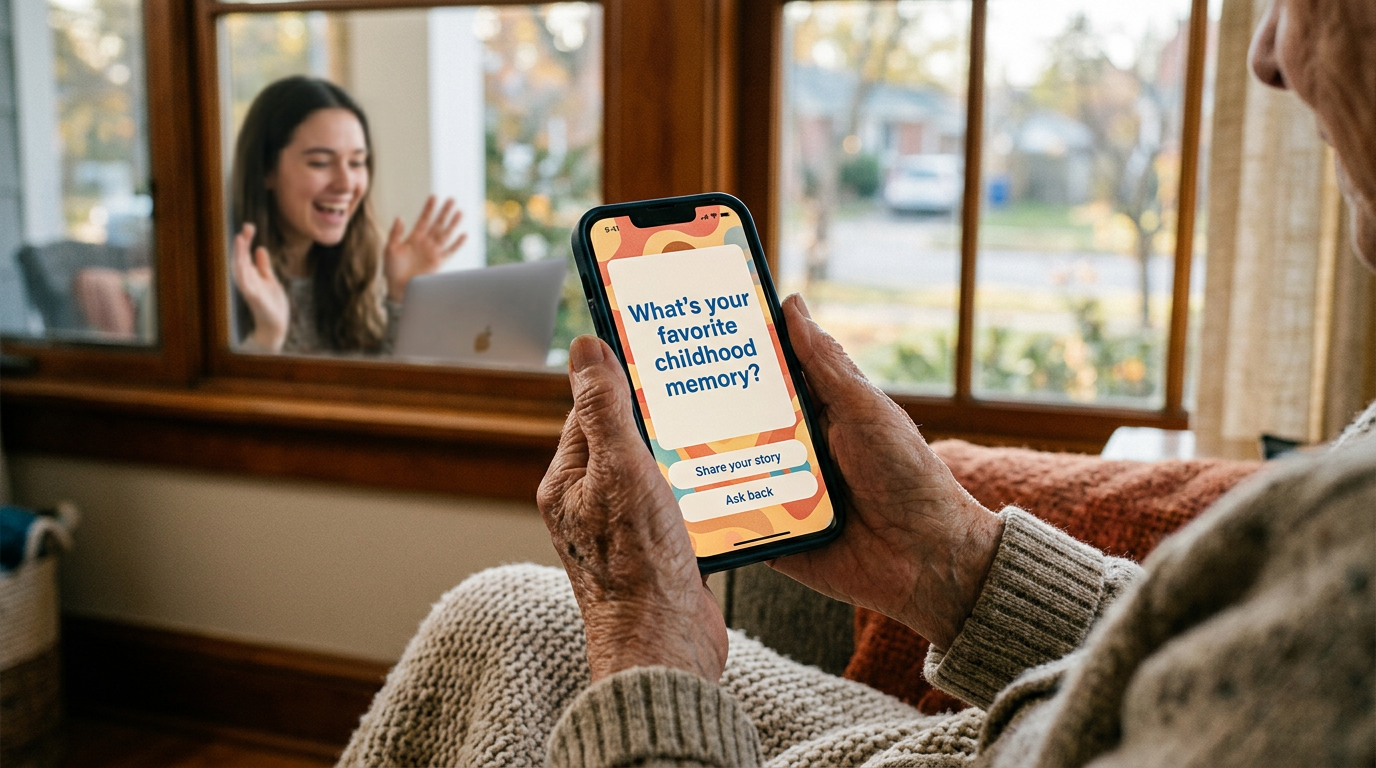
The technology offers several distinct advantages for family use:
Mobile-First Accessibility
Platform-agnostic design means conversations can happen anywhere—during video calls, through messaging apps, or during in-person gatherings. The conversation starter app travels with families rather than requiring physical cards that might be forgotten.
Progress Tracking and Favorites
Features that enable families to save favorite questions and track conversation history help build ongoing traditions rather than one-time interactions. Families can develop inside jokes, reference previous conversations, and create shared history that deepens relationships over time.
User-Friendly Design
Google sign-in integration and intuitive interfaces remove technological barriers for less tech-savvy family members. The focus remains on connection rather than navigation.
Regular Content Updates
Digital conversation cards offer fresh content through regular updates, with premium members receiving early access to new question packs. This ensures conversations remain engaging rather than repetitive, addressing a common complaint about physical conversation decks.
"Digital tools have made it easier for family members living apart to maintain close ties. Regular video calls, messaging, and social media interactions help bridge the physical gap, allowing for a continual presence in each other’s lives." — Transitions Counseling Services
The flexibility of digital platforms means they adapt to various communication styles—some families prefer video calls where everyone sees each other’s faces, others use messaging apps for ongoing written conversation, and still others blend in-person and digital interactions. Quality conversation tools support all these modalities.
Choosing the Right Conversation Starter App for Your Family
Selecting the right conversation starter app requires considering your family’s specific needs, technological comfort levels, and communication patterns. Key features to evaluate include:
Themed Question Packs
Look for platforms offering diverse themes appropriate for multi-generational use. Questions should span topics from family history and traditions to personal values and future aspirations. The best apps provide clear categorization so families can choose themes matching their mood and context.
Age-Appropriate Content
Ensure questions work for all generations involved. Topics should be complex enough to engage adults but accessible enough for younger family members. Language should avoid slang that might confuse older users while remaining relevant to younger generations.
Ease of Use Across Age Groups
Test the interface with the least tech-savvy family member. If navigation requires explanation, it creates barriers rather than removing them. Look for simple sign-in processes, clear typography, and intuitive navigation.
Freemium Accessibility
Freemium models allow families to try before committing, testing whether the approach works for their dynamic before investing. Premium features should enhance rather than be essential—free tiers should offer genuine value.
Cross-Platform Accessibility
Family members use various devices—phones, tablets, computers across different operating systems. Quality conversation tools work seamlessly across all platforms without requiring everyone to use identical hardware.
Progress Tracking
The ability to save favorite questions and return to meaningful topics helps families build conversation traditions. Look for features that enable creating custom question collections or tracking conversation history.
Pricing Considerations
Family conversation starters should be accessible financially. Low-cost subscription models around $4.99/year make premium features feasible for family-wide use without creating barriers. Compare this to physical card sets costing $20-30 or premium couples apps charging $69.99 annually—digital conversation tools occupy an accessible middle ground.
| Feature | Essential | Nice-to-Have | Optional |
|---|---|---|---|
| Themed question packs | ✓ | – | – |
| Multi-device compatibility | ✓ | – | – |
| Progress tracking | ✓ | – | – |
| Premium question packs | – | ✓ | – |
| Offline access | – | ✓ | – |
| Custom question creation | – | – | ✓ |
Meaningful Conversation Topics That Bridge the Age Divide
Not all conversation topics work equally well across generations. The most effective meaningful conversation topics create space for both generations to share while revealing unexpected common ground. Research identifies several categories that consistently resonate:
Family History and Heritage
Questions about family history appeal to grandparents’ desire to pass down wisdom while satisfying grandchildren’s natural curiosity:
- "What was your favorite childhood tradition?"
- "Tell me about your first job."
- "How did you meet Grandma/Grandpa?"
- "What’s the most valuable lesson your parents taught you?"
These topics allow grandparents to feel valued as historians and tradition-bearers while grandchildren gain connection to their ancestry.
Wisdom and Life Lessons
Grandparents accumulate wisdom through decades of experience, and most yearn to pass it forward if asked in genuine ways:
- "What’s the most important lesson you’ve learned in life?"
- "How did you handle difficult times in your life?"
- "What do you know now that you wish you’d known at my age?"
- "What’s your biggest regret, and what did you learn from it?"
Younger family members often crave this guidance but don’t know how to ask for it directly—structured prompts create natural openings.
Historical Perspective
Conversations comparing historical moments create understanding across decades:
- "What’s changed most since you were my age?"
- "What was it like when [historical event] happened?"
- "What do you wish young people understood about your generation?"
- "What technological change has been most amazing to witness in your lifetime?"
These topics reveal how much has changed while highlighting universal human experiences that persist across time.
Shared Interests and Hobbies
Sometimes the best connections happen around unexpected shared passions:
- "What hobbies have brought you joy throughout your life?"
- "What music/movies/books do you return to again and again?"
- "What’s something you’ve always wanted to learn or try?"
- "What’s the best trip you’ve ever taken?"
Emotional Support and Connection
Story sharing activities allow both generations to provide emotional support—grandparents offer wisdom and perspective while grandchildren provide companionship and remind elders they’re not alone.
The key is framing questions that invite authentic sharing rather than fact-finding. Open-ended questions starting with "what" or "how" typically generate more meaningful responses than closed questions requiring yes/no answers.
Success Stories: Real Results from Digital Intergenerational Programs
Evidence from real-world programs demonstrates the transformative potential of structured digital conversation tools. Singapore’s Silver Infocomm Initiative provides compelling data on what’s possible when families commit to intentional intergenerational connection.
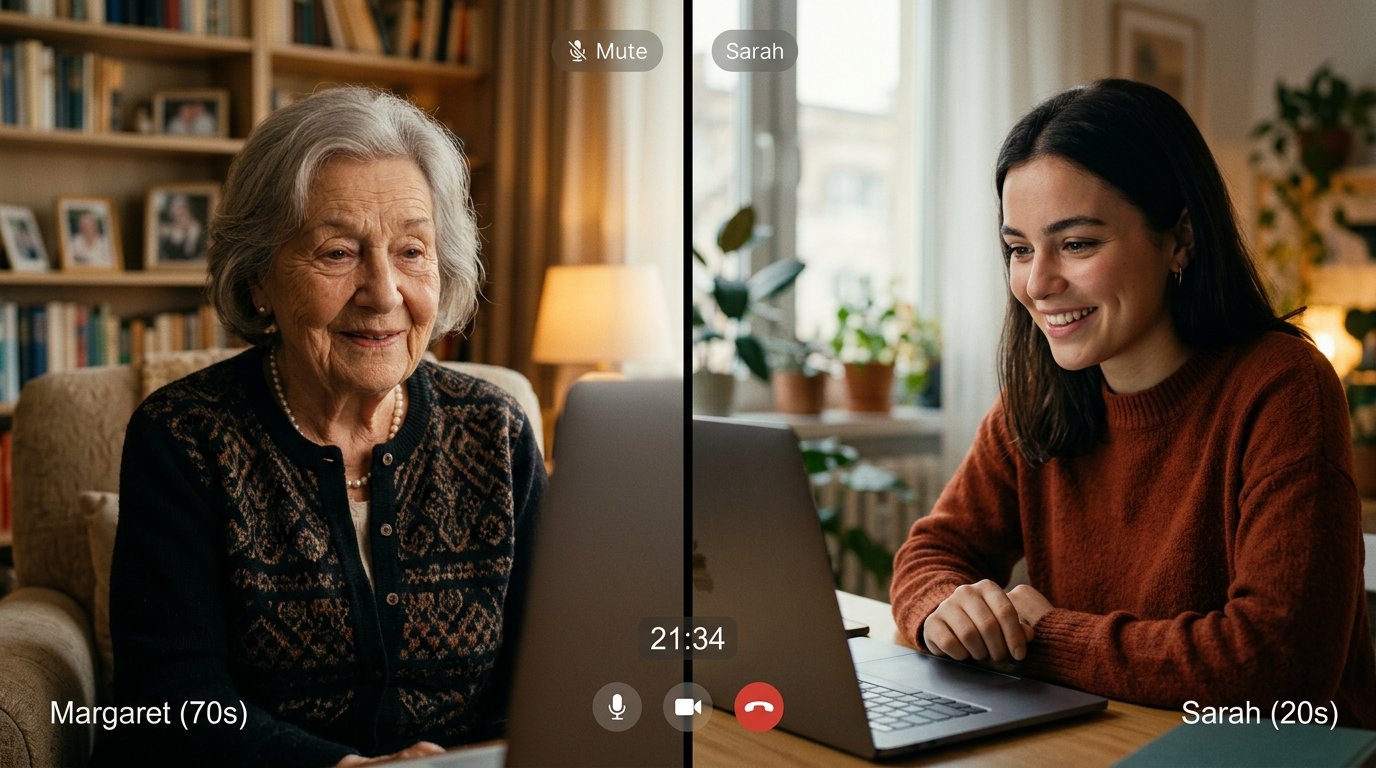
"This not only equips the seniors with knowledge but also fosters intergenerational understanding and bonding. By 2021, more than 33,000 seniors have attended learning circle sessions, and more than 13,000 seniors have adopted new digital tools and services." — IntechOpen – Bridging the Gap: Understanding and Fostering Intergenerational Communication in the Digital Age
The program’s remarkable success stems from its dual focus: teaching seniors digital skills while creating structured opportunities for meaningful intergenerational communication. More than 33,000 seniors participated in learning circles, with over 13,000 adopting new digital communication tools. These weren’t isolated technical training sessions but opportunities for grandparents and grandchildren to learn together, creating bonding alongside skill development.
Other documented success stories include:
Grandparent-Grandchild Relationship Improvement
Research studies using digital storytelling systems and conversation prompts show measurable improvements in grandparent-grandchild relationship quality. Both generations report increased satisfaction with their relationships after participating in structured conversation programs using digital tools.
Digital Literacy Gains
Seniors who participate in intergenerational digital conversation programs show improved digital readiness beyond the specific tools used. The confidence gained through successful video calls and messaging interactions transfers to other digital activities, reducing overall social isolation.
Reduced Social Isolation
User-centered participatory design in mobile apps shows promise for reducing social isolation among older adults. When seniors help design communication tools they’ll actually use, adoption increases significantly—contrast this with apps designed by young developers without senior input that often fail to address real needs.
Enhanced Family Dynamics
Families who create clear guidelines about technology use during shared time report stronger intergenerational relationships. This suggests that structured digital conversation activities can enhance rather than replace meaningful interactions when implemented thoughtfully.
The consistent theme across success stories is that technology alone isn’t enough—it’s the combination of accessible digital tools and structured conversation prompts that creates transformational results.
Practical Tips for Making Digital Conversation Tools Work for Your Family
Implementing digital conversation tools successfully requires attention to timing, frequency, and family dynamics. These practical strategies help create sustainable habits around family conversations:
Start Structured and Regular
Scheduled times create anticipation and reduce resistance. Weekly video calls using conversation prompts become rituals families protect rather than obligations to reschedule. Consistency matters more than duration—regular 20-minute conversations using quality prompts outperform occasional hour-long sessions lacking focus.
Create Technology Guidelines
Paradoxically, using technology intentionally requires setting boundaries around it. Families should establish clear guidelines about technology use during conversation time—muting notifications, using video rather than just audio when possible, and designating distraction-free environments.
Begin Easier, Go Deeper Gradually
Jumping immediately into deeply personal questions can create resistance. Start with lighter topics—favorite foods, childhood memories, travel experiences—before progressing to more vulnerable subjects about regrets, relationships, and life lessons. Build trust before demanding vulnerability.
Rotate Leadership
Designate different family members as "question leaders" each session. This shares responsibility while giving everyone practice in initiating conversation. Grandchildren might research family history questions one week, while grandparents prepare questions about modern life the next.
Use Progress Tracking Features
Save favorite questions and return to particularly meaningful topics in future conversations. Reference previous discussions ("Remember when you told me about…?") to create continuity and demonstrate that you’re listening and valuing previous sharing.
Mix Digital and In-Person
Use digital conversation cards to prepare questions for in-person gatherings too. Technology doesn’t replace face-to-face connection but enhances it by providing structure and fresh topics for shared meals and holiday celebrations.
Practice Active Listening
The quality of listening determines conversation quality more than the questions themselves. Families should practice reflecting back what they hear before sharing their own thoughts. Phrases like "What I’m hearing is…" and "That sounds really…" demonstrate engagement.
Celebrate Small Wins
Acknowledge when conversations go well and express gratitude for participation. Positive reinforcement builds momentum. "I really loved hearing that story about your first job" or "This was the best talk we’ve had in months" reinforces the value of continued connection.
Building Lasting Family Traditions Through Ongoing Dialogue
The most significant outcome of consistent family conversation starters isn’t individual conversations but the traditions they create. When families commit to regular meaningful dialogue, they establish rituals that become cherished touchstones in family life—practices children remember fondly and continue with their own families.
Story sharing adapts beautifully to intergenerational contexts, enriching both grandparents and grandchildren in measurable ways. Grandparents report increased sense of purpose and reduced loneliness when their life experience is sought after genuinely. Grandchildren develop stronger family identity and wisdom that guides their own life decisions. These mutual benefits create positive reinforcement loops that sustain connection.
Digital literacy extends beyond technical skills to encompass ethical considerations and digital citizenship learned together across generations. When families navigate online communication together, they establish shared values about privacy, respectful discourse, and healthy technology use—teachings that last lifetimes.
Families who prioritize structured communication report stronger bonds and better mutual understanding across every measurable dimension. They weather conflicts more effectively, support each other through challenges more reliably, and create shared narratives that provide meaning and continuity across generations.
The path forward starts simply: choose one conversation this week using digital tools designed for intergenerational connection. Whether it’s a video call across continents or an in-person dinner conversation, structured questions open doors to connection that might otherwise remain closed. The generation gap isn’t unbridgeable—it just requires intentional effort and the right tools.
Family conversation starters provide those tools, turning ordinary moments into opportunities for building connection and intimacy across generations. The technology makes access easy; the question prompts reduce awkwardness; the consistency creates tradition. What matters most is the commitment to showing up, listening authentically, and valuing connection over convenience.
Start this week. Pick a question. Ask someone you love. Listen to their answer. Bridge the gap, one conversation at a time.
Leave a Reply