Author: Bloggen

  • Millennial Parents Guide to Teaching Kids Communication Skills in the Digital Age

    Millennial Parents Guide to Teaching Kids Communication Skills in the Digital Age

    Forty-two percent of millennial and Gen Z parents feel disconnected from their children due to technology. Meanwhile, their children spend an average of four hours daily in front of screens on a typical day—a significant portion of childhood that could be devoted to developing crucial offline communication skills. This isn’t another article demanding you eliminate screens from your home. It’s a practical guide to ensuring your children develop robust face-to-face communication abilities alongside digital fluency. The solution lies not in choosing between technology and connection, but in using structured dialogue tools like family conversation starters and conversation cards to bridge the gap.

    The Digital Disconnect: Why 42% of Millennial Parents Feel Technology Is Eroding Family Connection

    "The poll of 2,000 U.S. millennial and Gen Z parents found 42% of them feel disconnected from their children due to technology, with kids spending an average of four hours in front of screens on a typical day" — Talker Research (2026)

    A modern family sitting together at a dining table engaged in conversation, with mobile phones set aside, demonstrating balanced technology use and family connection

    This statistic captures the anxiety defining modern parenting: technology is creating genuine distance in families. The average child’s four hours of daily screen time replaces potential face-to-face interaction time, and parents observe concerning behavioral changes. According to the same Talker Research survey, parents report:

    • Increased distraction (42%)
    • Less physical activity (42%)
    • Irritability (34%)
    • Sleep troubles (30%)
    • Disengagement with people around them (30%)

    The parenting challenge isn’t about eliminating technology—it’s about ensuring kids develop crucial offline communication skills alongside digital fluency. Your children can be digitally native AND socially competent. The key is intentional dialogue practices that complement, rather than contradict, modern life. Structured conversation tools like family conversation starters provide the framework to make this happen.

    The Developmental Cost: What Happens to Communication Skills When Screens Dominate Childhood

    The research is clear: high screen time impacts social communication development in measurable ways. A 2025 New Zealand study found that children watching more than 90 minutes of screen time daily had below-average vocabulary, communication, and numeracy at ages 4 and 8. The effects aren’t just academic—they’re social.

    According to research published in PMC, "Skills such as interpreting body language, managing conversation flow, and understanding tone are best learned in live social settings… children may experience delayed social communication development" when screens dominate their time.

    The replacement effect is particularly concerning: screens displace the critical conversational turns that build neural pathways for speech and language comprehension. When children interact with digital content rather than people, they miss opportunities to practice:

    • Reading facial expressions
    • Managing conversation flow
    • Understanding tone and subtext
    • Responding to social cues
    • Navigating spontaneous dialogue

    Digital communication skills don’t automatically translate to offline competence. Texting eliminates nonverbal cues. Gaming voice chat focuses on task coordination rather than emotional connection. Social media prioritizes performative communication over authentic dialogue. Your children need explicit practice with face-to-face conversation to develop the full range of communication abilities required for real-world success.

    The Brain Science Behind Building Better Conversations: Why Face-to-Face Dialogue Matters

    Conversation isn’t just bonding—it’s brain-building. Back-and-forth conversational turns between children and attentive adults strengthen white matter connections in brain regions related to speech and language comprehension. Research published in the Journal of Neuroscience found that parent-infant conversational turns link to white-matter growth at age 2, predicting better language skills years later.

    The "Strive-for-Five" framework provides a practical approach to leveraging this science. Instead of the typical three-turn conversation (parent asks, child answers, parent responds), extend dialogues to five turns:

    1. Child says something
    2. Parent responds and asks a follow-up question
    3. Child answers
    4. Parent responds and asks another question
    5. Child elaborates

    This simple extension dramatically improves foundational language skill development. Quality conversations enhance vocabulary, critical thinking, problem-solving abilities, and understanding of formal language structure. Perhaps most importantly, live conversation teaches timing, emotional reciprocity, and attention-shifting skills that apps cannot replicate.

    The compounding effect matters too: regular dialogue practice creates neural pathways that support all future learning and relationship skills. Each conversation is an investment in your child’s cognitive and social development.

    Using Family Conversation Starters and Conversation Cards as Training Wheels for Social Skills

    Structured conversation tools provide the practical bridge between digital native childhood and robust offline communication abilities. Conversation cards offer a scaffolded approach to building dialogue skills, particularly effective for children who struggle with spontaneous conversation.

    Colorful conversation cards spread on a kitchen table with a child's hand reaching for one, showing structured dialogue tools for building family communication skills

    "Conversation Cards provide a structured and non-intimidating way for children to express their thoughts and feelings" — My Marks – Family Conversation Cards

    Why structure works:

    • Removes pressure: Children know what to expect and don’t face the anxiety of generating topics
    • Models question-asking: Cards demonstrate how to formulate open-ended questions
    • Provides predictable framework: Children learn conversation patterns through repetition
    • Creates safety: Scripted questions let kids practice difficult skills before real-world application

    For shy or reluctant communicators, conversation cards are especially powerful. These children often fear judgment or struggle with spontaneous conversation. The structured format lets them practice turn-taking, listening, elaboration, and vulnerability in bite-sized chunks. Think of conversation cards as training wheels for social skills—they provide support until confidence develops.

    The key is introducing conversation cards so they feel like games, not lessons. Choose relaxed timing (dinner, car rides), keep the tone playful, and follow your child’s interest. When conversation feels fun rather than tested, children engage more deeply and build skills naturally.

    Age-by-Age Guide: Kids Conversation Activities from Toddlers to Teens

    Family conversation starters work best when adapted to your child’s developmental level. Here’s how to use conversation activities across childhood stages:

    Toddlers (2-4): Building Foundations

    Focus on "Strive-for-Five" conversational turns during everyday activities. Narrate experiences together: "I see you’re stacking the red block on top of the blue one. What should we put next?" Simple picture-based conversation cards can introduce basic question-and-answer patterns. The goal is teaching that communication is back-and-forth, not one-way.

    Preschool/Early Elementary (5-7): Expanding Expression

    Move beyond "how was your day?" with specific question cards about feelings, favorites, and experiences. Try role-playing simple conversations: "Pretend you’re meeting a new friend at the park. What would you say?" Kids conversation activities at this stage focus on expressing thoughts clearly and listening to others.

    Elementary (8-10): Developing Depth

    Introduce deeper conversation starters about friendships, challenges, and opinions. Teach follow-up questions: "You said recess was fun—what game did you play?" Family conversation card games become engaging activities rather than lessons. Children at this age can practice articulating their perspectives and learning that others have different viewpoints.

    Pre-Teens (11-13): Building Complexity

    Use conversation cards about values, social dilemmas, and family stories. Practice opinion expression and respectful disagreement through structured debates: "Should schools ban homework? Tell me your reasons." This stage focuses on developing nuanced thinking and communicating complex ideas clearly.

    Teens (14+): Adult-Level Discourse

    Conversation prompts about future goals, relationships, and current events break through typical one-word responses. Model adult-level discourse by sharing your own thoughts and genuinely engaging with theirs. The goal is preparing teens for college, career, and relationship conversations they’ll soon navigate independently.

    Each stage builds on previous skills—conversation development is a cumulative process, not a series of isolated lessons.

    Building Active Listening Skills in a Screen-Dominated World (For Parents and Kids)

    Active listening must be taught explicitly in an era of distraction-trained brains.

    A diverse group of teenagers and parents engaged in animated outdoor conversation, actively listening and connecting without digital devices

    "Active listening involves showing an authentic interest in what children have to say. Active listening looks like minimizing distractions, making eye contact, stopping other things you are doing, lowering yourself to their physical level" — The Conversation

    Parents must model active listening first. Children learn communication skills through imitation, observing parents’ verbal and nonverbal cues, facial expressions, and body language. If you check your phone while your child talks, they learn that partial attention is acceptable.

    Practical conversation activities that practice listening:

    • Mirroring games: "Repeat back what I said before you answer"
    • Conversation card summaries: "Summarize my answer before you give yours"
    • Phone-free zones: Designated times when devices are put away
    • Eye contact challenges: Maintain focus for increasing durations

    Teach kids to listen for understanding, not response. Conversation card activities that require summarizing before answering build this skill: "Tell me what you heard me say, then share your thoughts."

    Countering screen-trained distraction habits takes time. Start short (5 minutes), build tolerance gradually, and celebrate successful focused conversations. The active listening feedback loop matters too: when kids feel heard, they become more willing to engage in deeper conversations.

    Creating Natural Conversation Opportunities Without Feeling Like Forced Lessons or Therapy

    Many parents resist structured conversation because it feels artificial. The fear is understandable—forced dialogue can feel like therapy sessions rather than family life. The solution is weaving conversation cards and dialogue practice into existing routines naturally.

    Conversation feels forced when:

    • There’s fear of judgment or evaluation
    • The structure is too rigid
    • Timing conflicts with natural energy levels
    • Parental anxiety about development creates pressure

    Natural conversation triggers occur during hands-on activities. In fact, 87% of parents believe doing projects with their kids strengthens their bond while teaching patience, creativity, and collaboration skills. Parenting communication flows better when hands are busy and pressure is lower.

    Integrate conversation cards into existing routines:

    • Dinner table conversations
    • Car rides and commutes
    • Bedtime reflection talks
    • Chores or household projects
    • Art projects and crafts

    According to recent research, 54% of parents reduce screen time through hands-on activities including playing with toys (68%), helping around the home (66%), coloring (66%), crafts (63%), and reading (60%). Each of these provides natural conversation opportunities.

    Conversation activities paired with projects:

    • Ask questions while cooking together
    • Use cards during art projects
    • Discuss while building Lego creations
    • Talk through problems during homework help

    The "while doing something" approach works because movement reduces eye-contact pressure, shared activity provides conversational material, and hands-busy means minds-free to engage.

    When awkward silences occur, normalize discomfort, have backup questions ready, and know when to pause and return later. Not every conversation will flow perfectly—and that’s okay.

    Balancing Screen Time and Face Time: Practical Strategies That Actually Work for Busy Families

    The goal isn’t declaring war on technology. It’s ensuring family conversation starters and dialogue activities coexist with digital devices. Focus on adding face-to-face time rather than just subtracting screen time—research shows limiting screens alone doesn’t restore language skills. The replacement effect matters: what kids do instead of screens determines developmental outcomes.

    Phone-free zones that work for real families:

    • Dinner table (most common, highly effective)
    • Car rides (captive audience, low pressure)
    • First 30 minutes after school (transition time)
    • Bedtime routine (wind-down connection)

    Micro-conversation opportunities:

    • 5-minute conversation card breaks between activities
    • Transition moments while getting ready
    • Waiting periods at restaurants or appointments
    • Morning check-ins before school

    Weekend conversation rituals create structure without pressure:

    • Special family conversation card sessions
    • Sunday planning talks for the week ahead
    • Post-activity reflections ("What was your favorite part?")
    • Family meeting check-ins

    Track progress without obsession. Celebrate:

    • Increased conversation length
    • Deeper questions from your child
    • More child-initiated dialogue
    • Less self-selection for screens during free time

    Why structured tools help: conversation cards provide easy, low-prep ways to initiate face time without extensive planning or mental energy. When you’re exhausted after work, pulling out a deck of questions feels manageable compared to improvising meaningful dialogue.

    Conversation Activities That Build Emotional Intelligence Beyond Basic Communication

    Quality conversations between children and caring adults enhance vocabulary AND strengthen trust and relationships. But the benefits extend beyond language—family conversation starters build emotional intelligence, empathy, and resilience.

    Conversation cards that explore emotions:

    • "What made you feel proud today?"
    • "When did you feel frustrated?"
    • "How did you help someone today?"
    • "What was the best part of your day? The hardest part?"

    Developing emotional vocabulary through dialogue moves children beyond "good" and "bad" to specific feeling words: disappointed, excited, nervous, relieved, frustrated. Children who can name emotions accurately can manage them more effectively.

    Practicing perspective-taking:

    Conversation activities that ask kids to imagine others’ experiences build empathy: "How do you think your friend felt when that happened?" "What might your teacher be thinking right now?" These questions develop theory of mind—the ability to understand others have thoughts and feelings different from their own.

    Building resilience through conversation:

    Discussing challenges, failures, and coping strategies in safe structured format teaches that difficulties are normal and manageable. When children can talk openly about setbacks, they develop stronger regulation skills and problem-solving abilities.

    How regular conversations create emotional safety: children who can talk openly about feelings develop stronger regulation skills. They learn that emotions are discussable, problems are solvable, and adults are supportive resources.

    The compounding benefit: emotionally intelligent conversations improve all relationships—family, future friendships, romantic partners, and professional connections. The skills your child practices at dinner become the foundation for all future relationship success.

    Your Action Plan: Starting Family Conversation Starters This Week

    Here’s your concrete step-by-step plan to begin using conversation cards and dialogue activities immediately:

    Step 1: Choose One Daily Conversation Opportunity

    Pick dinner, bedtime, car rides, or whatever already works for your schedule. Don’t overhaul everything—start with one reliable moment when everyone is present and energy is manageable.

    Step 2: Select Age-Appropriate Conversation Cards

    Choose 5-10 family conversation starters suited to your child’s developmental level. Don’t overprepare. Simple questions work fine: "What was your favorite thing that happened today?" "If you could design a perfect weekend, what would we do?"

    Step 3: Set Up Your Environment

    Put phones aside. Ensure eye contact is possible. Choose timing when everyone is reasonably comfortable. Friday after a long school day might be harder than Sunday morning after breakfast.

    Step 4: Start Small and Celebrate Success

    Five minutes is a win. One good question counts as progress. If your child gives a one-word answer, celebrate that they engaged at all. Building conversation tolerance is like building any other skill—gradual improvement matters more than instant perfection.

    Step 5: Expand Gradually

    Add a second conversation time once the first feels established. Introduce deeper questions as trust builds. Let kids pick cards or create their own questions. Follow their interests—children engage more deeply when topics matter to them.

    Managing expectations:

    • Some conversations will flop
    • Resistance is normal
    • Consistency matters more than perfection
    • Progress isn’t linear

    Success indicators to watch for:

    • Longer child responses over time
    • More questions from your child
    • Less automatic screen selection during free time
    • More spontaneous conversation initiation
    • Increased emotional vocabulary

    The long game: building communication skills is a multi-year process, but conversation improvements often appear within weeks of consistent practice. Children are adaptable, and brains are plastic—intentional dialogue creates measurable change.

    Every conversation is a brain-building opportunity, and structured tools make it easier than ever to give kids the communication skills they need for offline success. Family conversation starters aren’t just about bonding—they’re about ensuring your children can navigate face-to-face interactions in a digital world with confidence, empathy, and skill.

    Start this week. Pick one moment. Ask one question. The conversation that follows might be the first of thousands that shape your child’s future.


  • Why Passive Entertainment Destroys Relationship Intimacy Over Time

    Why Passive Entertainment Destroys Relationship Intimacy Over Time

    One in four people admit to turning down sex in favor of binge-watching their favorite series. This statistic alone reveals a troubling shift in modern relationships: passive entertainment has become a formidable competitor to genuine intimacy. While couples sit side-by-side on the couch, streaming their way through entire seasons, they’re often physically together but emotionally absent—and the long-term costs to their relationship may be steeper than they realize.

    The seductive appeal of passive entertainment is understandable. After demanding workdays, the path of least resistance beckons: collapse onto the sofa, press play, and let someone else do the talking. Survey data shows that 36% of adults aged 18-38 consistently choose television over physical intimacy with their partners. Netflix’s 2024 survey revealed that more than half of people have actually abandoned their partners to binge-watch shows alone, with 8% admitting they would break up with a partner who finished a series without them.

    This represents more than a harmless preference for relaxation. It signals a fundamental reorientation of relationship priorities—one that systematically erodes the very foundations of intimacy. The paradox is stark: in choosing the easiest form of togetherness, couples may be making themselves progressively less together in ways that matter.

    Research-backed solutions exist, however, and they’re remarkably accessible. Meaningful conversation serves as relationship currency, building connection that compounds over time. The following analysis explores why passive entertainment destroys intimacy—and how budget-friendly alternatives under $10 can reverse the damage.

    Phubbing: The Silent Relationship Killer Affecting 46% of Couples

    Before examining passive entertainment’s broader impact, we must address its most insidious manifestation: phone snubbing, or "phubbing." The term describes the increasingly common practice of prioritizing smartphone engagement over the person physically present.

    A couple sits together on a couch in the evening, emotionally disconnected as one person stares at their smartphone while their partner gazes at them with a sad expression, illustrating how phones create barriers to intimacy

    A comprehensive 2025 meta-analysis of 52 studies involving 19,698 participants revealed that partner phubbing significantly reduces:

    • Relationship satisfaction
    • Marital satisfaction
    • Intimacy
    • Emotional closeness

    Simultaneously, phubbing increases conflict and jealousy between partners. The data is unequivocal: when one partner consistently chooses their phone over their significant other, the relationship suffers measurable damage.

    The scope of this problem extends beyond isolated incidents. According to Institute for Family Studies data, 46% of adults report experiencing phubbing from their partners, while 23% consider it a significant relationship problem. This means nearly half of all relationships contain a pattern of digital rejection that undermines intimacy.

    Objective 2025 research painted an even clearer picture. In observational studies, participants used smartphones during 27% of time spent with their partners. Perhaps more telling, 86% used phones daily around their partners, with phone use predicting lower relationship satisfaction—especially for women, who report disproportionately higher negative impacts from partner phubbing.

    "Phubbing is micro-ostracism. It leaves someone, even while with another, suddenly alone." — David G. Myers, Institute for Family Studies

    The psychological mechanism is straightforward: phubbing sends a powerful message that whatever appears on your screen matters more than the person beside you. Over time, these micro-rejections compound, creating emotional distance that becomes increasingly difficult to bridge.

    Why Your Phone’s Mere Presence Destroys Intimacy (Even When Unused)

    Perhaps the most surprising research finding concerns what happens when phones remain present but unused. Conventional wisdom suggests that putting a phone face-down or silencing notifications eliminates its negative impact. The data tells a different story.

    The mere presence of a phone decreases feelings of closeness with conversational partners—even when no one actively uses it. Why? Phones act as a "threat of interruption" that mentally divides attention. Your brain remains partially alert to the possibility of incoming communication, preventing full presence in the current moment.

    "Even the phone’s mere presence decreases people’s feelings of closeness with their conversational partner." — Institute for Family Studies

    This phenomenon explains why couples can feel disconnected despite spending hours together in the same room. If phones sit on the coffee table, even untouched, the conversation lacks the intimacy of undivided attention. Each partner operates with a mental reservation, maintaining peripheral awareness of their digital life.

    True intimacy requires eye-to-face contact, sustained focus, and psychological availability. The presence of phones undermines all three. Consider the difference between these two scenarios:

    Scenario Psychological Impact Connection Level
    Conversation with phone visible Partial attention, anticipation of interruption Shallow
    Phone-free conversation Full presence, openness to vulnerability Deep

    The second scenario creates the conditions for genuine intimacy, while the first inherently limits it. As Myers observes:

    "A real touch beats being pinged. A real smile beats an emoticon. An eye-to-eye talk beats an online chat. We are made for face-to-face relationship."

    The practical implication is clear: putting phones face-down isn’t enough. True connection requires their complete removal from the conversational space.

    The Science: Deep Conversations vs. Small Talk—Why Content Matters

    If passive entertainment and digital distraction erode intimacy, what builds it? The answer lies in the quality of conversation between partners. Research consistently shows that happy individuals have significantly more substantive conversations and less small talk than unhappy people.

    Two people shown in profile, engaged in deep conversation with warm golden lighting between them, symbolizing the intimate connection that meaningful dialogue creates in relationships

    This isn’t merely correlation. The content of dialogue actively shapes relationship satisfaction. Harvard Business School research demonstrates that people engaging in substantive conversations report 12% higher relationship satisfaction compared to those who stick to conventional small talk.

    The mechanisms are multifaceted:

    1. Meaning-making: Substantive conversations help couples construct shared narratives and purpose
    2. Vulnerability: Deep dialogue requires and builds emotional openness
    3. Discovery: Partners continually learn new aspects of each other’s inner lives
    4. Validation: Meaningful exchange communicates "you matter to me"

    A 2024 National Marriage Project study found that fun conversation-induced satisfaction growth in marriage can reach up to 30% when couples regularly engage in meaningful dialogue. This represents a substantial improvement—equivalent to the impact of many costly interventions or therapies.

    The connection extends beyond relationship satisfaction to overall well-being. Psychological research links meaningful conversations to higher life satisfaction and personal happiness. Substantive dialogue serves as a key component of both relationship health and individual flourishing.

    "Meaningful conversations contribute to higher life satisfaction and well-being… Sharing personal stories builds closeness and enhanced intimacy." — Research findings on substantive conversations

    Neurochemically, deep conversations trigger the release of bonding hormones like oxytocin and dopamine, creating physiological reinforcement for the connection. Small talk and passive entertainment simply don’t produce the same neurochemical response.

    How Passive Entertainment Creates Long-Term Relationship Atrophy

    The damage from passive entertainment accumulates gradually, making it easy to overlook until significant atrophy has occurred. Each night spent binge-watching rather than talking subtly weakens communication muscles, much like physical muscles atrophy without exercise.

    Consider what happens during a typical passive entertainment evening:

    • No shared stories are created that you’ll retell together later
    • No new understanding of each other’s inner world develops
    • No practice occurs in active listening or vulnerability
    • No emotional intimacy is built or maintained

    The opportunity cost is substantial. Over months and years, couples who consistently choose screens over dialogue find themselves with fewer conversation tools, less practice in deep connection, and diminished ability to access intimacy when they need it most.

    This atrophy manifests in several critical areas:

    1. Conflict resolution: Without regular practice in meaningful dialogue, couples lose the skills needed to navigate disagreements constructively
    2. Emotional attunement: The ability to read and respond to partners’ emotions requires consistent engagement
    3. Shared meaning: Passive entertainment doesn’t help couples articulate or reinforce their shared values and goals
    4. Vulnerability access: The pathways to openness narrow without regular use

    "Research shows that couples who focus on engaging in meaningful conversations are more likely to report higher satisfaction in their relationships." — Deeper Talk, 2025

    The cruel irony: couples often choose passive entertainment because it feels "easy." Yet this very choice makes meaningful connection progressively harder, creating a self-reinforcing cycle of disconnection. The path of least resistance becomes a path toward relationship fragility.

    The 36 Questions Effect: How Structured Conversations Accelerate Intimacy

    If passive entertainment represents the wrong direction, what does the right path look like? One of the most compelling answers comes from a landmark study demonstrating how structured, increasingly personal questions can transform relationships—even between strangers.

    The famous "36 Questions to Fall In Love" experiment revealed that guided vulnerability accelerates intimacy. The research showed that mutual self-disclosure through progressively deeper questions creates trust and connection far more efficiently than unguided conversation.

    Why does this approach work so effectively?

    1. Scaffolding: Questions start easier and build depth gradually, making vulnerability accessible
    2. Reciprocity: Taking turns sharing creates balanced investment in the connection
    3. Permission: The structured format gives partners permission to discuss topics they might otherwise avoid
    4. Discovery: Well-designed questions elicit new information about both partners

    Couples conversation questions and card games help partners explore aspirations, memories, and fantasies while creating trust through deeper self-disclosure. For established couples, structured questions unlock aspects of each other that years of conventional small talk never accessed.

    Research indicates that structured dialogue creates 30% more relationship satisfaction than casual conversation. This isn’t surprising—casual conversation tends toward familiar topics and surface-level exchange, while structured questions deliberately target the substance of who we are.

    The practical applications extend beyond romantic relationships. The same principles that deepen couple connections strengthen friendships, family bonds, and even team cohesion in professional settings.

    Budget-Friendly Date Ideas: Conversation-Based Activities Under $10

    The good news for couples seeking meaningful connection? You don’t need expensive dinners or elaborate experiences. The most relationship-building activities are remarkably affordable—and conversation-focused options top the list.

    A couple sits at a small café table engaged in animated conversation, demonstrating that budget-friendly activities focused on dialogue can create meaningful connection without expensive dates

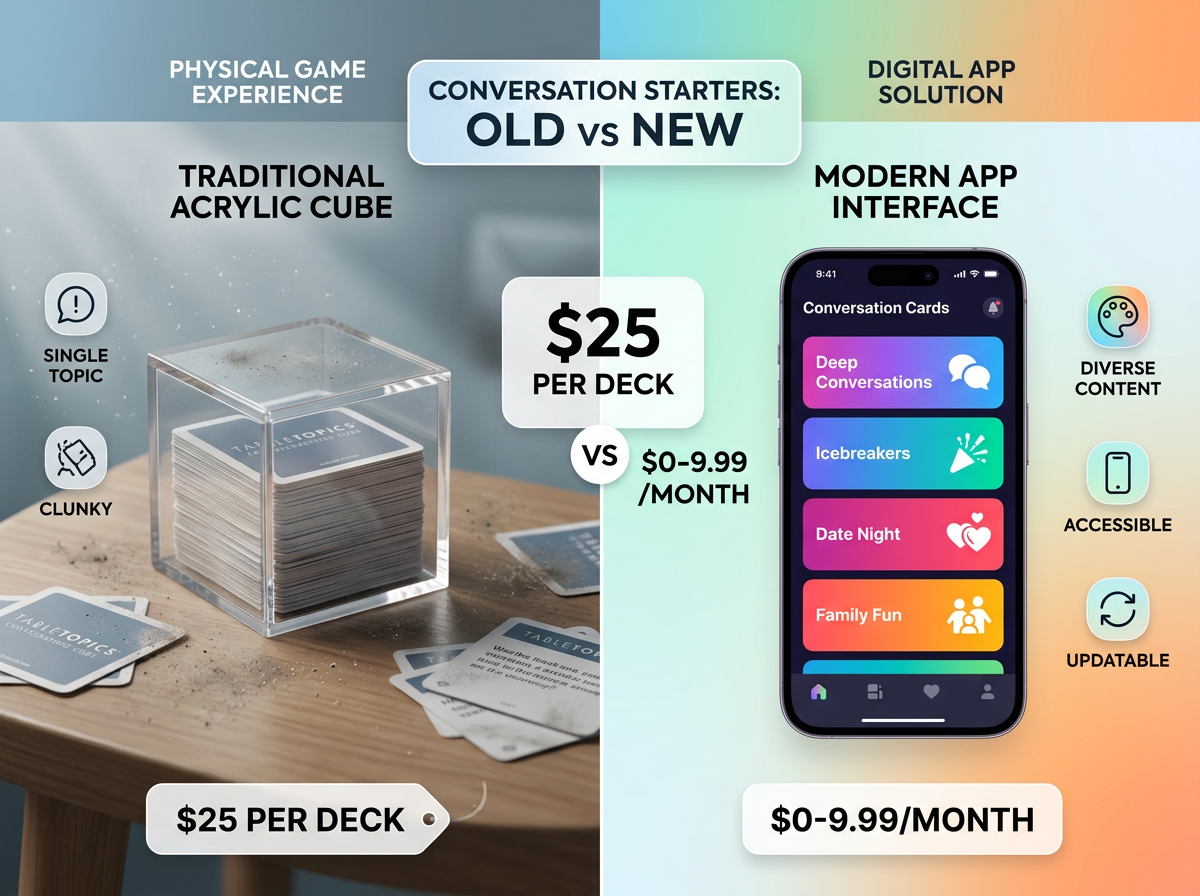
    Consider Convo Cards as a premier budget-friendly date idea. At just $4.99/year, it offers:

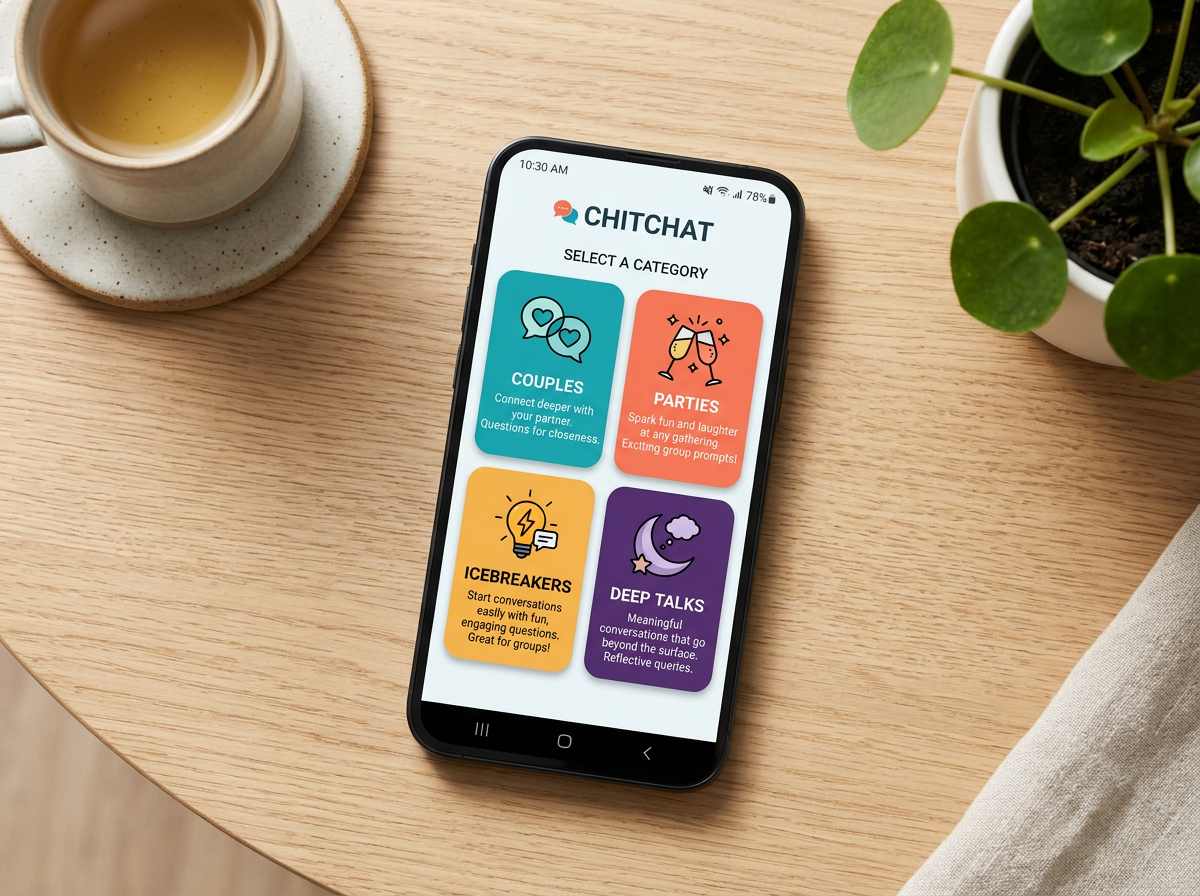
    • 18+ diverse question packs covering relationships, family, hobbies, and adventures
    • Mobile-first accessibility requiring no app download
    • Progress tracking to measure conversation growth
    • Favorites features for building recurring dialogue themes
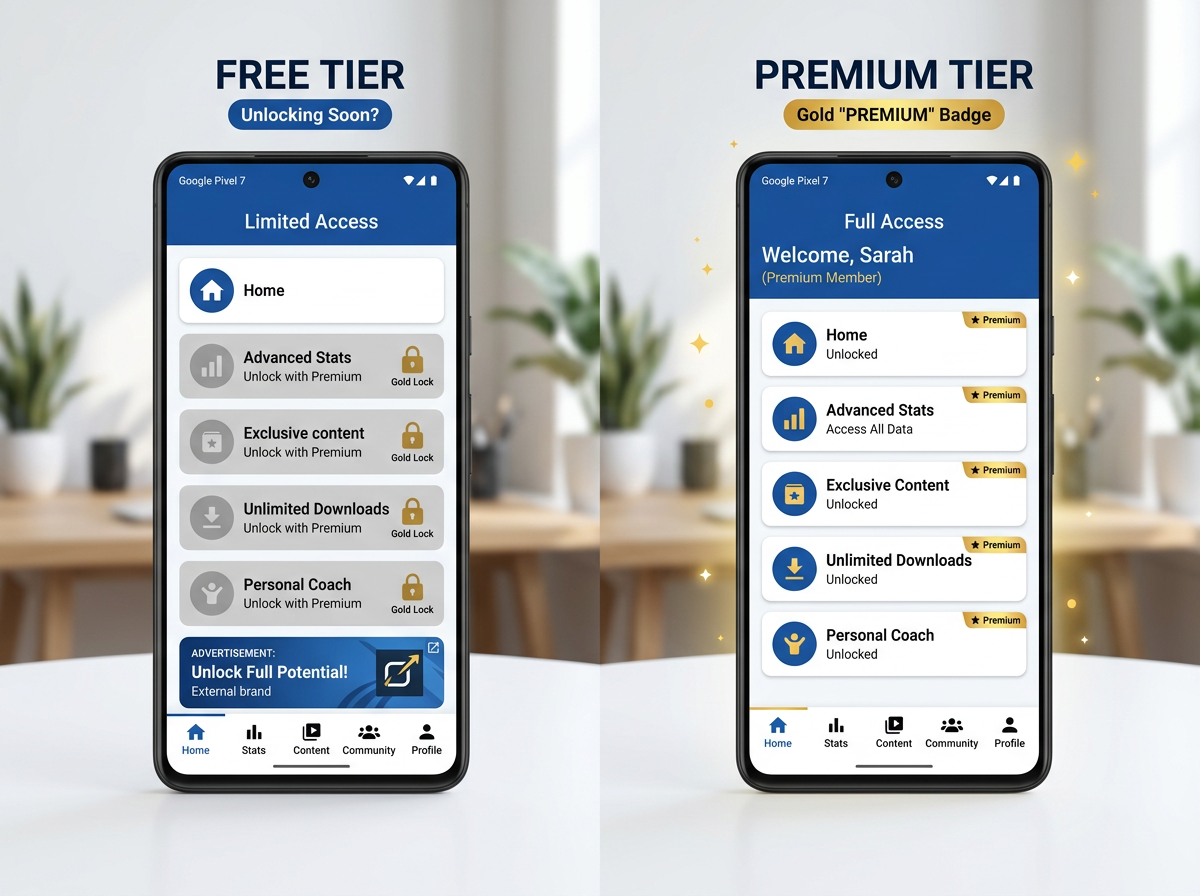
    • Freemium model allowing free basic access

    This pricing dramatically undercuts alternatives:

    Platform Type Typical Cost Commitment
    Convo Cards (digital) $4.99/year Annual subscription
    Physical card sets $20-30 One-time purchase
    Premium couples apps $69.99/year Annual subscription

    The economics of conversation-based dates favor connection. Consider that:

    • A Netflix premium subscription costs $15.49/month ($185.88/year)
    • A single dinner date averages $50-100
    • Movie tickets for two exceed $25 before concessions

    Meanwhile, conversation-based activities under $10 provide unlimited relationship-building experiences. The same Convo Cards subscription works for date nights, family time, friend hangouts, and team building—maximizing value across multiple relationship contexts.

    These budget-friendly date ideas work precisely because they prioritize dialogue over entertainment. Rather than passively consuming content together, couples actively create connection through exchange.

    Affordable Couples Activities: Why Dialogue Beats Dining for Relationship Value

    When couples think "date night," they often default to dinner and a movie. But from a relationship-building perspective, these traditional options offer surprisingly poor return on investment.

    Expensive dinners often prioritize logistics over meaningful dialogue. Between navigating menus, coordinating with servers, and managing the social performance of public settings, couples find little bandwidth for substantive conversation. The setting actively works against vulnerability.

    Compare this to conversation-focused activities:

    Activity Type Cost Intimacy Potential Distractions
    Restaurant dinner $50-100 Low-medium High (public setting, service logistics)
    Conversation-based home date $0-10 High Minimal (when phone-free)
    Movie theater $25+ Low Complete (no talking possible)

    The $4.99/year Convo Cards subscription versus a $50-100 dinner date illustrates a fundamental truth about relationship ROI: meaningful interaction creates far more connection per dollar than expensive experiences that don’t facilitate dialogue.

    Conversation-focused activities offer additional advantages:

    • Performance pressure removal: No need to impress servers or navigate public spaces
    • Authentic environment: Home settings allow genuine vulnerability
    • Story creation: Meaningful conversations become stories you retell together, building shared narrative
    • Flexibility: No reservations, schedules, or external constraints

    Physical card sets like TableTopics at $20-30 and premium couples apps at $69.99/year demonstrate the market recognizes conversation’s value. However, digital alternatives at $4.99/year make this approach universally accessible.

    The best affordable couples activities prioritize interaction over entertainment. They recognize that relationship health depends not on what you do together, but on how you engage while doing it.

    Date Night Questions That Transform Small Talk Into Big Talk

    The search volume data tells a story: "date night questions" receives 74,000 monthly searches, revealing couples’ hunger for better dialogue. But what transforms conventional small talk into the substantive connection that builds relationships?

    The difference lies in question design. Transactional small talk ("How was your day?") elicits minimal information and requires little vulnerability. Transformative "big talk" questions invite deeper disclosure:

    Categories That Unlock Vulnerability

    Aspirations

    • "What’s something you’ve always wanted to learn, and what’s stopped you?"
    • "If you could master any skill instantly, what would it be and why?"

    Memories

    • "What’s your earliest happy memory, and why does it stand out?"
    • "What experience from your childhood shaped who you are today?"

    Fears

    • "What’s something you’re afraid to try but secretly want to attempt?"
    • "What worry keeps you up at night that you rarely talk about?"

    Fantasies

    • "If we could design our ideal life five years from now, what would it look like?"
    • "What adventure have you always dreamed of taking together?"

    These examples share common characteristics:

    1. More than yes/no answers: They require elaboration
    2. Personal significance: They connect to values, identity, or emotions
    3. New information: They go beyond familiar, well-worn topics
    4. Invitation to vulnerability: They make safe space for sharing something real

    Why do curated questions outperform improvisation? The pressure of "what should I say?" often leads couples to default to familiar small talk. Well-designed conversation starters remove this pressure, providing a clear path to depth.

    The beauty of conversation cards and structured questions lies in their accessibility to established couples, not just new relationships. Years of marriage don’t guarantee deep dialogue—many long-term couples report knowing the details of each other’s days but losing touch with the substance of each other’s inner lives.

    From Conversation Deficit to Connection Surplus: Your 30-Day Action Plan

    The stakes of inaction are higher than many couples realize. Netflix’s survey showing 8% would break up with a partner who finished a series without them reveals how deeply entertainment preferences can entangle with relationship commitment. Meanwhile, research demonstrates up to 30% relationship satisfaction increases from regular meaningful dialogue.

    The conversation deficit created by passive entertainment is reversible—but it requires intentional action.

    Week 1: The Foundation

    Day 1-3: Phone-free zones

    • Designate phone-free spaces in your home (bedroom, dining table)
    • Practice 15 minutes of undivided attention daily
    • Notice how different conversation feels without digital threat of interruption

    Day 4-7: First structured conversation

    • Try one conversation-based date using free conversation starter tools
    • Set aside 30 minutes with no distractions
    • Focus on listening rather than preparing your response

    Week 2: Building the Habit

    Day 8-14: Daily micro-conversations

    • Replace "How was your day?" with one substantive question daily
    • Rotate question categories: aspirations Monday, memories Tuesday, etc.
    • Track which questions spark the best connection

    Week 3: Deepening Practice

    Day 15-21: Extended dialogue sessions

    • Schedule one 45-minute conversation date weekly
    • Use progressively deeper questions from conversation card sets
    • Practice reflecting back what you hear before responding

    Week 4: Integration

    Day 22-30: Making it sustainable

    • Identify which conversation approaches work best for your relationship
    • Create recurring phone-free times (daily dinner, weekly conversation night)
    • Expand to family conversations, friend connections, team building

    Starting small makes the transformation manageable. A single conversation-based date under $10 this week can begin shifting your relationship culture from passive consumption to active connection.

    Take the first step: Access free conversation tools at Convo Cards with no account required. The platform offers basic features at no cost, allowing you to test the approach before committing to premium access.

    The science is clear, the tools are accessible, and the cost is minimal. The only remaining question is whether you’ll choose connection over convenience.

    "We are made for face-to-face relationship." — David G. Myers, Institute for Family Studies

    Every relationship contains a choice point between passive entertainment and active intimacy. Choose conversation. Choose connection. Choose the budget-friendly date ideas that build something real.

    Your relationship is worth more than another Netflix binge—and the research proves it.

  • How Conversation Starters Help Caregivers Connect With Aging Parents

    How Conversation Starters Help Caregivers Connect With Aging Parents

    Your mother sits in her favorite armchair, eyes distant, as you ask yet another question about her day. "Fine," she says, the same response she’s given for months. You’ve noticed the silence growing between you—those easy conversations you once shared now feel like walking through quicksand. You’re not alone. Adult children across the country struggle to maintain meaningful connections with aging parents experiencing cognitive decline, memory loss, or profound isolation.

    But here’s what’s remarkable: even when recent memories fade and daily conversations become difficult, the door to connection remains open through the past. Family conversation starters designed for reminiscence can transform those awkward silences into rich, meaningful dialogues that honor your parent’s legacy while reducing your own caregiving stress.

    Beyond Small Talk: Why Meaningful Conversations Transform Caregiving

    The emotional toll of maintaining connections with aging parents facing cognitive decline cannot be overstated. As memory loss progresses, the easy flow of shared history gives way to halting exchanges and persistent quiet. What many caregivers don’t realize is that loneliness in elderly parents presents a significant health risk—comparable to smoking 15 cigarettes daily in its impact on mortality. When your parent cannot engage in meaningful conversation, the isolation compounds both cognitive and emotional decline.

    Meaningful dialogue isn’t merely pleasant conversation; it’s a therapeutic intervention. Reminiscence therapy—the practice of using guided conversations about past experiences to reduce anxiety and foster connection—has emerged as a powerful tool for caregivers. This approach works because, even as recent memories deteriorate first in Alzheimer’s disease, memories from young adulthood and childhood often remain accessible with gentle prompting.

    Structured family conversation starters transform routine visits into quality time that honors your parent’s life story. Rather than struggling to fill silence with superficial updates about weather or health, prepared questions about childhood memories, career milestones, and family traditions invite your parent into familiar territory where confidence replaces confusion. These conversations don’t just pass the time—they build bridges across the cognitive gaps that memory loss creates.

    Understanding Reminiscence Therapy: The Science of Memory and Connection

    Reminiscence therapy is a psychotherapy approach that uses guided conversations about past experiences, often enhanced by props like photographs, music, familiar scents, or keepsakes. These sensory elements trigger memory networks more powerfully than words alone, creating opportunities for detailed recall even when short-term memory has significantly declined.

    "Did you know that you can provide feelings of comfort and safety to a loved one with dementia or other forms of memory loss simply by asking questions or discussing things about their past? It’s called reminiscence therapy, and it’s easy and effective!"

    — LifeBio

    The science behind reminiscence therapy reveals why this approach works so effectively. Alzheimer’s disease and related dementias typically damage the hippocampus—the brain region responsible for forming new memories—first. However, long-term memories stored throughout the cortex remain relatively preserved even in moderate stages of dementia. These memories, once consolidated, can be accessed through the right prompts and sensory triggers.

    2026 clinical research provides compelling evidence for reminiscence therapy’s benefits. A study of the Living Memory Home digital reminiscence tool found that structured reminiscence conversations reduced pre-death grief in caregivers and showed significant potential for improving relationship quality between dementia patients and their family caregivers. These findings confirm what many families discover intuitively: focusing on preserved memories rather than lost capacities creates connection rather than frustration.

    Reminiscence therapy proves most beneficial for individuals with mild to moderate dementia, as it helps maintain their sense of self while addressing symptoms of depression and anxiety. The approach creates a sense of connection and belonging whether conducted one-on-one or in group settings, making it adaptable to various caregiving situations.

    The Art of Asking: Gentle Conversation Techniques That Work

    The way you phrase questions makes the difference between a conversation that sparks joy and one that creates pressure. Many well-meaning caregivers unknowingly cause stress by asking "Do you remember when…"—phrasing that feels like a memory test your parent is failing. Instead, gentle invitations like "Tell me about…" or "What was it like when…" encourage storytelling without the anxiety of performance.

    "Even people who have difficulty communicating can still benefit from reminiscence therapy. The goal is to help them share anecdotes from the past. Asking open-ended questions can help them remember past events and stories about loved ones."

    — Verywell Health

    Your questioning approach should adapt to your parent’s cognitive abilities:

    Dementia Stage Question Type Example
    Mild cognitive decline Open-ended questions "Tell me about your first job."
    Moderate dementia Simple yes-or-no questions "Did you enjoy working at the factory?"
    Severe dementia Sensory-based prompts "Would you like to hold this photograph?"

    For parents with mild cognitive decline, open-ended questions invite elaboration and reflection. "What was your childhood home like?" encourages more detailed response than "Did you like your childhood home?" However, as cognitive abilities progress, simpler yes-or-no questions about preferences work better than complex queries requiring synthesis of multiple ideas.

    "Start out with one or two sentences, since by the time you get to sentence three, they’re lost. Ask yes-or-no questions. ‘Would you like a cup of tea?’ may work better than ‘What would you like to drink?’"

    — Harvard Health

    Effective topics for reminiscence conversations include:

    • Childhood memories and early family life
    • Family traditions and holiday celebrations
    • Career experiences and work milestones
    • Life lessons and personal wisdom
    • First loves and courtship stories
    • Historical events they witnessed
    • Favorite hobbies and pastimes

    The goal isn’t factual accuracy—it’s emotional connection and honoring your parent’s narrative, however fragmented it may become.

    50 Family Conversation Starters That Spark Rich Stories

    These meaningful conversation topics are organized by theme to help you find prompts that resonate with your parent’s interests and preserved memories. Sensory-rich, concrete questions work better than vague prompts because they help set specific scenes and trigger detailed recall.

    Childhood and Early Family Life

    • "Tell me about the house you grew up in—what did your bedroom look like?"
    • "What did your kitchen smell like when you were growing up?"
    • "What sounds do you remember from your childhood neighborhood?"
    • "Who was your best friend when you were young? What did you do together?"
    • "What was your favorite thing to do after school?"
    • "Tell me about a memorable birthday celebration from your childhood."
    • "What did your family do for fun when you were growing up?"
    • "How did you get to school? What was the journey like?"

    Close-up of weathered, gentle hands holding open a vintage photograph album with black and white family photos, capturing a moment of reminiscence

    Family Traditions and Celebrations

    • "How did your family celebrate holidays when you were a child?"
    • "What was your favorite holiday tradition growing up?"
    • "Tell me about your favorite family meal—who cooked, and what made it special?"
    • "What music did your family listen to during celebrations?"
    • "How did your family handle difficult times or sad occasions?"
    • "Are there any family traditions you hope we continue?"
    • "What made holidays special in your childhood home?"

    Heartwarming multigenerational family gathering with elderly grandparent sharing stories while adult children and grandchildren listen with genuine interest

    Career and Work Life

    • "What was your very first job like? Tell me about your first day."
    • "How did you choose your career path?"
    • "Tell me about a proud moment in your work life."
    • "What was the hardest job you ever had?"
    • "Who was your favorite coworker or boss? What made them special?"
    • "What skills are you most proud of mastering in your career?"
    • "How did you feel when you retired?"

    Life Lessons and Wisdom

    • "What’s the most important thing you learned about love?"
    • "What advice would you give your younger self if you could?"
    • "What are you most proud of in your life?"
    • "What difficult experiences taught you the most?"
    • "What do you hope your grandchildren learn from you?"
    • "What values do you think are most important in life?"
    • "What does being a good parent mean to you?"

    Historical Events They Witnessed

    • "Where were you when [major historical event] happened?"
    • "How did your family handle the difficult times during the war?"
    • "What technological changes have amazed you most in your lifetime?"
    • "How was life different when you were raising children?"
    • "What was the most exciting historical event you experienced?"
    • "How did your community respond to [historical event]?"

    Relationships and Social Life

    • "Tell me about how you met Mom/Dad."
    • "What was your first date like?"
    • "Who made you laugh the most growing up?"
    • "What qualities did you value most in your friends?"
    • "Tell me about a memorable vacation or trip you took."
    • "How did you celebrate your wedding?"

    Values and Beliefs

    • "What traditions mean the most to you?"
    • "What gives your life meaning and purpose?"
    • "What role has faith or spirituality played in your life?"
    • "What do you think makes a family strong?"
    • "What makes a house feel like a home?"

    Using Conversation Cards and Digital Tools to Guide Reminiscence

    The challenge many caregivers face isn’t willingness to have meaningful conversations—it’s knowing what to say. The mental burden of constantly generating fresh questions, especially during emotionally charged visits, can lead to conversation fatigue. Conversation cards and conversation starter apps provide structured support that reduces cognitive load while ensuring variety.

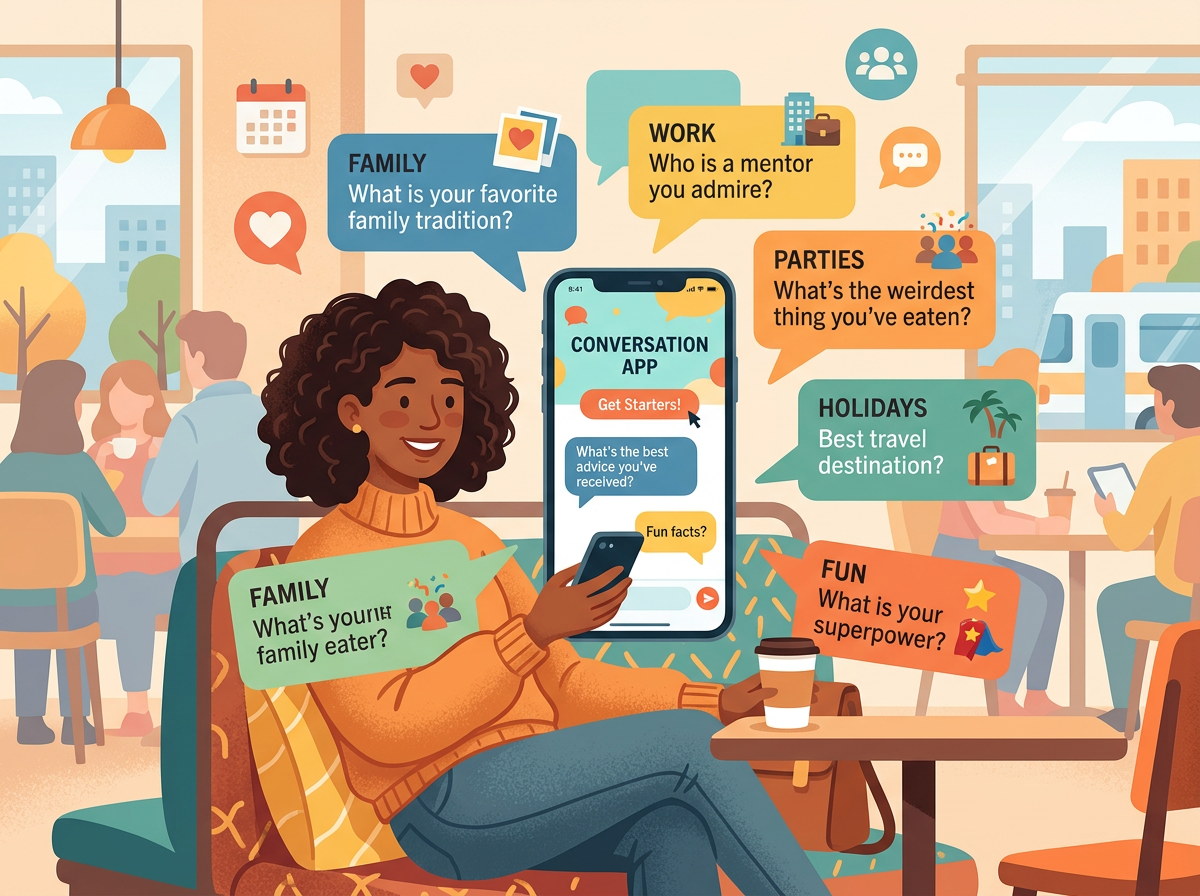
    Conversation cards offer organized, themed prompts that eliminate awkward silences and provide natural progression from lighter topics to deeper discussions. Physical cards can be shuffled and selected spontaneously, creating a sense of discovery and playfulness. Digital conversation starter apps take this concept further by offering:

    • Instant accessibility on mobile devices during visits
    • Regular content updates with fresh questions
    • Ability to save favorites for repeated use
    • No need to carry physical cards or remember topics
    • Progress tracking to build a personal archive of family stories

    Benefits of structured conversation tools include:

    1. Eliminates decision fatigue—no scrambling for questions during visits
    2. Ensures variety—avoids repeating the same prompts week after week
    3. Provides natural progression—many collections move from light to deeper topics
    4. Creates tangible results—saved questions become a family history archive
    5. Reduces caregiver anxiety—knowing you have meaningful questions ready

    For maximum effectiveness, select conversation themes that match your parent’s energy levels and current cognitive state. Follow conversational tangents naturally—the question is a starting point, not a rigid script. Return to prepared prompts only if conversation stalls or becomes repetitive.

    Memory Triggers: Using Photos, Music, and Objects to Deepen Dialogue

    Multi-sensory props and mementos significantly enhance memory access and emotional engagement during reminiscence conversations. Familiar scents, music, photographs, and keepsakes activate memory networks more powerfully than words alone, creating opportunities for vivid recall even in moderate dementia stages.

    Photo-based conversations provide concrete anchoring points that reduce cognitive load:

    • "Tell me about the people in this picture."
    • "What was happening the day this was taken?"
    • "Where was this photograph taken? What do you remember about that place?"
    • "What were you feeling in this moment?"

    Music as a memory bridge proves especially powerful because musical memory often remains intact even when other capacities fade. Songs from your parent’s youth and young adulthood can trigger detailed memories while improving mood:

    • "What does this song make you remember?"
    • "Did you and your friends have a favorite song?"
    • "What music played at your wedding?"
    • "Tell me about concerts or dances you attended."

    Handling keepsakes and heirlooms provides tactile grounding for conversations:

    • Physically passing objects while discussing their history connects narrative to tangible reality
    • "Tell me about how you acquired this piece."
    • "Who gave this to you? What did they mean to you?"
    • "What memories does this object bring back?"

    Creating memory boxes or albums offers long-term structure for ongoing reminiscence. Curated collections of meaningful items provide ready conversation starters for future visits while building a tactile family archive. Consider including:

    • Photographs with labels or captions
    • Small keepsakes or mementos
    • Dried flowers or pressed memorabilia
    • Fabric swatches from significant clothing
    • Copies of important documents or letters

    Active Listening Techniques: Making Every Conversation Count

    The quality of your attention determines the quality of the conversation. Active listening techniques—making eye contact, showing genuine curiosity, observing nonverbal cues, and practicing patience—create an environment where your parent feels safe to share memories, however fragmented they may be.

    "Active listening, which involves making eye contact, showing curiosity, noting nonverbal cues, and other techniques, fosters respect and understanding. Whether you’re reminiscing together or recording stories for the future, these questions can strengthen bonds and preserve family history."

    — A Place for Mom

    Core active listening skills for reminiscence conversations include:

    Non-verbal engagement:

    • Maintain comfortable eye contact without staring
    • Lean forward slightly to show interest
    • Nod or smile in response to emotional content
    • Match your facial expression to the mood of the story

    Patience strategies:

    • Allow silence for processing—resist the urge to fill every pause
    • Don’t interrupt or complete sentences
    • Give extra time for responses, knowing processing may be slower
    • Accept repetitions without correction or frustration

    Validation techniques:

    • "That sounds wonderful."
    • "Tell me more about that."
    • "I’d love to hear that story."
    • Respond to the feeling behind the story even when details are unclear

    Reading nonverbal cues:

    • Note when your parent is engaged, tired, frustrated, or emotionally moved
    • Adjust conversation topics based on their responses
    • Recognize when they’ve reached their cognitive limit for the day
    • Watch for signs of pleasure, agitation, or withdrawal

    Presence and focus:

    • Put away phones and minimize distractions
    • Give full attention to honor the importance of their story
    • Physical touch—holding hands or gentle arm touches—can provide comfort
    • Remember: emotional connection matters more than factual accuracy

    Handling Difficult Moments: When Memory Fades or Emotions Overwhelm

    Reminiscence conversations sometimes trigger sadness, frustration, or grief—both for your parent and for you. These difficult moments don’t indicate failure; they’re part of the process. Having strategies for navigating emotional challenges helps you maintain connection while honoring your parent’s emotional experience.

    When memories are inaccessible, shift focus from facts to feelings:

    • Instead of "Who was at that party?" try "How did those gatherings make you feel?"
    • Focus on preferences and opinions rather than specific events
    • Accept that some memories may be temporarily or permanently inaccessible
    • Move to different topics or sensory triggers if one path is blocked

    Managing emotional overwhelm requires sensitivity to your parent’s capacity:

    • It’s okay if reminiscence brings tears—emotional release is often therapeutic
    • Have a few lighter, positive conversation topics ready for redirection
    • Acknowledge emotions without trying to immediately fix them: "That sounds like it was really meaningful to you."
    • Know when to pause and return another day if emotions become too intense

    Redirecting gently preserves dignity while avoiding distress:

    • "I’d love to hear more about that sometime soon—tell me, what was your favorite holiday tradition?"
    • Use positive redirection rather than abrupt topic changes
    • Validate the emotion before shifting: "That sounds like a difficult time. You mentioned earlier that music helped you through challenges—tell me about your favorite songs from that period."

    When repetition occurs, respond as if hearing it for the first time:

    • Parents often repeat the same stories as a form of self-soothing
    • Each retelling provides comfort, regardless of your familiarity
    • Find new aspects to appreciate: "I hadn’t thought about how brave that was before."
    • Accept that repetition is part of the process, not a problem to solve

    Handling factual confusion without correction preserves the emotional truth:

    • Don’t correct confused details about people, places, or timelines
    • Validate the emotion and ask gentle follow-up questions
    • "Tell me more about that person" rather than "That’s actually your sister, not your mother"
    • Focus on the feeling behind the story, not its factual accuracy

    Silence as connection sometimes speaks louder than words:

    • Sitting together without conversation—perhaps holding hands or listening to music—is its own form of communication
    • Shared presence without pressure to speak can be profoundly meaningful
    • Accept that some visits will be quieter than others
    • Sometimes the best conversation is no conversation at all

    Making Meaningful Conversation a Regular Practice

    The research on reminiscence therapy reveals benefits that extend beyond individual conversations to transform the entire caregiving relationship. For caregivers, structured reminiscence reduces pre-death grief and burnout while strengthening emotional bonds. For aging parents, these conversations combat isolation, maintain sense of self, and create opportunities for joy despite cognitive decline.

    Starting small creates sustainable habits:

    • Begin with 10-15 minutes of focused conversation during regular visits
    • Choose just one or two conversation starters per session
    • Gradually build duration as both you and your parent become comfortable
    • Track which questions spark the best responses to build a personalized toolkit

    Using prepared conversation starters provides multiple benefits:

    • Reduces anxiety about what to say during visits
    • Ensures quality interactions even when you’re tired or stressed
    • Provides variety beyond the same repeated questions
    • Creates opportunities for discovery rather than routine

    Quality matters more than quantity:

    • Brief, meaningful exchanges create lasting impact
    • A single rich conversation outweighs many superficial ones
    • Focus on emotional resonance, not conversation length
    • Some days will be better than others—that’s normal and acceptable

    Involving other family members amplifies benefits:

    • Siblings, grandchildren, and other relatives can participate in reminiscence conversations
    • Group sessions create shared experiences and broader family connection
    • Different family members may trigger different memories and perspectives
    • These conversations become part of your family’s collective story

    Honoring legacy happens through conversation, not perfection:

    "Make conversations meaningful by asking open-ended questions about their interests, memories, and opinions rather than just discussing health or practical matters."

    — Forbes

    Your parent’s legacy is being honored through these conversations regardless of memory completeness. The stories you gather now—even fragmented, even sometimes factually confused—become the stories future generations will tell about your family’s resilience and love.

    Family conversation starters provide the bridge between who your parent was and who they remain, creating space for connection that transcends cognitive decline. Every question asked with curiosity and patience becomes an act of love, preserving not just memories but the emotional bond that defines your relationship.

    The conversations you have today become tomorrow’s family history. Start with one question, one photograph, one song—and discover what treasures await in your parent’s memory.

    Adult daughter sitting beside her elderly mother in a cozy living room, holding a photo album and having an engaging conversation in warm afternoon light

  • Conversation Starters for Networking Events That Actually Build Professional Relationships

    Conversation Starters for Networking Events That Actually Build Professional Relationships

    You walk into a crowded conference hall, name tag in place, scanning the room for someone approachable. The professional before you introduces themselves, shakes your hand, and waits for the inevitable question: "So, what do you do?" Within minutes, the conversation stalls, and you’re both glancing around the room for your next interaction. Sound familiar? This scenario plays out at networking events everywhere, and it represents one of the biggest missed opportunities in professional development. The quality of your conversation starters determines whether you collect business cards that end up in the trash or build relationships that transform your career.

    Why Your Networking Success Depends on Better Conversation Starters

    The statistics on professional networking are staggering: 72% of high-earning professionals link their career success to who they know, according to a Ladders survey cited by SUCCESS Magazine. Even more compelling, research from the University of Minnesota CCAPS reveals that 70-85% of career opportunities are found through professional connections and networking. These numbers aren’t just impressive—they represent the reality of professional advancement in 2026. Your ability to initiate and sustain meaningful conversations directly correlates with your access to opportunities, mentorship, and career growth.

    Diverse professionals engaging in authentic conversations at a modern networking event, with small groups connecting naturally in a warm conference setting

    The difference between forgettable networking interactions and memorable connections often comes down to one simple factor: the questions you ask. Generic questions like "What do you do?" lead to surface-level exchanges that both parties forget by the time they reach the hors d’oeuvres table. Meanwhile, thoughtful, strategic conversation starters signal genuine interest, demonstrate professional sophistication, and open doors to authentic dialogue.

    Effective networking focuses on quality over quantity—targeting a few meaningful conversations rather than attempting to meet everyone in the room. The professionals who derive the most value from networking events aren’t those who collect the most business cards; they’re the ones who leave with two or three genuine connections rooted in substantive conversation. This guide provides research-backed conversation starters that transform awkward networking events into opportunities for building lasting professional relationships.

    The Science Behind Networking Questions That Build Real Connections

    What makes certain conversation starters effective while others fall flat? The answer lies in the psychology of dialogue and human connection. Research from ResuFit demonstrates that open-ended questions create meaningful exchanges, whereas closed-ended inquiries produce one-word answers that halt momentum.

    "Generic queries like ‘What do you do?’ lead to surface-level exchanges, while thoughtful questions signal genuine interest and respect. Open-ended inquiries such as ‘What inspired your career path?’ create meaningful dialogue rather than one-word answers." — ResuFit Blog

    Strategic networking questions serve multiple purposes beyond merely starting a conversation. According to the Cvent Event Blog, well-crafted questions should:

    "Signal your professional interests and values, Establish trust in your sincerity and value as a connection, Make room for deeper engagement that goes beyond an elevator pitch."

    The most valuable networking conversations are those that feel authentic to both parties. The University of Minnesota CCAPS emphasizes this principle:

    "The most valuable networking activities are authentic, mutually beneficial, and between people who already know each other. As you interact with folks during professional conferences, at the gym, or even in line at your favorite coffee shop, think more about how you can support or help them rather than focusing on how the interaction can benefit you."

    Preparation significantly impacts conversation quality. SUCCESS Magazine recommends having two or three questions ready before attending networking events—a strategy that boosts confidence and increases the likelihood of engaging dialogue. This preparation shifts your mental energy from worrying about what to say to focusing on authentic connection and mutual value exchange.

    Professional Journey Conversation Starters That Reveal Stories

    Learning about someone’s professional journey creates opportunities for meaningful connection that transcend job titles and organizational affiliations. These conversation starters invite storytelling, which naturally builds rapport and reveals shared experiences.

    Core Professional Journey Questions

    • "What inspired your career path?" – This question creates space for meaningful personal and professional context, allowing the other person to share their motivation, pivotal moments, and the reasoning behind their professional choices.

    • "What’s been the most surprising aspect of your role?" – This inquiry reveals genuine insights about their day-to-day experience, often uncovering challenges and rewards that aren’t apparent from the outside.

    • "What project are you most proud of this year?" – Highlighting achievements allows professionals to share their values and what matters most to them in their work, creating natural opportunities for follow-up discussion.

    • "How did you get started in this industry?" – Origin stories often reveal shared experiences, common challenges, or unexpected entry points that build immediate connection through relatability.

    • "What’s the best career advice you’ve ever received?" – This question frequently leads to valuable wisdom exchange and demonstrates your respect for their experience and insight.

    These questions naturally create opportunities for follow-up and continued conversation. When someone shares a story about their career path, their response provides multiple hooks for deeper discussion—whether about specific challenges they faced, mentors who guided them, or pivotal decisions that shaped their trajectory. Particularly effective for introverts who prefer deeper one-on-one conversations over navigating large groups, professional journey questions allow for substantive dialogue without requiring extensive small talk.

    Icebreaker Questions That Uncover Shared Values and Interests

    Finding common ground beyond immediate work topics forms the foundation of lasting professional relationships. These conversation starters reveal alignment in values, goals, and working styles—elements that predict whether a professional connection will develop into a meaningful relationship.

    Value-Based Icebreaker Questions

    Conversation Starter What It Reveals Follow-Up Opportunities
    "What do you enjoy most about the types of events you attend?" Networking goals and event preferences Discussion about industry communities, preferred learning formats
    "What’s a cause or initiative you’re passionate about right now?" Core values and motivations Shared causes, corporate social responsibility initiatives
    "What’s one professional skill you’re currently developing?" Growth mindset and learning interests Resource sharing, learning recommendations, mutual development
    "What type of projects energize you the most?" Work preferences and passions Project collaboration discussion, role alignment exploration
    "What’s your favorite part of your company culture?" Work environment values Culture best practices, organizational fit discussions
    "What trend in our industry are you most excited about?" Forward-looking perspectives and interests Trend analysis, future industry developments, innovation discussion

    Two professionals having a deep, meaningful conversation over coffee in a modern cafe, showing genuine engagement and active listening

    These conversation starters transform networking from transactional to relationship-focused by uncovering the human elements behind professional personas. When you discover shared values—whether around sustainability initiatives, mentorship, or innovation approaches—you create a foundation for ongoing connection that extends beyond the initial event.

    For example, if a contact mentions they’re passionate about supporting emerging professionals in your field, this immediately creates an opportunity for mutual value exchange: you might connect them with motivated junior colleagues, while they might offer mentorship or advice that accelerates your career development. These win-win scenarios emerge from thoughtful icebreaker questions that reveal what truly matters to the people you meet.

    Industry-Specific Networking Questions That Demonstrate Expertise

    Industry-specific conversation starters serve dual purposes: they demonstrate your knowledge and understanding of the field while opening doors to deeper technical discussions. These questions work exceptionally well for establishing credibility and creating peer-to-peer connections rather than novice-expert dynamics.

    Strategic Industry-Focused Questions

    • "What’s the biggest challenge facing our industry right now?" – This question shows strategic thinking and market awareness while inviting substantive discussion about current landscape pressures.

    • "How has your approach to [industry-specific process] evolved over the past few years?" – Reveals experience level, adaptability, and willingness to discuss methodologies rather than just outcomes.

    • "What’s your take on [current industry trend or development]?" – Invites expert opinion and analysis, positioning both parties as knowledgeable professionals with valuable perspectives.

    • "What tools or methods have transformed how you work in this field?" – Practical knowledge exchange that often yields actionable insights and recommendations.

    • "What’s one misconception people outside our industry often have?" – Creates insider connection through shared understanding and common frustrations with external perceptions.

    These questions position you as a knowledgeable peer rather than a novice seeking basic information. The dynamic shifts from teaching (which can feel one-sided) to mutual exploration (which feels like collaboration). When both professionals recognize each other’s expertise, the conversation naturally progresses toward substantive discussion, potential collaboration opportunities, or valuable resource sharing.

    Consider the difference between asking "What does your company do?" versus "How has AI adoption changed your approach to customer segmentation in fintech over the past year?" The first question requires the other person to deliver a rehearsed elevator pitch. The second invites genuine dialogue about industry evolution, positioning both parties as informed practitioners exploring changes together.

    Conversation Starters for Networking with Senior Leaders and Executives

    Initiating conversations with senior professionals requires nuance—balancing respect for their experience with authentic curiosity about their insights. These conversation starters create opportunities to learn from established leaders while maintaining appropriate professional boundaries.

    Executive-Level Conversation Starters

    • "What leadership lesson took you the longest to learn?" – Invites wisdom sharing while showing respect for their journey and the challenges they’ve navigated.

    • "What’s your perspective on how the industry has evolved since you started?" – Leverages their experience and historical perspective, often yielding valuable context about industry cycles and evolution.

    • "What initiatives are you most excited about in your current role?" – Focuses on current work and enthusiasm, allowing executives to share what drives them rather than just listing accomplishments.

    • "What do you look for when mentoring or supporting emerging professionals?" – Opens relationship-building opportunities by demonstrating your own commitment to growth while inviting guidance.

    • "What advice would you give your younger self starting out in this field?" – Combines respect with vulnerability, often prompting executives to share meaningful reflections about their professional evolution.

    The key to executive networking is framing questions that demonstrate professional sophistication while avoiding overly casual language or presumptive familiarity. These questions signal that you value their experience while establishing your own professional curiosity and commitment to growth. When executives perceive genuine interest in learning from their journey rather than merely extracting favors or contacts, they’re far more likely to engage authentically and potentially offer ongoing mentorship or guidance.

    Team Building Conversation Starters for Workplace Networking

    Internal networking and team building require a different approach than external professional events. These conversation starters strengthen organizational relationships by bridging gaps between colleagues, uncovering collaboration opportunities, and building cross-functional understanding.

    Internal Networking Conversation Starters

    • "What’s a project you’d love to collaborate on but haven’t had the chance yet?" – Identifies collaboration opportunities and reveals interests that might not be apparent from someone’s formal role.

    • "What’s something you’re working on that you wish more people knew about?" – Promotes cross-team awareness and visibility for initiatives that might benefit from broader organizational support.

    • "How do you prefer to approach problem-solving in your role?" – Reveals working styles and preferences, improving future collaboration by understanding how colleagues think and operate.

    • "What’s a skill you have that people might not expect?" – A fun way to discover hidden talents within the organization while learning more about colleagues’ diverse backgrounds.

    • "What’s been your favorite moment or project since joining the company?" – Encourages positive reflection and shared experiences, building organizational culture through appreciation.

    • "What tools or resources do you wish more people here knew about?" – Practical value-sharing that improves organizational efficiency while positioning you as someone interested in collective success.

    Team building questions should strengthen internal networks while maintaining professional focus. Unlike external networking, where relationship-building often starts with establishing basic trust, internal networking leverages existing organizational context. The goal shifts from introduction to deepening understanding and uncovering opportunities for collaboration that might not emerge through normal workflows. These conversations often reveal complementary skills, shared challenges across departments, and opportunities to streamline processes through better cross-functional communication.

    How to Make Your Networking Conversations Lead to Meaningful Follow-Ups

    Exceptional conversation starters mean little without strategies for ensuring great conversations translate into lasting professional relationships. The following approaches maximize the likelihood that networking interactions develop into ongoing connections.

    Strategic Follow-Up Framework

    Listen for Natural Follow-Up Hooks

    Professional at modern workspace following up on networking connections via smartphone and laptop, representing strategic relationship maintenance

    During conversations, listen for specific mentions of projects, challenges, or interests that become natural reasons to continue the dialogue. When someone mentions an upcoming product launch, a hiring challenge, or an industry conference they’re attending, you’ve been handed a logical follow-up opportunity.

    Create Specific Connection Points

    Rather than generic follow-up like "It was great meeting you," reference specific parts of your conversation to demonstrate genuine listening and investment in the relationship:

    "I’d love to hear more about [specific topic they mentioned] – would you be open to connecting for coffee or a brief call next week?"

    This approach creates a clear reason for follow-up rather than leaving the connection vague and indefinite.

    Set Measurable Networking Goals

    SUCCESS Magazine recommends preparation with specific, measurable objectives:

    "Preparation builds confidence for successful networking. As a beginner, you should set specific and measurable goals, such as meeting three new contacts, learning about emerging industry trends and connecting with a professional of interest."

    These goals shift focus from anxiety about quantity to intentionality about quality.

    Focus on Mutual Benefit

    The University of Minnesota CCAPS emphasizes relationship-oriented networking:

    "As you interact with folks during professional conferences, at the gym, or even in line at your favorite coffee shop, think more about how you can support or help them rather than focusing on how the interaction can benefit you."

    When your follow-up emphasizes how you might support their goals—whether through sharing resources, making introductions, or providing relevant information—you demonstrate authentic interest in their success rather than transactional networking focused solely on your own advancement.

    Using Convo Cards to Transform Your Networking Experience

    Preparation significantly impacts networking success, but remembering strategic conversation starters in the moment presents a challenge. Convo Cards offers a practical solution for professionals who want consistent access to high-quality conversation starters without memorization or awkward last-minute preparation.

    How Convo Cards Supports Professional Networking

    Curated Professional Question Packs

    Access conversation starter packs designed specifically for professional networking events, team building activities, and industry conferences. These curated collections eliminate the pressure of crafting questions on the spot while ensuring you always have thoughtful, strategic options available.

    Mobile-First, Platform-Agnostic Design

    The web-based platform works seamlessly on any device—smartphone, tablet, or laptop—meaning conversation starters are always available whether you’re at a formal conference, an informal meetup, or an internal team building session. No app downloads required; simply access the platform through your browser and start conversations with confidence.

    Immediate Access Without Barriers

    Start using conversation cards immediately—no account required to begin exploring basic conversation starters. This frictionless entry means you can enhance your networking approach at your next event, even if you discovered Convo Cards that morning.

    Premium Features for Networking Professionals

    For professionals who rely heavily on networking for career advancement, premium access ($4.99/year) unlocks:

    • 18+ diverse question packs, including professional networking themes and team building collections
    • Ability to save favorite conversation starters for quick reference during events
    • Progress tracking that helps you identify which questions generate the best responses
    • Early access to new question packs and regular content updates

    This ultra-affordable pricing—particularly compared to expensive physical card sets ($20-30) or premium networking apps ($18-70/year)—makes professional conversation enhancement accessible at any career stage.

    Confidence-Building Through Preparation

    Like having a networking coach in your pocket, Convo Cards provides the preparation that SUCCESS Magazine identifies as crucial for networking success. Instead of arriving at events anxious about what to say, you enter with ready-to-use conversation starters that demonstrate professional sophistication and authentic interest in meaningful connection.

    Ready to Network with Confidence? Your Next Steps

    The research is clear: 70-85% of career opportunities come through professional connections, meaning your conversation quality directly impacts your access to advancement, mentorship, and professional fulfillment. The difference between a networking event that yields lasting relationships and one that produces only discarded business cards often comes down to preparation and the quality of questions you ask.

    Take Action Today

    1. Prepare strategically – Choose 2-3 conversation starters from this guide before your next networking event. SUCCESS Magazine confirms this simple preparation significantly boosts confidence and conversation quality.

    2. Focus on quality, not quantity – Set a specific goal for your next event: aim for 2-3 meaningful conversations using these conversation starters rather than attempting to meet everyone in the room.

    3. Follow up authentically – Listen for natural follow-up hooks during conversations and reference specific topics when you reach out, demonstrating genuine investment in the relationship.

    4. Try Convo Cards – Access basic conversation starters for free, or upgrade to premium for full networking question packs at just $4.99/year—a minimal investment for significantly improved networking outcomes.

    Remember that authentic networking is about mutually beneficial relationships, not just advancing your own goals. As the University of Minnesota CCAPS emphasizes, focus on how you can support and help others rather than what you can extract from every interaction. The professionals who build the strongest networks aren’t those who view connections as transactions—they’re the ones who approach networking with curiosity, generosity, and genuine interest in creating value for others.

    Your next networking event represents an opportunity: not just to collect contacts, but to plant seeds for meaningful professional relationships that will support your career growth for years to come. Prepare with thoughtful conversation starters, approach each interaction with authentic curiosity, and watch as awkward small talk transforms into dialogue that matters.

  • Conversation Tools That Help Introverts Thrive in Social Situations

    Conversation Tools That Help Introverts Thrive in Social Situations

    You’ve felt it before—that moment when you walk into a room full of people and your mind goes blank, searching desperately for something to say while everyone else seems to navigate conversation effortlessly. For 38% of adults globally who identify as introverts, this isn’t an occasional challenge; it’s a weekly reality that transforms social opportunities from moments of connection into sources of anxiety and exhaustion.

    But what if the problem isn’t your social skills, but rather the tools you’re using?

    Understanding the Introvert’s Social Dilemma: Why Spontaneity Creates Stress

    The scale of introversion in modern society reveals that conversation challenges are far from niche concerns. Research indicates that 30-50% of the population identifies as introverts, with 25-40% of the U.S. population specifically classified as introverted. Globally, 38% of adults self-identify as introverts—nearly two-fifths of the population faces similar social challenges.

    A thoughtful person standing contemplatively at the edge of a warm social gathering, representing the introvert's experience of feeling overwhelmed by spontaneous social interactions while desiring connection.
    The tension between wanting to connect and feeling overwhelmed by spontaneous social interaction

    The statistics reveal a profound misalignment between how introverts prefer to communicate and what social situations demand:

    • 75% of introverts prefer deep conversations over small talk, yet most social situations prioritize surface-level exchange
    • 40% of introverts experience social fatigue weekly, indicating that energy-efficient conversation methods are crucial for wellbeing
    • 65% of introverts dislike networking events, highlighting the need for tools that reduce social friction in professional settings

    The core problem lies in how we structure social interaction. Unstructured conversation demands improvisational performance that exhausts introvert mental resources. Without frameworks to guide dialogue, introverts must simultaneously read social cues, generate responses, manage timing, and navigate group dynamics—all while managing the cognitive load of spontaneous topic generation.

    This isn’t a matter of skill deficiency. It’s a mismatch between how introverts process social information and the unstructured nature of most gatherings. Conversation starters and structured frameworks bridge this gap by providing the scaffolding that allows introverts’ natural strengths—depth, thoughtfulness, and active listening—to shine without the drain of constant improvisation.

    The Hidden Cost of Small Talk: How Unstructured Interaction Drains Your Social Battery

    The psychological demands of spontaneous conversation reveal why traditional social expectations create such difficulty for introverted individuals. Every unstructured social exchange requires constant mental processing across multiple domains simultaneously:

    Cognitive Demand Impact on Introverts
    Reading social cues Heightened sensitivity to nonverbal signals drains attention
    Generating responses Pressure to be interesting exhausts creative reserves
    Managing timing Anxiety about pauses creates mental overhead
    Tracking multiple threads Group conversations overwhelm processing capacity

    The fundamental challenge lies in the mismatch between introvert communication preferences and standard social expectations:

    "Introverts value depth over breadth: Unlike casual small talk, introverts tend to engage most deeply when a conversation has real substance. Questions that go somewhere beat questions that fill silence." — Science of People – 30 Great Conversation Starters For Introverts

    Small talk forces breadth over depth, asking introverts to engage repeatedly in their least preferred interaction style. Each spontaneous exchange drains mental energy because there’s no predictable framework to reduce cognitive load.

    This creates a compounding effect. As social fatigue accumulates throughout an event, the mental energy available to generate conversation topics decreases—making each subsequent interaction more difficult. The exhaustion paradox emerges: the more social interaction required, the less energy available to do it well.

    For introverts experiencing social anxiety, this effect intensifies. The pressure to be interesting and witty creates a performance cycle that exhausts reserves before the evening begins. Conversation starters break this cycle by removing the burden of topic generation, allowing mental energy to focus on connection rather than survival.

    How Conversation Starters Transform Social Interaction from Performance to Process

    The fundamental mechanism by which structured conversation frameworks work involves shifting mental load from improvisation to facilitation. This transformation addresses the core cognitive challenges that make unstructured interaction exhausting.

    Pre-planning conversations with scripts and templates significantly lowers cognitive demand:

    "Pre-planning conversations with scripts and templates significantly lowers the cognitive demand of spontaneous conversation. For anyone who finds in-the-moment interactions draining, including autistic, ADHD, or introverted individuals, having a prepared framework turns unpredictable social exchanges into manageable, structured interactions." — Tonen Blog – Social Anxiety Conversation Tips (2026)

    The key transformation occurs in three stages:

    1. Preparation reduces anxiety: When you know the conversation direction, your brain can focus on content rather than mechanics
    2. Structure enables depth: Having ready-to-use phrases reduces the burden of spontaneity by providing anxious minds something concrete to grasp
    3. Facilitation leverages strengths: Conversation starters transform social interaction from improvisational performance into structured, low-pressure engagement

    The role shift matters profoundly. Rather than performing as an interesting conversationalist, you become a facilitator of meaningful dialogue—a role that aligns with introvert strengths in listening, observation, and thoughtful inquiry:

    "Asking thoughtful questions transforms you from a participant who must perform into a facilitator of exploration—a role that aligns naturally with an introvert’s preference for observation and depth over performance and breadth." — Tonen Blog – Conversation Starters for Introverts

    This explains why icebreaker questions and conversation frameworks work so effectively. They provide predictability that allows introverts to engage authentically without the mental drain of constant topic generation and navigation.

    The Science of Conversation Frameworks: Why Preparation Beats Improvisation

    Cognitive load theory provides the scientific foundation for why structured conversation tools work so effectively. Prepared frameworks reduce mental processing demands by eliminating the need to generate topics spontaneously, freeing cognitive resources for genuine engagement.

    The neurological mechanism is straightforward: when your brain doesn’t need to allocate resources to "what should I say next?", it can redirect that capacity toward listening, processing, and responding meaningfully. This explains why prepared conversations feel less draining—they require less mental energy to initiate and maintain.

    The effectiveness of structured frameworks is well-documented:

    "Icebreakers are an underutilized tool, yet are so valuable to defeat social anxiety, warm up the group, and get everyone connected and engaged. To work successfully together, we need to know more than what is on a person’s business card." — CHART Hospitality Training Association

    Research indicates several consistent patterns:

    • The ‘Two Truths and a Lie’ icebreaker method specifically works because it creates clear rules and known expectations, removing ambiguity about conversation parameters
    • Scripts and templates significantly lower cognitive demand for anyone finding in-the-moment interactions draining
    • Open-ended questions that invite reflection create space for genuine engagement, while yes/no questions often produce one-word replies
    • Preparation allows for higher-quality responses because mental energy focuses on substance rather than survival

    The evidence supports what introverts experience intuitively: having a conversation framework transforms unpredictable social exchanges into manageable, structured interactions that enable authentic connection without exhaustion.

    "This classic icebreaker is one of the most effective conversation starters for introverts because it transforms social interaction from an improvisational performance into a structured, low-pressure game." — Tonen Blog – Conversation Starters for Introverts

    Conversation Cards for Introverts: How Digital Platforms Provide Social Structure

    Digital conversation cards represent a modern evolution of structured conversation tools, offering on-demand structure without carrying physical materials or memorizing scripts. These platforms address several specific challenges introverts face in social situations:

    A modern digital interface on a tablet displaying conversation starter cards with engaging questions, resting on a wooden table with coffee, illustrating how digital conversation tools provide structure and preparation.
    Digital conversation platforms transform intimidating social situations into manageable, structured interactions

    Digital Platform Advantages

    Accessibility: Mobile-first platforms like Convo Cards offer immediate access across devices, removing preparation friction and barriers. Your conversation toolkit lives in your pocket, available whenever needed without advance planning.

    Targeted Frameworks: Curated question packs organized by occasion (date nights, networking, family time) provide targeted conversation frameworks for specific situations. Rather than generic questions, you receive contextually appropriate prompts that match the social environment.

    Low-Pressure Access: No-account-required platforms allow spontaneous access without social commitment or signup anxiety. You can explore conversation starters without providing personal information or creating profiles.

    Personalization: Progress tracking and favorites features enable introverts to build personal conversation toolkits over time. Save questions that work well for you, creating a customized library of effective frameworks.

    Affordability: Many digital platforms offer pricing under $10/year, making conversation support accessible compared to expensive physical card sets or therapy options. This low barrier to entry means you can experiment without significant investment.

    Flexibility: Digital platforms enable instant topic pivots when conversations stall, without the awkward pause of searching for something to say. Simply pull up a new question and transition smoothly.

    The digital format particularly suits introvert preferences because it enables preparation without visible effort. You can review conversation starters privately before an event, building confidence in your frameworks without the anxiety of carrying physical cards or fumbling with notes.

    When Digital Conversation Cards Work Best

    • Networking events: Professional question packs bridge beyond business cards and surface-level introductions
    • First dates: Curated relationship questions create natural progression without awkward silences
    • Family gatherings: Themed questions navigate potentially sensitive topics with structure
    • Team building: Work-appropriate questions facilitate professional bonding without forcing vulnerability
    • Social parties: Occasion-specific questions provide conversation rescue when small talk stalls

    5 Proven Conversation Starter Frameworks That Help Introverts Shine

    Rather than relying on generic questions, effective conversation frameworks provide structured approaches that leverage introvert strengths. Here are five proven methods with specific application guidance.

    1. The Depth First Framework

    How it works: Start with meaningful questions about passions or perspectives rather than weather/weekend small talk.

    Example questions:

    • "What’s a topic you could talk about for hours without getting tired of it?"
    • "What’s something you’ve changed your mind about recently?"
    • "What project or goal are you most excited about right now?"

    Why it works for introverts: Jumping directly to substantive topics bypasses the draining small talk phase entirely. This framework honors the introvert preference for depth over breadth while creating natural conversation momentum.

    Best contexts: First meetings, dinner parties, one-on-one conversations where genuine connection is the goal.

    2. The Facilitator Approach

    How it works: Ask thoughtful questions that transform conversation from performance to exploration, leveraging introvert listening skills.

    Example questions:

    • "What’s your perspective on [current event or topic relevant to the context]?"
    • "How did you get interested in [their field, hobby, or area of expertise]?"
    • "What’s something people often misunderstand about [what they do]?"

    Why it works for introverts: This approach shifts you from performer to facilitator—a role that aligns with natural strengths in observation and inquiry. You become the person who creates space for others to share, which feels energizing rather than draining.

    Best contexts: Networking events, professional gatherings, situations where you want to make others feel valued while staying comfortable.

    3. The Story Exchange

    How it works: Share a brief personal anecdote, then invite the other person to share a similar experience—creates balanced depth.

    Example framework:

    1. Share a 30-second story about a specific experience
    2. Ask: "Have you had anything similar happen?"
    3. Follow up with genuine curiosity about details

    Why it works for introverts: The personal story reduces vulnerability risk (you’re sharing first) while establishing reciprocity. The structure creates predictable give-and-take without requiring sustained monologue.

    Best contexts: Building rapport, casual social settings, situations where you want to create connection without intense focus on either person.

    4. The Perspective Probe

    How it works: Ask "What’s your take on…" questions that invite substantive responses without requiring personal vulnerability.

    Example questions:

    • "What’s your take on how [industry trend] is changing things?"
    • "What’s your perspective on balancing [relevant challenge]?"
    • "How do you think [relevant topic] will evolve over the next few years?"

    Why it works for introverts: These questions invite thoughtful analysis without requiring personal disclosure. You can engage in intellectual discussion while maintaining personal boundaries.

    Best contexts: Professional networking, intellectual gatherings, conversations with new acquaintances where you want depth without over-sharing.

    5. The Prepared Portfolio

    How it works: Keep 3-5 go-to conversation starters mentally saved for different scenarios (networking, parties, one-on-one).

    Example structure:

    • Networking: "What’s the most interesting change you’re seeing in your field right now?"
    • Social: "What’s something you’ve read or watched recently that really stuck with you?"
    • One-on-one: "What’s a project or goal you’re working toward that excites you?"

    Why it works for introverts: Mental preparation eliminates the pressure of on-the-spot topic generation. Having ready frameworks reduces anxiety before conversations even begin.

    Best contexts: All situations—this is your foundational toolkit that reduces conversation anxiety across the board.

    The key is selecting frameworks that match your natural strengths: observation, analysis, depth, or listening. Each framework reduces cognitive load by providing clear parameters and expected conversation arcs.

    Mastering Networking Events with Icebreaker Questions (Without Social Exhaustion)

    Networking events represent particularly challenging terrain for introverts, with 65% reporting active dislike of these professional gatherings. The high-stakes nature—career advancement depends on making connections—compounds the standard social anxiety. Structured conversation approaches make networking manageable and even productive for introverted professionals.

    Pre-Event Preparation Strategies

    Arrive with 3-5 prepared icebreaker questions specific to the event context. This removes the pressure of on-the-spot topic generation and provides immediate conversation openers that feel natural rather than rehearsed.

    Event-specific preparation examples:

    • Industry conferences: "What’s the most interesting thing you’ve learned so far today?"
    • Professional mixers: "What brought you to this event? What are you hoping to get out of it?"
    • Company networking: "How long have you been with [company]? What’s your favorite part about working here?"

    During-Event Techniques

    Use structured games when appropriate. Transform networking from awkward mingling to guided interaction with frameworks like "Two Truths and a Lie" or simple question rotations. The structure creates natural conversation flow.

    Leverage conversation cards for ready-made professional questions. Digital platforms provide fresh prompts throughout the event, preventing repetitive conversations and enabling natural transitions between topics.

    Time-box your networking strategically:

    • Use conversation frameworks to make interactions efficient
    • Preserve energy for targeted high-value connections
    • Quality over quantity: structured conversations enable deeper connections with fewer people, rather than exhausting shallow contact with many

    Digital conversation platforms enable quick reference during event breaks—step out, review fresh questions, return renewed. This tactical recharge prevents the cumulative fatigue that typically sidelines introverts midway through networking events.

    Energy Conservation Strategies

    Strategy Implementation Energy Benefit
    Strategic deployment Save best conversation starters for high-value interactions Focuses energy where it matters most
    Time-boxing Engage for 30-60 minutes, then take breaks Prevents cumulative fatigue
    Digital refresh Step away, review new questions, return prepared Provides mental reset without leaving venue
    Quality targeting Use structured frameworks to create deeper connections Fewer, more meaningful interactions

    The networking paradox is that introverts often make better connectors once past initial barriers—conversation frameworks enable reaching that depth where introvert strengths shine.

    Building Meaningful Connections Without Forcing Extroverted Performance

    The fundamental irony of introvert social challenges is that introverts often excel at depth once conversations reach substantive levels. The barrier isn’t capability—it’s the exhausting small talk required to reach meaningful exchange.

    Two people engaged in genuine deep conversation in a cozy coffee shop setting, with warm beverages and attentive body language, demonstrating authentic connection through thoughtful dialogue.
    Conversation frameworks facilitate the authentic connections introverts crave—without the performance pressure

    Understanding this dynamic transforms how introverts approach conversation tools:

    "75% of introverts prefer deep conversations over small talk, making structured conversation frameworks particularly valuable for this demographic." — GitNux Introvert Statistics 2026

    The Small Talk Bypass Strategy

    Conversation starters provide a bridge from surface-level obligatory exchange to the meaningful dialogue introverts value. Rather than suffering through weather discussions and weekend recaps, structured questions jump directly to substance.

    Example progression:

    • Traditional approach: Weather → Weekend → Work → (Maybe eventually) Meaningful topics
    • Structured approach: Meaningful question → Substantive response → Natural depth

    The bypass works because most people actually prefer deeper conversation—they default to small talk simply because it’s the established social pattern. When someone breaks the pattern with genuine curiosity, the relief is often mutual.

    The Authentic Connection Paradox

    Having prepared frameworks allows introverts to bypass exhausting small talk while still maintaining social smoothness. The structure feels artificial initially, but creates more authentic connection than unscripted awkwardness:

    • Preparation is visible: People recognize genuine interest more than reheated questions
    • Depth attracts depth: Meaningful questions draw thoughtful responses from others who also crave substance
    • Momentum builds naturally: Once conversations reach substance level, they sustain themselves with less cognitive input

    Digital Tool Advantages for Authentic Connection

    Asynchronous preparation enables introverts to review questions before events, arriving ready for substantive exchange. You’re not reading from a script—you’ve prepared frameworks that allow flexibility within structure.

    Introverts excel at depth once the conversation reaches substance level; conversation cards accelerate reaching that meaningful depth without the drain of preliminary small talk.

    The paradox resolution: Using structured questions feels artificial initially, but creates more authentic connection than unscripted awkwardness. The key is recognizing that preparation enables authenticity by removing the anxiety that masks your genuine self.

    Protecting Your Social Battery: Strategic Conversation Management

    The most effective conversation tools for introverts aren’t just about facilitating dialogue—they’re about managing energy strategically. Frameworks that work without respect to energy conservation ultimately fail; those that reduce cognitive drain while enabling meaningful connection create sustainable social engagement.

    Energy-Efficient Conversation Practices

    Use conversation frameworks to reduce cognitive drain—prepared questions require less mental energy than spontaneous generation. The mental energy saved on topic generation can be redirected toward genuine engagement.

    Strategic deployment: Save your best conversation starters for high-value interactions rather than using energy on low-stakes exchanges. Not every conversation deserves your full toolkit—match framework complexity to relationship potential.

    Time-limit framework use: Engage with conversation cards for 30-60 minutes, then take a break to recharge before continuing. Sustainable social engagement operates in cycles rather than constant output.

    Digital platforms enable discreet question review during events—step away briefly, refresh your mental toolkit, return prepared. This tactical refresh prevents the progressive fatigue that typically limits introvert social endurance.

    Building Your Personal Conversation Library

    Develop a personalized conversation starter library that aligns with your interests and values, making conversations energizing rather than draining. Generic questions feel performative; tailored questions that genuinely interest you create natural enthusiasm.

    Library organization by context:

    • Professional: Industry trends, work challenges, career path questions
    • Social: Media recommendations, hobby discussions, perspective questions
    • Relationship: Values exploration, experience sharing, future vision
    • Family: Memory sharing, perspective gathering, generational bridge-building

    Quality over quantity: Use structured frameworks to create fewer but more meaningful connections, preserving overall energy. The goal isn’t meeting everyone—it’s connecting genuinely with the right people.

    Social Fatigue Reduction

    With 40% of introverts experiencing social fatigue weekly, conversation tools offer a practical intervention:

    Framework-driven interaction reduces the cumulative drain of constant improvisation, extending social endurance.

    Predictable conversation patterns lower baseline anxiety, reducing the energy cost of simply being present in social situations.

    Structured depth creates meaningful connection that feels energizing rather than depleting—substantive conversation is less draining than sustained small talk precisely because it engages rather than performs.

    The energy management principle is straightforward: conversation frameworks reduce cognitive overhead, allowing introverts to engage socially within sustainable energy budgets rather than exhausting themselves through improvisation.

    From Awkward to Authentic: Real Stories of Introverts Thriving with Conversation Tools

    The journey from social anxiety to confident engagement isn’t about transforming personality—it’s about providing tools that allow authentic self-expression to emerge without performance pressure. Conversation tools don’t make you fake; they provide structure that allows your authentic thoughtful self to emerge naturally.

    The Preparation Paradigm Shift

    Preparation is a strength, not weakness: Athletes, speakers, and leaders all use frameworks; conversation deserves the same approach. We wouldn’t expect athletes to perform without training or speakers to present without preparation—why expect conversation to be the only social skill that operates best without preparation?

    Structured conversation preparation is simply recognizing that social interaction, like any skill, benefits from practice and framework. The authenticity comes through in how you use frameworks, not in the frameworks themselves.

    Starting Small: Implementation Strategy

    Start with one conversation starter at your next gathering, observe how it changes the interaction dynamic, build from there. This incremental approach prevents overwhelm while allowing experimentation with different frameworks.

    Observe the pattern shift: Notice how structured questions transform group dynamics, often creating relief not just for you but for others who also find unstructured socializing draining. Many people welcome the direction that conversation tools provide.

    Build your confidence: Success with one framework builds confidence for broader application. Each positive experience reinforces the value of preparation over improvisation.

    Low-Risk Experimentation

    Digital platforms like Convo Cards offer low-risk experimentation with freemium access—test structured conversation without financial commitment. This removes barriers to trying conversation frameworks while providing access to professional-grade tools.

    The gradual progression:

    1. Experiment: Try one conversation starter in a low-stakes situation
    2. Observe: Notice the impact on conversation quality and your energy levels
    3. Expand: Build your toolkit as you discover what works for your communication style
    4. Integrate: Make conversation frameworks a natural part of your social approach

    The Transformation Possibility

    The shift from dreading social events to anticipating meaningful conversation is possible with the right preparation tools. The change isn’t in your personality—it’s in your approach to social interaction.

    Your introvert traits—depth, thoughtfulness, listening skills—become advantages when conversation structure reduces performance pressure. These aren’t liabilities to overcome; they’re strengths that flourish in the right conversational environment.

    The shared experience: Nearly 40% of adults share your introversion; conversation tools are designed for this massive audience, not niche needs. You’re not alone in finding unstructured conversation draining, and you’re not alone in benefiting from structured frameworks.

    The Authentic Self Through Structure

    The ultimate irony of conversation tools is that they enable authenticity by reducing the performance pressure that masks your genuine self. When you’re not exhausted by constant improvisation, your natural thoughtfulness, curiosity, and depth emerge naturally.

    Conversation starters and structured frameworks aren’t about becoming someone else—they’re about becoming more fully yourself in social situations, with the support that allows your natural communication preferences to shine without the drain of unstructured interaction.

    The tools are simple, but the transformation is profound: from dreading social events to navigating them with confidence, from exhausting small talk to energizing depth, from hiding your introvert nature to leveraging it as a strength. Conversation frameworks make this possible—and the accessibility of digital platforms means these tools are available to anyone who needs them, without barrier or stigma.

    Your authentic self doesn’t need to perform to be valuable in conversation. It just needs the right framework to emerge naturally.

  • Screen Free Family Dinner Rituals That Reconnect Busy Households

    Screen Free Family Dinner Rituals That Reconnect Busy Households

    Screen Free Family Dinner Rituals That Reconnect Busy Households

    The average American family spends fewer than 40 minutes per day actually talking to each other. With work schedules, extracurricular activities, and digital distractions competing for attention, dinner often represents the only window where everyone is in the same room together. Yet research shows only 1 in 4 families report consistently screen-free meals, while 57% of parents admit someone at their table is device-distracted during dinner. The very moments that should strengthen family bonds are being silently eroded by the persistent glow of smartphones and tablets.

    The Hidden Cost of Screen Time at Dinner: Why Your Family Meals Are Suffering More Than You Think

    The impact of devices on family meal quality extends far beyond missed conversation opportunities. When phones are present during meals, participants feel more distracted and enjoy their time with friends and family significantly less than those who put phones away, according to a study published in the Journal of Experimental Social Psychology. The mere presence of a device—even silenced and face down—creates what researchers call a "psychological presence" that divides attention and diminishes the quality of social interactions.

    A warm family of four enjoying a screen-free dinner together, engaged in animated conversation around a dining table with soft golden lighting
    The difference is palpable: families who disconnect from devices report greater enjoyment and deeper connection during meals.

    Consider what’s at stake: Dinner represents the primary opportunity for meaningful family connection in most households. When screens intrude, they disrupt the specific type of bonding that makes family dinners uniquely valuable for child development. The conversation flows less freely. Emotional cues are missed. The spontaneous moments that build family culture—the inside jokes, the shared revelations, the quiet admissions—get crowded out by notifications and scrolling habits.

    Perhaps most concerning: Teenagers actually prefer eating with parents over eating alone in front of screens or with peers when given the genuine choice, contrary to common parental assumptions about adolescent independence. The research reveals that even as teens push for autonomy, they secretly value these connection rituals—provided they’re genuinely engaging rather than forced or judgmental.

    The Science of Connection: What Happens When Families Eat Together Without Devices

    The benefits of consistent, device-free family dinners extend far beyond pleasant conversation. Columbia University’s National Center on Addiction and Substance Abuse found compelling evidence that kids who eat dinner with their parents five or more days per week are less likely to use drugs, make healthier food choices, and perform better in school. These aren’t marginal improvements—researchers identified substantial, measurable differences in outcomes correlated directly with family meal frequency.

    Split-screen illustration contrasting disconnected dining with devices on the left against connected, device-free family dinner on the right

    "Kids who eat dinner with their parents five days a week or more are less likely to use drugs, make healthier food choices, and perform better in school." — National Center on Addiction and Substance Abuse at Columbia University, via Feeding America

    Common Sense Media’s research on device-free dinners revealed additional benefits beyond the immediate meal: better nutrition, improved focus at home, and fewer problems at school. The Harvard Family Dinner Project further documented that frequent meaningful dinner conversations predict stronger vocabulary development, better academic performance, and lower substance use rates that persist through adolescence.

    What makes these outcomes possible isn’t the food itself—it’s the quality of conversation. The American Psychological Association found that the quality of small daily conversations serves as a stronger predictor of relationship satisfaction than frequency of dates, vacations, or grand gestures. When families protect dinner time from digital intrusion, they create space for precisely the type of consistent, low-stakes interaction that builds lasting connection.

    The top three reported benefits of family mealtime consistently emerge across studies: stress reduction, connecting with others, and taking time to slow down. These aren’t luxuries—they’re fundamental psychological needs that device-free dinners uniquely fulfill in our hyper-connected world.

    From Small Talk to Real Talk: Why "How Was Your Day?" Isn’t Working

    Every parent has experienced the conversational dead-end that follows "How was your day?" The typical response—"Fine" or "Okay"—shuts down dialogue before it begins. Yet families continue relying on this generic question, not realizing that the problem isn’t disinterest but poor questioning technique.

    Why do generic questions fail? They’re too broad, too easily answered with minimal information, and they signal that the asker hasn’t given much thought to the conversation. They become ritualistic rather than genuinely curious. Children and teens quickly learn that one-word answers satisfy the requirement without inviting deeper engagement.

    Psychologist Eileen Kennedy-Moore offers a research-backed alternative: specific, elaborative questions that require detailed responses and help conversation flow naturally. Instead of "How was your day?", try "What games did you play at recess today?" or "What was the funniest thing that happened in math class?" These questions narrow the focus enough to make answers concrete while remaining open-ended enough to invite storytelling.

    "Asking more specific questions, such as ‘What games did you play at recess or camp?’ or ‘What was your favorite part of the day?’ that require more elaborative answers will help conversation flow during family mealtime." — Psychologist Eileen Kennedy-Moore, via Feeding America

    The distinction matters: Information-gathering questions seek facts—what happened, when, where. Connection-building questions seek experience—how it felt, what it meant, why it mattered. The latter transforms family dinners from status updates into genuine opportunities for understanding each other’s inner lives.

    This approach works because it respects children’s and teens’ capacity to reflect on their experiences. It signals that parents value their perspective beyond surface-level information. It creates conversational openings that naturally lead to follow-up questions, shared stories, and genuine engagement.

    Dinner Table Conversation Starters That Actually Work for Kids, Teens, and Adults

    Effective dinner table conversation starters share specific characteristics: they’re concrete rather than abstract, they invite opinion or perspective rather than facts, and they’re specific enough to spark detailed responses while remaining open-ended enough to allow genuine expression. Here are tested examples organized by age group and family dynamic:

    For Younger Children (Ages 5-9)

    • "What was the funniest thing that happened at school today?" — Humor creates positive associations with dinner conversation and helps kids practice storytelling.
    • "If you could design a new holiday, what would it celebrate?" — Creativity questions reveal values and imagination while avoiding performance pressure.
    • "Which friend made you laugh the hardest this week?" — Social questions help parents understand friendship dynamics without feeling invasive.
    • "What was the hardest thing you had to do today?" — Struggle-sharing questions normalize difficulty and build resilience when handled supportively.

    For Elementary Age (Ages 10-12)

    • "What’s something you learned today that surprised you?" — Curiosity questions engage critical thinking and reveal academic interests.
    • "Which teacher would you want to switch places with for a day and why?" — Perspective-taking questions build empathy and understanding of adult roles.
    • "What’s something your friends really like that you just don’t get?" — Generational difference questions allow honest expression while maintaining respect.
    • "If you were in charge of dinner tomorrow, what would we eat?" — Participation questions build investment in family routines.

    For Teens and Adolescents (Ages 13-18)

    • "What’s an unpopular opinion you have about school?" — These questions validate that teens have unique perspectives worth hearing.
    • "What’s something most adults don’t understand about your generation?" — Generational insight questions make teens feel like experts rather than subjects.
    • "What’s a rule at school that you think is actually unfair?" — Critical thinking questions invite analysis without triggering defensiveness.

    "Teens shut down when they feel interrogated, but light up when they feel respected. Try ‘what’s an unpopular opinion you have about school?’ or ‘what’s something most adults don’t get about your generation?’ Treat them like people whose perspective matters — because it does." — Plunge App – 100+ Dinner Conversation Starters That Turn Family Meals Into Real Connection

    Why do "unpopular opinions" and "adult misconceptions" questions work particularly well with adolescents? They frame teens as experts rather than objects of instruction. They validate that teens have meaningful perspectives on their own experiences. They invite honest disagreement without judgment. They create conversational space where teens feel heard rather than tested.

    For Adults and Mixed Groups

    • "What’s something you changed your mind about recently?" — Growth-mindset questions model intellectual humility and invite sharing.
    • "What’s a small win you had this week that nobody noticed?" — Recognition questions help family members celebrate each other’s achievements.
    • "If you could instantly master any skill, what would you choose?" — Aspiration questions reveal values and dreams naturally.
    • "What’s something you’re looking forward to that’s coming up soon?" — Anticipation questions build shared family momentum.

    Topic categories that resonate across age groups include: school experiences and learning, friendship dynamics and social challenges, current events and ethical questions, hypothetical scenarios and values exploration, and family history and shared memories.

    Conversation Games and Activities That Make Screen-Free Time Actually Fun

    Beyond simple Q&A formats, interactive conversation games transform screen-free dinners from obligation to engagement. Gamification reduces resistance to device-free routines by making participation feel voluntary and entertaining rather than enforced. When conversation becomes play, the "screen-free" aspect transforms from deprivation into opportunity.

    Close-up of conversation starter cards, a mason jar with discussion prompts, and a notebook on a wooden table with family members enjoying dialogue in the background
    Simple tools like conversation jars and starter cards transform awkward silences into engaging dialogue.

    Two Truths and a Tale: Family Edition

    Each family member shares three statements—two true, one fictional—and others guess which is the tale. Age-appropriate variations keep it challenging: for younger kids, make truths concrete ("I have two stuffed animals on my bed"); for teens, allow more abstract or opinion-based statements ("I think homework should be banned"); for adults, mix in family history. This game builds storytelling skills and creates surprising revelations about family members.

    Would You Rather: Values Edition

    Present hypothetical choices that reveal priorities and spark debate about values: "Would you rather have the ability to fly or be invisible?" "Would you rather always have to say everything on your mind or never speak again?" "Would you rather be respected without being loved or loved without being respected?" The follow-up discussions—why someone chose their option—often reveal more than the choice itself.

    Story-Building Relay

    Each family member adds one sentence to create a collaborative narrative, building on what previous contributions established. This exercise builds listening skills, creative thinking, and flexibility. Younger children practice narrative structure; teens practice humor and timing; adults practice letting go of control. The resulting stories become family in-jokes referenced for years.

    Rose, Thorn, Bud: Daily Reflection Practice

    Each family member shares three elements from their day:

    • Rose: Something good that happened (a highlight)
    • Thorn: Something difficult or challenging
    • Bud: Something they’re looking forward to

    This simple structure creates consistent space for processing emotions, celebrating wins, and building anticipation. It normalizes discussing difficulties without making dinner a complaint session, and it ensures every family member speaks every time.

    Topic Jars and Rotation Systems

    Create physical or digital collections of conversation prompts organized by theme—adventure topics for Mondays, gratitude topics for Wednesdays, challenge topics for Fridays. Let children take turns drawing questions or selecting themes. This shares leadership in family conversations and gives kids investment in the ritual’s success.

    The Gentle Start Strategy: How to Implement Screen-Free Dinners Without a War

    Resistance to screen-free dinners typically stems from three sources: habit (devices are automatically present), withdrawal (fear of missing notifications or entertainment), and expectation (screens are normal at meals). Overcoming this resistance requires recognizing that you’re not just changing a rule—you’re rebuilding a family culture around attention and presence.

    Start Small and Build Gradually

    Attempting perfect phone-free dinners immediately often triggers rebellion and undermines the initiative. Instead, begin with 10-15 minutes of screen-free time during the meal and gradually extend the duration as the habit solidifies. Initial success matters more than immediate perfection.

    "Start with just 10-15 minutes of screen-free time during that meal. Many families find dinner easiest because everyone’s schedules tend to align, but choose whatever works best for your routine." — Easy Peasie – Mindful Mealtime: Breaking the Screen Time Habit at the Dinner Table

    Create Positive Structures, Not Punitive Restrictions

    Frame device-free dinners as opportunity rather than deprivation: "We’re going to try something fun at dinner—conversation games and real food," rather than "You’re not allowed phones at dinner anymore." Positive language builds buy-in; restrictive language triggers resistance.

    Designate a Device "Parking Spot"

    Create a specific location where devices "live" during meals—a charging station, a decorative basket, or a designated surface near the table. This removes decision fatigue each night while creating a visual ritual that signals the transition to family time. Make the spot appealing rather than punitive; consider adding a small sign or decoration.

    Model the Behavior Consistently

    Parents must commit to the same screen-free expectations they set for children. Nothing undermines credibility faster than a parent checking email while enforcing device-free rules for kids. Leadership in this area means demonstrating that attention to family matters enough to warrant your own full presence.

    Timing Strategy: When Dinners Work Best

    While evenings work for many families because schedules tend to align, the right timing depends on your household’s rhythm. Some families find breakfast conversations more reliable; others use weekend dinners as their primary ritual. Choose timing that maximizes consistency rather than ideal circumstances. Regular, predictable routines build stronger habits than sporadic perfect attempts.

    Teen-Tested Tactics: Getting Adolescents to Engage (Without Eye Rolls)

    Engaging teenagers in family dinner conversation presents unique challenges. Adolescents push for autonomy, question parental authority, and often retreat to digital worlds where they feel more control and connection with peers. Yet research reveals that beneath this independence drive, teens genuinely value family connection when it’s framed respectfully.

    "When kids are given the choice, or when they’re asked in a survey, would you rather eat with your parents than by yourself in front of a screen or with their peers…It’s not true [that teenagers want nothing to do with parents at dinner]." — Harvard Graduate School of Education – The Benefit of Family Dinner

    Understanding the Teen Perspective

    Why do teens shut down at dinner? Typically not because they lack interest in family connection, but because they feel interrogated rather than engaged. "How was school?" feels like testing. "Did you finish your homework?" feels like monitoring. "What are your friends doing?" feels like surveillance. Questions that seek information rather than perspective trigger defensive responses.

    Conversation Approaches That Validate Teen Experience

    Effective teen conversation starters share these characteristics:

    • They invite opinion rather than facts: "What do you think about…?" not "What did you do…?"
    • They acknowledge complexity: "How are you handling…?" not "Why did you…?"
    • They show curiosity about perspective: "What’s it like to…?" not "Don’t you think…?"
    • They create space for honest disagreement: "I might be wrong, but…" not "You should…"

    Topics That Resonate with Adolescents

    Teens engage most when questions touch on areas where they feel expertise or experience:

    • Social dynamics: "What’s something about friendship that adults get wrong?"
    • Technology ethics: "Should parents have access to kids’ social media accounts?"
    • Future aspirations: "If you could design your ideal job, what would it look like?"
    • Generational differences: "What’s something about being a teenager that’s harder than most adults realize?"
    • Values clarification: "What’s a rule you think we should change in this house?"

    Modeling Vulnerability and Authentic Exchange

    Teens recognize when conversation is one-sided—when parents ask questions but share nothing of themselves. Authentic exchange requires reciprocity. Share your own struggles at work. Admit when you don’t have answers. Discuss mistakes you’ve made and what you learned. This models that dinner conversations are mutual exchanges rather than interrogations.

    Creating Space for Disagreement and Debate

    Teens often engage more when their viewpoints are challenged respectfully. "I see it differently, but your perspective makes me think about…" validates their contribution while introducing contrast. "What would you say to someone who disagreed with that?" develops critical thinking without triggering defensiveness. The goal isn’t agreement—it’s authentic engagement with ideas.

    Overcoming Resistance: What to Do When Screen-Free Dinners Hit a Rough Patch

    Every family implementing screen-free dinners encounters resistance eventually. Schedules conflict, motivation wanes, routines break down, and the gravitational pull of digital distractions asserts itself. Anticipating these obstacles and preparing strategies creates resilience when initial enthusiasm fades.

    Addressing the "But My Friends Are All Online!" Objection

    This objection reflects genuine social fear, not mere obstinacy. Teens worry about missing group conversations, feeling disconnected from peer culture, or falling behind on social developments. Effective responses acknowledge this reality while maintaining boundaries:

    • Validate the concern: "I know it feels like you’re missing out when friends are online."
    • Offer compromise: "Let’s do 30 minutes of screen-free dinner, then you have 30 minutes to catch up online."
    • Build understanding: "Our phones will still be here after dinner—our time together won’t."
    • Create alternative connection: "Maybe your friends can try screen-free dinners too, and you can compare notes."

    Handling Extracurricular Schedule Conflicts

    Sports practices, music lessons, and club meetings make consistent dinner times challenging for many families. Solutions include:

    • Flexible timing: Screen-free meals whenever family members are present, not necessarily at traditional dinner hours.
    • Partial participation: Some family members eating together when others are absent, maintaining the ritual without requiring perfect attendance.
    • Weekend intensives: Extended device-free weekend meals when weekday schedules prevent consistency.
    • Backup meals: Breakfast conversations or bedtime snacks that maintain connection when dinner isn’t feasible.

    Adapting When One Parent Travels or Works Late

    Single-parent dinners, when handled intentionally, can maintain the screen-free ritual even when full family participation isn’t possible. Strategies include:

    • Smaller but consistent rituals: Shorter, focused conversation when it’s just parent and child(ren).
    • Virtual participation: Video calls with traveling parent during meals (device-free for the present family members).
    • Weekend catch-ups: Extended family conversations on weekends when the traveling parent returns.
    • Ritual preservation: Maintaining the core elements—no screens, intentional conversation—even when participation varies.

    Managing Guest Situations and Extended Family

    When friends or extended family join meals, they may not share your screen-free norms. Approach this gracefully:

    • Explain, don’t enforce: "We’ve been trying device-free dinners, and we’re loving the connections—it’s cool if you need to check something, but we’re keeping phones away tonight."
    • Lead by example: Your consistency often influences guest behavior more than direct requests.
    • Flexible expectations: First-time guests get more grace than immediate family members.
    • Share the transformation: "Since we started screen-free dinners, my kids actually talk about their day—it’s been amazing."

    Re-energizing Stalled Routines

    When screen-free dinner habits deteriorate, rebuild momentum through:

    • Fresh conversation materials: New question packs, themes, or games that renew curiosity.
    • Special meals: Theme nights, favorite food requests, or restaurant-style presentations that make dinners feel special.
    • Rotating leadership: Different family members choosing topics or leading conversations each week.
    • Habit resets: One-week intensive focus on screen-free dining to rebuild the foundation.
    • Celebrating progress: Acknowledging streaks, improvements in conversation quality, or successful challenges.

    From One Dinner to Lasting Rituals: Building Consistency in Busy Households

    The difference between a well-intentioned attempt and a sustainable ritual lies in consistency and adaptability. Families that maintain screen-free dinners long-term recognize that imperfection is inevitable, but persistence creates cumulative benefits that justify the effort.

    Why Consistency Matters More Than Frequency

    Research on habit formation reveals that regular, predictable routines build stronger habits than sporadic perfect attempts. A family that manages device-free dinners three times per week, every week, builds more sustainable habits than a family that attempts daily success but frequently breaks their routine. Consistency creates expectation, reduces decision fatigue, and generates momentum.

    Creating Backup Plans for Challenging Circumstances

    Busy households inevitably face weeks when dinner consistency collapses—exams, travel, illness, or crunch periods at work. Build flexibility into your system:

    • Breakfast conversations: Screen-free morning meals when dinner timing is impossible.
    • Weekend catch-up sessions: Extended family conversations on weekends when weekday routines fail.
    • Evening snack debriefs: Later conversations after activities when dinner timing doesn’t align.
    • Scheduled reconvening: Explicitly noting, "This week was crazy—let’s get back to our normal routine next week."

    Involving Kids in Planning and Leadership

    Investment in rituals increases when family members share ownership:

    • Theme selection: Let kids choose conversation themes or question categories for specific nights.
    • Meal preparation involvement: Children who help prepare food feel more invested in the dining experience.
    • Conversation starter selection: Rotate responsibility for choosing daily or weekly prompts.
    • Ritual evaluation: Ask family members periodically what’s working and what could improve.

    Tracking Progress and Celebrating Milestones

    Habit strength increases through visible progress acknowledgment:

    • Streak tracking: Simple calendar markings noting successful screen-free dinners build competitive commitment.
    • Conversation quality notes: Brief notes about particularly good conversations or funny moments create positive reinforcement.
    • Milestone celebrations: Acknowledging 30 days, 100 dinners, or one year of screen-free meals with special treats or activities.
    • Monthly evaluations: Family discussions about how the ritual is working and adjustments needed.

    Scaling from Weekly Success to Daily Routines

    For families finding immediate daily consistency overwhelming, a gradual scaling approach works better:

    • Week 1-2: Target 2-3 screen-free dinners per week, focusing on quality over frequency.
    • Week 3-4: Increase to 4 dinners per week as initial resistance subsides.
    • Week 5-6: Aim for 5 dinners per week, maintaining flexibility for schedule conflicts.
    • Week 7-8: Transition to daily screen-free dinners, treating exceptions as planned breaks rather than failures.

    This gradual approach prevents the overwhelm that leads to abandonment while building the habit infrastructure needed for long-term success.

    Your Starter Pack: 30 Days of Dinner Table Conversation Starters to Get You Going

    Building sustainable screen-free dinner rituals requires consistent conversation material that keeps curiosity alive. Here’s a 30-day progression designed to move families from initial connection through deeper sharing to creative exploration and future thinking.

    Week 1: Building Connection (Daily Experiences)

    Monday: What was the funniest thing that happened today?
    Tuesday: What made you smile today that nobody noticed?
    Wednesday: Who made you feel good today, and how did they do it?
    Thursday: What was the most interesting thing you learned today?
    Friday: What’s something you did today that you’re proud of, even if it was small?
    Saturday: What’s the best thing that happened this week that you haven’t told us about yet?
    Sunday: What are you most looking forward to about this coming week?

    Week 2: Going Deeper (Values and Challenges)

    Monday: What’s something that was harder for you today than you expected?
    Tuesday: What’s a rule you think should be different at school/work?
    Wednesday: What’s something you wish you could tell your younger self?
    Thursday: What’s something you’re worried about that you haven’t mentioned?
    Friday: What’s a mistake you made recently that taught you something useful?
    Saturday: What’s something about our family that you’re really grateful for?
    Sunday: What’s something you’d like to get better at this year?

    Week 3: Creativity and Imagination (Hypotheticals)

    Monday: If you could have any superpower, what would you choose and why?
    Tuesday: If you could design a perfect day from start to finish, what would it look like?
    Wednesday: If animals could talk, which species would be the most interesting to converse with?
    Thursday: If you could instantly master any skill, what would you choose?
    Friday: If you could live in any book, movie, or video game world, which would you pick?
    Saturday: If you could change one thing about the world, what would it be?
    Sunday: If you could have dinner with anyone, living or dead, who would you choose?

    Week 4: Future Thinking (Goals and Dreams)

    Monday: What’s something you’re excited about in the next month?
    Tuesday: What’s a goal you have for yourself this year?
    Wednesday: What kind of job do you think you’d be really good at?
    Thursday: What’s something you want to learn how to do eventually?
    Friday: Where do you see yourself in 5 years?
    Saturday: What’s an adventure you’d like to go on someday?
    Sunday: What’s one thing you hope our family does together in the next year?

    Age Adaptation Notes

    For younger children (ages 5-9): Simplify abstract questions to concrete alternatives. Instead of "What’s a rule you think should be different?" try "What’s something at school you think isn’t fair?" Replace future thinking with immediate preference questions.

    For elementary age (ages 10-12): Maintain the core questions but allow more elaboration. Encourage storytelling around their answers. Follow up with "Why did you choose that?" and "Tell me more about that."

    For teens (ages 13-18): Frame questions to invite opinion rather than information. Add complexity to hypotheticals. Allow skepticism and disagreement. Share your own answers first to model authentic participation.

    Mix-and-Match Approach

    Rather than following this 30-day progression rigidly, create conversation starter systems that match your family’s style:

    • Topic jars: Write questions on slips of paper, draw randomly during meals.
    • Digital apps: Use conversation starter apps that provide daily prompts and track streaks.
    • Card decks: Physical conversation card sets organized by theme and occasion.
    • Custom collections: Build family-specific question lists reflecting your interests and values.
    • Rotating themes: Assign different categories to different nights—adventure Mondays, gratitude Wednesdays, future Fridays.

    The Transformative Power of One Ritual

    Screen-free family dinner rituals offer something increasingly rare in modern life: predictable, protected space for undivided attention and authentic connection. The research makes clear that these moments aren’t merely pleasant—they’re protective factors for child development, academic success, emotional health, and family stability.

    The path from device-distracted dinners to meaningful conversation doesn’t require perfection. It begins with small commitments: 10-15 minutes of screen-free time, one thoughtful question, a willingness to listen more than you speak. It builds through consistency: showing up night after night, even when conversations feel flat or resistance emerges. It deepens through curiosity: asking questions that invite perspective rather than information, sharing your own genuine thoughts rather than performing parental wisdom.

    Dinner table conversation starters become more than prompts—they become doorways to understanding your children’s evolving inner worlds, to sharing your own values and vulnerabilities, to building the type of family culture that provides ballast in challenging times. The screens will always be there, demanding attention. But these years of family dinners? They’re finite—and too precious to spend scrolling.

    Your family’s screen-free dinner ritual starts with a single question. What will you ask tonight?

  • First Date Conversation Starters That Avoid Awkward Silences

    First Date Conversation Starters That Avoid Awkward Silences

    First Date Conversation Starters That Avoid Awkward Silences

    Why First Date Conversations Matter: What the Data Reveals About Modern Dating

    You’ve experienced it before: that sudden, stomach-dropping silence where your mind goes blank and the clock seems to stop. According to research from Plenty of Fish, you’re far from alone—70% of singles have experienced awkward silences on typical first dates, making conversation preparation not just helpful, but essential.

    The stakes for quality first date conversation have never been higher. Recent research reveals that only 15% of Tinder matches become real conversations, highlighting how crucial strong conversation skills are in the earliest stages of dating. Meanwhile, 61% of adults now believe relationships from dating apps can be just as successful as in-person connections—meaning quality conversation is what bridges that gap between digital interest and real-world compatibility.

    The challenge is particularly acute for younger generations. According to Hinge’s 2025 Gen Z D.A.T.E. Report:

    "84% of Gen Z Hinge daters are seeking new ways to build emotional intimacy, even as hesitation, gendered expectations, and a lack of meaningful questions on dates hold them back."

    This gap between desire for connection and uncertainty about how to achieve it through conversation is exactly why first date conversation starters matter. They’re not just fillers for awkward moments—they’re strategic tools for building the emotional intimacy that modern daters crave.

    Consider what happens when conversations fail: missed connections, wasted opportunities, and the reinforcing of dating fatigue. But when prepared with thoughtful conversation starters, you create space for genuine connection to emerge naturally. The right first date conversation starters transform potentially awkward encounters into opportunities for authentic discovery.

    The Art of Open-Ended Questions: Why ‘How’ Beats ‘Why’ Every Time

    The difference between a conversation that flows and one that stalls often comes down to question structure. Relationship experts emphasize that open-ended questions are the foundation of engaging dialogue.

    As Rachel Zar, PhD, a licensed marriage and family therapist, explains in SELF magazine:

    "What’s important is that your conversation starters actually, well, lead to conversations. It’s best to stick with open-ended questions that’ll invite more than just a one-word response."

    The psychology behind this is straightforward: closed questions that can be answered with "yes" or "no" create conversational dead ends. They feel like an interrogation rather than genuine curiosity. In contrast, open-ended questions invite storytelling, reflection, and elaboration.

    One subtle but powerful technique involves swapping "why" questions for "how" questions. "Why" questions can feel judgmental or defensive—asking someone to justify their choices or beliefs. "How" questions, by contrast, feel more curious and exploratory, inviting your date to describe their process or experience.

    For example:

    • Instead of "Why did you choose your career?" try "How did you discover your passion for your field?"
    • Instead of "Why do you like that hobby?" try "What drew you to that hobby initially?"

    Dr. Zar notes another key insight:

    "People love talking about themselves, and they’ll light up when you mention things they’re passionate about."

    This human tendency means that well-crafted questions about interests and passions naturally elicit more animated, genuine responses. When you structure questions that allow someone to share what excites them, you create positive emotional associations with the conversation—and with you.

    Open-ended questions also serve a practical purpose in dating: they reveal values, communication style, and personality organically, without feeling like an interview. Someone’s response to "How do you usually spend your ideal weekend?" tells you far more about compatibility than asking "Do you like weekends?" ever could.

    Fun Icebreaker Questions to Ease First Date Nerves

    Laughter serves as one of the most powerful tools for easing first-date tension—not to mention it’s one of the most common signs of attraction. When both parties can laugh together, it creates immediate shared experience and breaks down defensive walls.

    Artistic illustration of two speech bubbles merging, one containing hobby symbols like music notes and books, the other with thoughtful question marks in warm coral, teal, and gold

    The most effective icebreaker questions strike a balance between being playful without being outrageous, and revealing without being heavy. They should feel natural, not scripted. Consider these approaches:

    Lighthearted hypothetical scenarios:

    • "If you could instantly master any skill without the practice curve, what would it be?"
    • "If you had to eat only one cuisine for the rest of your life, what would you choose?"
    • "If you could teleport anywhere right now, where would you go?"

    Pop culture and entertainment insights:

    • "What’s the most ridiculous thing you’ve ever binge-watched?"
    • "What movie or TV show do you quote without realizing it?"
    • "What’s a book or show that fundamentally changed how you see things?"

    Observation-based questions:

    • "What’s the best meal you’ve had in the past month?"
    • "What’s something small that made your week better?"
    • "What’s a hidden gem in this city that more people should know about?"

    These questions work because they’re low-stakes. There’s no "right" answer, which reduces pressure and creates space for authentic personality to emerge. They also provide natural pivot points—if your date mentions they’d teleport to Japan, you might ask about their interest in travel, Japanese culture, or food.

    The strategic use of humor on first dates accomplishes multiple goals: it diffuses tension, reveals shared comedic sensibilities, and creates positive emotional associations. When you can laugh together early, you establish rapport that makes deeper conversations feel safer and more natural.

    First Date Conversation Starters About Passions and Everyday Interests

    Questions about hobbies, interests, and passions often elicit the most animated responses because they tap into what genuinely excites someone. When people discuss what drives them—their side projects, their learning goals, their favorite ways to spend time—they become more energized and authentic.

    Two people enjoying a warm, engaging conversation on a first date at a cozy cafe with soft golden lighting and genuine smiles

    These conversations also serve a dual purpose: they reveal what your date values in life while showing you whether you’ll find their actual day-to-day interests engaging. After all, you’re considering whether you want to spend substantial time with this person—their everyday interests matter immensely.

    Effective passion-focused conversation starters include:

    Current interests:

    • "What’s a hobby you’ve always wanted to pick up but haven’t yet?"
    • "What could you give a 30-minute presentation on with absolutely no preparation?"
    • "What’s something you’ve been learning about recently that fascinates you?"

    Childhood and evolution:

    • "What did you want to be when you were growing up, and how has that evolved?"
    • "What activities did you love as a kid that you still make time for now?"

    Time and energy:

    • "What do you wish you had more time for in your life?"
    • "What’s something you can do for hours and lose all track of time?"

    Dr. Zar emphasizes this point:

    "People love talking about themselves, and they’ll light up when you mention things they’re passionate about."

    The key is active listening for what relationship experts call "counters"—meaningingful details your date mentions that can spark deeper discussion. If they mention they love hiking, the counter isn’t just "Do you hike often?" but "What’s been your most memorable hiking experience?" or "What draws you to being outdoors?"

    These conversations also reveal growth mindset and curiosity—qualities strongly correlated with relationship satisfaction. Someone who actively pursues interests and learns new things demonstrates qualities that often translate well to long-term partnerships.

    Meaningful Conversation Topics That Reveal Compatibility (Without Being Heavy)

    There’s a crucial distinction in dating that often gets overlooked: the difference between chemistry and compatibility. As Alyssa Mancao, LCSW, explains in Wondermind:

    "One of the most common mistakes is overemphasizing chemistry and equating it with compatibility… True compatibility takes time to assess and unfold."

    Chemistry is that immediate spark, attraction, and ease of interaction. Compatibility—the alignment of values, life goals, communication styles, and priorities—is what determines long-term potential. Meaningful conversation topics help assess compatibility without making the date feel like a job interview.

    Recent data from Forbes 2025 reinforces this balance: 35% of people seek someone they can consider a friend, while 38% prioritize genuine connections with long-term potential. Both require moving beyond surface-level conversation—but strategically and thoughtfully.

    Effective compatibility-revealing questions include:

    Values and priorities:

    • "What’s something you’re genuinely looking forward to this year?"
    • "What’s a value that’s non-negotiable in your relationships?"
    • "What do you think makes a friendship last?"

    Views on time and energy:

    • "How do you usually recharge after a stressful week?"
    • "What’s your ideal balance between social time and solitude?"

    Relationship philosophy:

    • "What’s something you’ve learned about yourself from past relationships?"
    • "What role do close friends play in your life?"

    The art is phrasing these questions naturally, within conversation flow, rather than working through a checklist. If your date mentions a close friend, you might ask what qualities they value in that friendship. If they talk about a stressful work situation, you might explore what supports they need during challenging times.

    These conversations gauge compatibility on dimensions that matter: communication style, values alignment, conflict resolution approach, and emotional maturity—all while maintaining the lightness appropriate for a first date.

    How to Keep the Conversation Flowing: Active Listening and Finding ‘Counters’

    The best conversations aren’t about having the perfect questions prepared—they’re about how you respond to what your date shares. Active listening transforms conversation from an exchange of information into genuine dialogue, where both parties feel heard and curious about each other.

    Key techniques for maintaining conversation flow:

    Follow-up questions: When your date shares something, respond with genuine curiosity rather than immediately pivoting to your own experience. "What was that like?" "How did you handle that?" and "What surprised you about that?" all invite deeper sharing.

    Finding counters: As noted earlier, counters are meaningful details within conversation that can launch deeper discussion. If your date mentions they took a solo trip last year, that detail—the solo travel experience—is a counter you can explore further.

    Balanced sharing: Reciprocity matters. While you want to ask thoughtful questions, you should also share related experiences from your own life. This creates balance and reveals your own personality and values.

    Noticing flow indicators: Signs that a conversation is going well include mutual laughter, natural follow-up questions from both sides, genuine curiosity, and that sense of time passing without notice. When these elements are present, you’re in conversational sweet spot.

    When a topic isn’t landing—perhaps your date gives short answers, seems uncomfortable, or the energy drops—knowing how to pivot gracefully is essential. You might acknowledge the shift lightly ("Well, that was heavier than I intended!") and move to something more lighthearted without making it awkward.

    The goal isn’t to avoid all awkwardness—that’s unrealistic. The goal is to create enough conversational ease that when moments of awkwardness arise (as they inevitably do), you both have enough rapport to navigate them without tension.

    Reading the Room: When to Go Deep vs. Stay Light

    Context matters enormously in first date conversations. A dinner date with multiple courses and wine naturally lends itself to deeper, more extended conversation. A coffee date with a tighter time constraint may benefit from lighter, more energetic topics. Activity-based dates—mini golf, axe throwing, museums—create conversation opportunities through shared experience rather than direct questioning.

    Reading nonverbal cues helps determine whether your date is ready for deeper topics or needs to stay in lighter territory. Signs someone might be open to deeper conversation include sustained eye contact, leaning in, asking you thoughtful questions, and sharing more vulnerably themselves. Signs they prefer lightness include more closed body language, brief answers, looking around frequently, or changing topics quickly.

    Appropriate depth for date stages:

    Early date (first 15-20 minutes): Stick to lighter topics—current interests, recent experiences, observations about your shared environment. Let both parties warm up.

    Middle date: Once rapport is established, you can explore more meaningful topics—values, what motivates them, what they’re looking for in connection.

    Later date: If energy is good, deeper topics about relationship philosophy, life goals, and vulnerabilities may feel natural.

    The combination of humor and vulnerability can be particularly powerful. A joke followed by a genuine reflection, or sharing something slightly vulnerable followed by levity, creates emotional texture and shows range.

    Your goal is balancing two assessments: chemistry (attraction, ease, spark) and compatibility (values, goals, communication style). Conversation choices help you evaluate both without making the date feel like an evaluation. When you can laugh together AND explore meaningful topics, you’re gathering data on both dimensions.

    Conversation Red Flags: What Awkward Silences (and Their Absence) Can Tell You

    Not all silence is problematic. Comfortable silence—where both parties feel at ease without needing constant chatter—can actually indicate natural chemistry and ease together. The issue arises when silence feels awkward, tense, or anxious.

    The fact that 70% of singles have experienced awkward silences on first dates suggests it’s nearly universal. What matters more than whether awkwardness occurs is how your date handles it. Do they get curious? Make a joke? Acknowledge it lightly? Or do they shut down, blame, or retreat?

    Potential conversation red flags include:

    • Consistent one-word answers without elaboration, even when you ask open-ended questions
    • Never asking questions back to you, creating one-sided conversation
    • Dominating conversation and interrupting frequently
    • Rude or dismissive responses to service staff (often a revealing behavior)
    • Refusal to engage with any topics beyond surface-level

    Normal nervousness vs. concerning patterns:

    It’s worth considering your own role in conversational dynamics. If you’re anxious, you might project that tension onto your date or interpret normal pauses as problematic. Likewise, if you’re not asking engaging questions or creating conversational space, your date’s brief answers may reflect that rather than lack of interest.

    The key is distinguishing between someone who’s simply nervous or quiet (which may change with comfort) and someone who demonstrates consistent disinterest, poor communication skills, or concerning behaviors. First dates are high-pressure situations—some allowance for nerves is reasonable. Patterns, not single moments, reveal what you need to know.

    Digital to Real Life: Transitioning from Text to In-Person Conversation

    The modern dating landscape creates a unique challenge: building conversational momentum through text messaging, then translating that chemistry to face-to-face interaction. Given that only 15% of matches become real conversations, this transition is where most potential connections either succeed or stall.

    Visual narrative showing the transition from dating app messaging to genuine in-person conversation at an outdoor cafe

    Strategies for smooth digital-to-in-person transition:

    Reference earlier conversations strategically: If you bonded over a shared interest on your favorite hiking spots or a TV show you both love, referencing that can create continuity. "You mentioned that hike you did last month—how was it?" shows you were listening and creates an easy conversation bridge.

    Adjust expectations: Texting allows time to craft responses and use emojis/tone indicators. In-person conversation is more immediate. Someone who seemed witty over text might be more reserved in person—and vice versa. Neither is necessarily better; they’re different communication modes.

    Use text chemistry as foundation, not crutch: The fact that you found things to discuss over messaging suggests conversational compatibility. Trust that rather than trying to recreate exactly the same conversations you had via text.

    Prepare conversation starters: Having a few prepared questions reduces anxiety about that transition period. You’re not scripting the entire interaction—you’re just giving yourself confidence tools for the opening minutes.

    The skill of translating digital rapport to in-person connection is increasingly essential. As 61% of adults now believe dating apps can produce relationships just as successful as in-person meetings, the daters who master this transition have a significant advantage.

    Remember: the conversation you built over text provided evidence of compatibility and mutual interest. That foundation remains real, even if the in-person dynamic feels different initially. Give yourself—and your date—grace during that adjustment period.

    Bringing It All Together: Your First Date Conversation Starter Toolkit

    First date conversation starters aren’t about avoiding awkwardness at all costs—they’re about creating conditions for genuine connection to emerge. When 84% of Gen Z daters are seeking emotional intimacy but lack meaningful questions to get there, prepared conversation starters become tools for bridging that gap.

    The sweet spot of first date questions includes:

    • Open-ended phrasing that invites more than one-word responses
    • Passion-focused topics that reveal what genuinely excites someone
    • Balance between fun and meaningful, letting chemistry and compatibility both emerge
    • Active listening and follow-up that transforms questions into actual dialogue
    • Context awareness that matches conversation depth to moment and setting

    The right first date conversation starters help you assess both chemistry (that immediate spark and ease) AND compatibility (shared values and life vision)—the two essential ingredients for successful relationships. When you can laugh together about hypothetical scenarios AND explore what matters to each of you, you’re gathering the data you need to make informed decisions about potential connection.

    Remember that awkward moments happen to 70% of daters—they’re universal. The difference isn’t avoiding them entirely, but having the conversational tools to navigate them gracefully. When you can move through an awkward moment with humor, acknowledgment, or a simple pivot, you demonstrate resilience and emotional intelligence—both attractive qualities.

    Practice these conversation starters before your next date. Not to script the interaction, but to build your confidence and reduce anxiety. The more comfortable you are with these tools, the more natural and present you can be during the actual date—creating the best possible conditions for real connection to develop.

    After all, that’s what first dates are actually about: not performing perfectly, but creating space for two people to discover whether they want to know each other better. The right conversation starters are simply keys to unlock that space.

  • TableTopics Alternatives That Are More Affordable and Convenient

    TableTopics Alternatives That Are More Affordable and Convenient

    TableTopics Alternatives That Are More Affordable and Convenient

    Imagine reaching into your bag at a restaurant, ready to spark a memorable conversation with your partner or friends, only to realize you left your conversation card deck on the kitchen counter. This scenario plays out countless times for people who rely on physical TableTopics decks. As we navigate 2026’s increasingly digital landscape, a new generation of TableTopics alternatives has emerged—digital conversation card platforms that eliminate the friction of physical cards while offering unprecedented affordability and convenience.

    The Hidden Cost of Physical Conversation Cards: Why TableTopics May Not Be Your Best Option

    TableTopics has established itself as a recognizable brand in the conversation starter market, but the true cost extends far beyond the initial purchase price. Physical conversation card decks like TableTopics typically cost $18.75–$25.00 per set (discounted from the regular $20–$25 price point), with each deck containing 135 static questions housed in acrylic cube packaging. While the upfront cost may seem reasonable, the long-term expenses accumulate quickly as you purchase separate themed categories.

    Each specialized category—Original, Family, Couples, Kids, Teens, and niche topics like Golf, Travel, Pets, and Dinner Party—requires individual purchases. The TableTopics Original & Family bundle offers 270 cards for $40 (regularly $50), which represents a significant upfront investment for content that never changes.

    "TableTopics® are fun conversation starters for any and every occasion. Our thought-progoking questions have helped millions of people spark engaging, meaningful conversations." — TableTopics Official Website

    While TableTopics delivers on quality, the cost limitations are substantial. Consider Talking Point Cards, a competitor in the physical conversation card space, priced at $29.95 per deck with over 1 million packs sold. This premium pricing standard across the industry demonstrates that physical conversation cards remain expensive for what is essentially static content.

    Beyond the financial cost, physical cards present practical challenges:

    • No ability to update content—once you’ve memorized the 135 questions, you need to buy another deck
    • Cards must be manually transported to gatherings
    • Risk of damage, loss, or forgetting cards at home
    • No progress tracking or ability to save favorites

    TableTopics Alternatives: Why Digital Conversation Cards Are Revolutionizing Social Connection

    Digital conversation card platforms have emerged as a compelling solution to the limitations of physical decks. These platforms leverage the ubiquity of smartphones to provide instant access to conversation starters anywhere, without the need to carry physical cards or remember to pack them before gatherings.

    Diverse group of friends enjoying dinner together, with one person holding a smartphone displaying a conversation card app that's sparking their engaging discussion
    Digital conversation starters are always in your pocket when you need them

    Digital conversation cards offer distinct advantages over their physical counterparts:

    • Instant accessibility: Web-based platforms eliminate app store downloads entirely—simply sign in and start using on any device with internet connectivity
    • Dynamic content: Unlike physical cards, digital platforms receive regular updates with fresh questions
    • Multi-device flexibility: Your conversation starters follow you everywhere—phone, tablet, or computer
    • Advanced features: Progress tracking, favorites saving, and themed question packs for specific occasions
    • Freemium pricing: Try before committing, unlike physical decks requiring full purchase upfront

    Mobile conversation cards serve multiple purposes—date nights, family time, friend hangouts, and team building—all within one unified platform. Instead of purchasing separate $20–$30 physical decks for each occasion, a single digital subscription covers every use case.

    The convenience factor alone makes digital alternatives compelling. Consider the scenario: you’re at a restaurant, the conversation has stalled, and you want to deepen the connection. With digital conversation cards, you simply pull out your phone and access a curated question instantly. No advance planning required.

    Breaking Down the Numbers: Physical Card Decks vs Digital Alternatives Price Comparison

    The financial comparison between physical conversation card decks and digital alternatives reveals stark differences in long-term value. Let’s examine the pricing landscape across the market:

    Split-screen comparison showing physical TableTopics acrylic cube on the left priced at $25 per deck, versus a modern smartphone conversation app on the right priced at $0-9.99/month
    The cost difference becomes clear when you compare physical decks to digital alternatives

    Product Type Example Price Content Value Proposition
    Physical Card Decks TableTopics $18.75–$25.00 per deck 135 static questions Tangible product, no updates
    Physical Card Decks Talking Point Cards $29.95 per deck ~200 questions Expert-developed, static content
    Physical Card Bundles TableTopics Original & Family $40 (regularly $50) 270 total questions Two themed sets, limited flexibility
    Premium Couples Apps Couply $69.99/year Comprehensive relationship platform Full-featured relationship app
    Premium Couples Apps Deeper Talks ~$18–$30/year Daily questions + themed packs Specialized for couples
    Affordable Digital Convo Cards $4.99/year (~$0.42/month) 18+ themed packs, 100+ questions "Affordable digital middle ground"
    Freemium Apps Party Qs Free + premium in-app purchases 2,000+ questions across 46+ categories Volume and variety

    Convo Cards occupies a unique "affordable digital middle ground" at $4.99/year (approximately $0.42/month), positioning itself between expensive physical sets ($20–$30) and premium couples apps ($18–$70/year). This pricing strategy makes conversation starters accessible to virtually anyone while delivering features impossible with physical cards.

    Party Qs operates on a freemium model, offering free access to core content with premium in-app purchases available. This flexibility allows users to pay only for what they need, when they need it.

    The long-term value proposition strongly favors digital platforms:

    • No shipping costs or delivery wait times—instant access means immediate value
    • One subscription covers multiple use cases (couples, friends, family, teams) versus buying multiple $20–$30 physical decks
    • Regular content updates at no additional cost, while physical decks require new purchases for fresh content

    When you calculate the total cost of ownership over three years, a single physical deck purchase represents a one-time expense, but digital platforms provide ongoing value through evolving content, advanced features, and cross-device accessibility—all for a fraction of the cost of buying multiple physical decks.

    Top 5 Digital TableTopics Alternatives That Won’t Break the Bank

    The digital conversation card market offers diverse options for different needs and budgets. Here’s a detailed comparison of the leading platforms:

    Convo Cards

    Price: $4.99/year
    Best for: Budget-conscious users seeking multi-occasion versatility

    Convo Cards delivers exceptional value with 18+ themed question packs covering date nights, family time, friend hangouts, team building, hobbies, nature, and more. Key features include:

    • Mobile-first design accessible on any device
    • Progress tracking to see which questions you’ve explored
    • Favorites saving to revisit meaningful conversations
    • Google sign-in integration for instant access
    • No ads experience
    • Regular content updates with early access for premium members

    The web-based platform requires no app store downloads, making it immediately accessible from any browser.

    Party Qs

    Price: Freemium (free + premium in-app purchases)
    Best for: Users seeking maximum question variety

    Party Qs boasts impressive scale with over 2,000 hand-selected questions across 46+ categories. The app has achieved remarkable success with:

    • Over 1 million downloads
    • 4.7/5 rating on both iOS and Android
    • Extensive category coverage for every occasion

    "Party Qs is the #1 app for conversation starters with over 2,000 hand-selected questions. Over 1M downloads. Rated 4.7 out of 5 on both iOS and Android." — Party Qs Official Website

    Notably, Party Qs also offers a physical card game product at $400 for 400 premium cards, demonstrating how digital-first brands can expand into physical products while maintaining affordable digital options.

    Deeper Talks

    Price: ~$18–30/year (~$1.49–$2.49/month)
    Best for: Couples seeking focused relationship conversations

    Deeper Talks specializes exclusively in couples’ relationships with:

    • Daily questions for ongoing connection
    • Themed conversation packs for specific relationship stages
    • Guided conversation paths
    • Relationship check-ins

    "Most couples don’t struggle because they don’t want to talk. They struggle because they don’t know where to start. Deeper Talks was created for those moments." — Deeper Talks Official Website

    The premium pricing reflects specialized features focused exclusively on romantic relationships.

    Couply

    Price: $69.99/year for both partners
    Best for: Couples seeking comprehensive relationship tools

    Couply positions itself as a full-featured relationship platform combining:

    • Conversation starters
    • Personality quizzes
    • Personalized date ideas
    • Expert relationship advice

    "Whether it’s your first date or you’re celebrating your 10th anniversary, Couply helps you get on the same page and stay on the same page." — Couply Official Website

    The premium pricing makes sense for couples who want ongoing relationship development tools rather than just conversation starters.

    Platform Comparison Summary

    Platform Ideal For Unique Advantage Price Point
    Convo Cards Multi-occasion use on a budget Web-based, no download required $4.99/year
    Party Qs Maximum variety and volume 2,000+ questions, 46+ categories Freemium
    Deeper Talks Couples-focused conversations Relationship check-ins, guided paths $18–30/year
    Couply Comprehensive relationship development Full relationship app ecosystem $69.99/year

    Each platform serves different needs. Choose based on your budget, whether you want couples-only or multi-occasion use, and whether you value simplicity or comprehensive features.

    The Convenience Factor: How Mobile Conversation Cards Beat Physical Decks in Everyday Use

    The practical advantages of digital conversation cards become immediately apparent in real-world scenarios. Consider how often spontaneous opportunities for meaningful conversation arise—at restaurants, during road trips, while waiting in line, or at unexpected gatherings. Mobile conversation cards transform these moments from potential missed connections into opportunities for deeper engagement.

    Illustration of a person holding a smartphone with floating speech bubbles containing colorful conversation cards, surrounded by social scenario icons showing the versatility of digital conversation starters
    Your conversation starters travel everywhere you do—no more forgotten decks

    Never forget your conversation starters at home—they’re always accessible through your smartphone. This simple fact eliminates the anxiety of planning ahead and the disappointment of arriving at a gathering unprepared. Spontaneous conversations become effortless: pull out your phone, open your preferred app, and select a perfectly curated question.

    Digital platforms solve several persistent problems with physical card decks:

    No More Physical Card Management

    • No damaged or lost cards—digital platforms can’t get bent, stained, or left behind at gatherings
    • No storage concerns—hundreds of questions take up zero physical space
    • No sorting or shuffling—digital platforms organize questions by theme automatically

    Instant Topic Switching

    Digital platforms make it effortless to jump between themed packs. You might start with date night questions over dinner, switch to family topics when relatives arrive, then pivot to team-building questions during a work retreat—all within the same platform. No multiple decks to carry, no cards to sort, no friction.

    Frictionless User Experience

    Modern digital platforms prioritize speed and simplicity:

    • Google sign-in integration eliminates account creation hassles—start conversations in seconds, not minutes
    • Progress tracking reveals which questions you’ve explored and what remains undiscovered
    • Favorites saving lets you bookmark particularly meaningful conversations for future reflection

    "Most couples don’t struggle because they don’t want to talk. They struggle because they don’t know where to start. Deeper Talks was created for those moments." — Deeper Talks Official Website

    Digital platforms remove that starting friction completely. The question is ready and waiting; your only task is to ask it.

    The convenience extends beyond individual use to group settings. A single device can serve as the conversation hub for an entire gathering, eliminating the need to pass physical cards around a table. The host or facilitator controls the flow, selecting questions perfectly suited to the moment.

    Beyond Static Content: How Digital Apps Keep Your Conversations Fresh with Regular Updates

    One of the most significant limitations of physical card decks is their frozen nature. Once you’ve purchased a TableTopics deck with 135 questions, that’s exactly what you have—135 questions that will never change, grow, or adapt. After working through the deck multiple times, the questions become familiar and lose their power to surprise and engage.

    Physical card decks are static purchases with diminishing returns. The first time you encounter a question, it sparks genuine reflection. By the tenth time, it’s routine. The hundredth time? You’re reciting from memory, not engaging in meaningful conversation.

    Digital conversation card platforms solve this fundamental limitation through:

    Continuous Content Evolution

    • Regular content updates introduce fresh questions to keep conversations engaging
    • Premium members receive early access to new question packs before general release
    • Seasonal and trending topics can be added instantly—imagine receiving holiday-themed questions or timely conversation starters automatically as events approach

    Scale Impossible to Match Physically

    Consider Party Qs, which boasts 2,000+ hand-selected questions across 46+ categories. This volume would be impractical, expensive, and unwieldy as a physical product. As a digital platform, however, this extensive library becomes a competitive advantage—users will never exhaust the content.

    Adaptive Content Development

    Digital platforms can:

    • Respond to user feedback by adding requested categories or refining existing questions
    • Test new question formats and iterate based on engagement data
    • Personalize recommendations based on your usage patterns and preferences

    The "affordable digital middle ground" means ongoing value: your $4.99/year subscription buys you evolving content, not a one-time purchase with diminishing returns. Compare this to buying a $25 physical deck—once you’ve memorized those 135 questions, you need to purchase another deck. The cycle repeats indefinitely.

    Community-Driven Improvement

    Digital platforms benefit from user feedback in ways physical products cannot:

    • Community insights help platforms identify which questions resonate most
    • Usage data reveals which categories need expansion
    • Direct user requests drive new pack development

    This creates a virtuous cycle: the platform improves based on actual usage, which increases user satisfaction, which drives more engagement, which generates more data for improvement.

    "Whether it’s your first date or you’re celebrating your 10th anniversary, Couply helps you get on the same page and stay on the same page." — Couply Official Website

    Digital platforms can adapt to your relationship stage or social situation with appropriate content, something impossible with static physical decks.

    The long-term value proposition clearly favors digital platforms: why pay $25 for 135 questions that never change when you can pay $4.99/year for a platform that continuously evolves, adds new content, and adapts to your needs?

    What to Look for in a Digital Conversation Starter App: Essential Features That Matter

    As you evaluate TableTopics alternatives in the digital conversation card space, several critical features distinguish excellent platforms from mediocre ones. Understanding what matters most will help you choose a solution that delivers genuine value rather than frustration.

    Close-up overhead view of a smartphone displaying a conversation starter app interface with colorful category cards including Couples, Parties, Deep Talks, and Icebreakers
    Digital apps offer organized categories for every occasion and relationship type

    Pricing Model and Flexibility

    Freemium vs. upfront cost significantly impacts your ability to test a platform before committing. Look for generous free tiers that let you experience the core functionality without financial risk:

    • Party Qs offers free access with premium in-app purchases available
    • Convo Cards provides a genuinely valuable free tier before premium upgrades
    • Both platforms let you evaluate whether the questions resonate with your communication style

    Avoid platforms that require payment before you can assess whether their question approach aligns with your preferences.

    Platform Accessibility and Device Coverage

    Consider how and where you’ll use conversation starters:

    Access Type Pros Cons Best For
    Web-based access No app download required, works on any device, instant access Requires internet connection Users who value flexibility and minimal setup
    App-only solutions Offline access possible, optimized mobile experience Requires downloads and updates, limited to installed devices Heavy mobile users with reliable app store access

    Convo Cards offers browser-based access without app store downloads, while competitors like Party Qs require iOS or Android installation. Choose based on whether you want cross-device flexibility or optimized mobile experiences.

    Question Variety and Organization

    The quantity of questions matters less than the quality and organization:

    • 18+ themed packs with clear theming beats disorganized question dumps
    • Category diversity ensures questions match your specific use cases (date nights vs. team building vs. family time)
    • Question curation—hand-selected questions outperform algorithmically generated or user-submitted content

    Look for platforms that clearly organize questions by occasion, relationship type, and conversation depth. This organization makes it easy to find the perfect question for any moment.

    User Experience and Friction Reduction

    Excellent digital conversation platforms prioritize simplicity:

    • Google sign-in eliminates lengthy account creation processes
    • No ads experience prevents interruptions during social moments
    • Progress tracking helps you discover new questions and revisit favorites
    • Favorites saving lets you build a personalized collection of most-impactful questions

    These features might seem minor, but they determine whether you’ll actually use the platform regularly or abandon it after a few sessions.

    Occasion Coverage

    Consider your actual use cases:

    • Single-purpose apps (couples-only like Deeper Talks) excel at specific scenarios but lack flexibility
    • Multi-occasion platforms work across date nights, family time, friend hangouts, AND team building in one subscription

    Be realistic about how you’ll use conversation starters. If you need them for multiple situations, a unified platform like Convo Cards eliminates the need for multiple subscriptions.

    Content Freshness and Updates

    • Regular updates ensure you’re not stuck with stale questions
    • Early access for premium members provides value for paid subscriptions
    • Transparent update schedules demonstrate platform commitment to content evolution

    Ratings and Social Proof

    Before committing to any platform, check:

    • App store ratings (Party Qs 4.7/5 rating across 1M+ downloads indicates proven satisfaction)
    • User reviews mentioning question quality, app stability, and customer support
    • Platform age and development activity—active development suggests ongoing improvement

    Choosing the Right TableTopics Alternative Based on Your Specific Needs

    Different users have different requirements for conversation starters. Rather than choosing the "best" platform universally, match the solution to your specific situation, budget, and usage patterns.

    Couples Seeking Relationship Deepening

    If your primary goal is enhancing romantic connection through focused conversations:

    Deeper Talks (~$18–30/year) specializes in couples with:

    • Daily questions for ongoing engagement
    • Themed conversation packs addressing specific relationship topics
    • Guided conversation paths that build depth over time
    • Relationship check-ins to monitor connection quality

    Couply ($69.99/year) offers comprehensive relationship development:

    • Conversation starters integrated with broader relationship tools
    • Personality quizzes that improve mutual understanding
    • Personalized date ideas based on your interests and relationship stage
    • Expert relationship advice for specific challenges

    The higher cost makes sense for couples seeking ongoing relationship development rather than just conversation prompts.

    Families and Friends Wanting Variety

    For multi-occasion use across different social situations:

    Convo Cards ($4.99/year) delivers broad appeal:

    • 18+ themed packs covering date nights, family time, friend hangouts, and team building
    • Mobile-first design works for any gathering
    • Low-cost premium makes it accessible for everyone in your social circle
    • Web-based access means no app downloads required

    Party Qs (freemium) provides unmatched volume:

    • 2,000+ questions across 46+ categories ensure you’ll never exhaust the content
    • Free tier lets multiple friends participate without cost barriers
    • Proven track record with 1M+ downloads and strong ratings

    Teams and Organizations

    For workplace team building and professional development:

    Look for platforms with team-building specific question packs designed for professional settings. Convo Cards includes themed question packs appropriate for:

    • Icebreaker activities at meetings
    • Remote team connection
    • Leadership development discussions
    • Cross-department relationship building

    Ensure the platform allows for easy sharing in group settings without requiring everyone to have individual subscriptions.

    Budget-Conscious Users

    If cost is a primary concern:

    1. Start with freemium options—both Party Qs and Convo Cards offer generous free tiers
    2. Test before upgrading—use free access until you’re confident the platform delivers value
    3. Compare annual costs—$4.99/year for Convo Cards versus $25+ per physical deck represents substantial savings
    4. Consider long-term value—digital platforms update content; physical decks never do

    Heavy Users Seeking Maximum Content

    For users who prioritize question volume above all else:

    Party Qs’ 2,000+ questions across 46+ categories provides unmatched scale. You’re unlikely to exhaust the content library, and the variety ensures you’ll always find fresh questions regardless of the occasion.

    Minimalists Who Value Simplicity

    If you want straightforward functionality without complexity:

    Convo Cards’ web-based, no-download approach eliminates:

    • App store accounts and downloads
    • Storage space concerns
    • Update management
    • Account creation hassles

    Simply sign in with Google and start asking questions.

    Matching Features to Needs Summary

    User Type Recommended Platform Key Reason
    Couples seeking depth Deeper Talks or Couply Specialized relationship features
    Multi-occasion users Convo Cards Versatile themed packs at lowest price
    Maximum variety seekers Party Qs 2,000+ questions across 46+ categories
    Budget-focused Convo Cards (free tier) or Party Qs (freemium) Low-risk entry with free access
    Team builders Convo Cards Professional-themed packs included

    "Whether it’s your first date or you’re celebrating your 10th anniversary, Couply helps you get on the same page and stay on the same page." — Couply Official Website

    Consider whether you want ongoing relationship tools or just conversation starters. This distinction determines whether premium comprehensive apps or focused conversation platforms better serve your needs.

    Making the Switch: How to Transition from Physical Cards to Digital Conversation Starters

    If you already own physical conversation card decks like TableTopics, the prospect of switching to digital alternatives might feel like abandoning an investment. However, transitioning doesn’t require discarding your physical cards—digital platforms can complement rather than replace what you already own.

    Gradual Transition Strategy

    Start by digitizing your favorite questions from existing physical decks. Many digital platforms allow you to save favorites or create custom question lists. This hybrid approach preserves your most-valued physical questions while introducing you to digital features.

    Use digital platforms alongside your physical cards initially. Keep your TableTopics deck at home for intentional conversations while installing mobile apps for on-the-go situations like restaurants, road trips, or spontaneous gatherings. This side-by-side comparison will help you identify which approach works better for different contexts.

    Leverage Freemium Models for Risk-Free Testing

    Take advantage of free tiers to test digital platforms without financial commitment. Both Party Qs and Convo Cards offer free access that lets you experience the core functionality:

    • Test question quality and variety
    • Evaluate user interface and ease of use
    • Assess whether digital access fits your lifestyle
    • Compare against your physical card experience

    If a platform doesn’t resonate, you’ve lost nothing but a few minutes of exploration.

    Identify Context-Specific Preferences

    As you test both physical and digital approaches, notice which occasions work better for each:

    Digital platforms excel at:

    • Travel and restaurants (no packing required)
    • Spontaneous gatherings (always available)
    • Large groups (single device serves everyone)
    • Exploring new topics regularly (content updates)

    Physical cards retain advantages for:

    • Intentional home date nights (tangible experience)
    • Technology-free gatherings (no screens present)
    • Gift-giving (physical products feel more substantial)
    • People uncomfortable with smartphones during conversations

    Calculate Your Cost Savings

    The financial argument for transitioning is compelling:

    • $4.99/year for Convo Cards versus $25+ per physical deck
    • You could try multiple digital platforms for less than the cost of one new physical set
    • Digital subscriptions provide ongoing value through updates; physical decks depreciate immediately

    If you’re considering purchasing a second or third themed physical deck, the cost savings of switching to digital become immediately apparent.

    Leverage Digital Features to Maximize Value

    Digital platforms offer capabilities impossible with physical cards:

    Progress tracking reveals your most-used question types, helping you understand your conversation patterns. This data can guide you toward themed packs that align with your actual interests rather than hypothetical preferences.

    Favorites saving creates a personalized collection of most-impactful questions. Over time, you’ll build a custom curated list that far exceeds the quality of generic physical decks.

    Environmental Considerations

    For environmentally conscious users, digital conversation cards offer sustainability benefits:

    • Eliminate plastic packaging from acrylic cubes and card boxes
    • Reduce shipping emissions associated with physical product delivery
    • Prevent card waste—no damaged or obsolete decks ending up in landfills

    While not the primary reason to switch, the environmental angle provides additional justification for embracing digital alternatives.

    Practical Transition Timeline

    Week 1-2: Download 1-2 freemium apps (Convo Cards, Party Qs). Explore free content without commitment.

    Week 3-4: Use digital apps for specific contexts (restaurants, travel) while maintaining physical cards for home use.

    Month 2: Identify which platform delivers the most value for your usage patterns. Consider premium upgrade if content and features justify the cost.

    Month 3+: Evaluate whether physical cards still serve a purpose in your life. Many users find they naturally gravitate toward digital convenience while retaining one special physical deck for nostalgic or gift-giving purposes.

    The goal isn’t total replacement but finding the right balance that maximizes meaningful conversations while minimizing friction and cost.

    The Future of Conversation Starters: Why Digital Platforms Are Here to Stay

    The conversation starter market has undergone a fundamental transformation, and digital platforms are positioned to dominate the future of social connection tools. This shift reflects broader technological trends while solving genuine pain points with physical conversation card products.

    Consumer Validation of Digital Approach

    The market has already spoken decisively in favor of digital conversation tools:

    • Party Qs has achieved remarkable success with over 1 million downloads and 4.7/5 ratings on both iOS and Android platforms
    • The sheer volume of users proves consumers embrace digital-first approaches to conversation starters
    • Strong retention rates and positive reviews demonstrate sustained satisfaction, not just initial curiosity

    This market validation suggests digital conversation cards aren’t a passing trend but a permanent evolution in how people approach meaningful conversations.

    Pricing Aligns with Consumer Preferences

    Modern consumers increasingly prefer flexible, low-commitment access over expensive upfront purchases:

    • $4.99/year for Convo Cards or freemium models like Party Qs beat $25+ upfront for physical decks
    • Subscription-based access reduces risk—users can cancel anytime versus being stuck with unused physical products
    • The "affordable digital middle ground" captures the mass market between expensive physical products and premium specialized apps

    This pricing philosophy mirrors successful transitions in other industries: streaming services replaced DVD purchases, and subscription software supplanted perpetual licenses.

    Content Evolution Creates Long-Term Value

    The fundamental limitation of physical conversation cards—static content—becomes fatal in a world where consumers expect continuous improvement:

    • Digital platforms grow with you through regular updates and new question packs
    • Seasonal content can be added instantly for holidays, events, or cultural moments
    • Community feedback drives platform improvements, creating products that evolve based on actual usage

    Physical card decks cannot compete with this dynamic value proposition. Once you’ve purchased a TableTopics set, you own exactly 135 questions—forever. Digital platforms promise an expanding library that improves over time.

    Mobile-First Design Matches Modern Lifestyles

    Smartphones have become indispensable companions, and conversation tools that leverage this reality gain inherent advantages:

    • Phones are always present at gatherings, restaurants, and social events
    • No advance planning required—conversation starters are always in your pocket
    • Cross-device synchronization means your questions follow you seamlessly

    This mobile-first design aligns with how people actually live in 2026, rather than requiring them to adapt their behavior to accommodate physical products.

    The Broader Pattern: Digital Complementing Physical Experiences

    The shift toward digital conversation cards mirrors well-established patterns across industries:

    • Streaming complemented physical media—DVDs haven’t disappeared, but streaming dominates due to convenience
    • E-books enhanced reading options—physical books persist for special occasions, but digital offers unmatched accessibility
    • Digital conversation cards will similarly coexist with physical products while becoming the default choice for everyday use

    The future isn’t binary—physical conversation cards will retain niche appeal for specific use cases (gifts, special occasions, technology-free gatherings). However, digital platforms will become the standard for regular, practical use due to superior convenience, affordability, and feature sets.

    Affordability Democratizes Access

    Perhaps most importantly, digital conversation cards democratize access to relationship-building tools:

    • $4.99/year makes quality conversation starters accessible to virtually anyone
    • Freemium models remove cost barriers entirely
    • No physical product costs (shipping, packaging, materials) reduce prices dramatically

    When TableTopics alternatives cost less than a single coffee per month, meaningful conversation becomes accessible regardless of economic circumstances—a social good worth celebrating.

    "TableTopics® are fun conversation starters for any and every occasion. Our thought-provoking questions have helped millions of people spark engaging, meaningful conversations." — TableTopics Official Website

    Digital platforms are achieving this same mission—helping millions spark meaningful connections—but doing so more affordably, conveniently, and effectively than physical cards ever could.

    Conclusion: Embracing the Digital Evolution of Meaningful Conversation

    The conversation starter landscape has evolved dramatically, and digital TableTopics alternatives now offer compelling advantages over traditional physical card decks. Through competitive pricing, continuous content updates, and unmatched convenience, platforms like Convo Cards, Party Qs, Deeper Talks, and Couply have transformed how people approach meaningful conversations.

    The math is straightforward: $4.99/year for Convo Cards versus $18.75–$25.00 per physical deck, with digital platforms delivering dynamic content, advanced features like progress tracking and favorites saving, and instant accessibility anywhere. When you factor in the ability to cover multiple occasions—date nights, family time, friend gatherings, and team building—through a single subscription, the value proposition becomes undeniable.

    For anyone seeking deeper connections through better conversations, 2026’s digital conversation card platforms offer an affordable, convenient, and continuously improving alternative to expensive, static physical decks. The question isn’t whether to make the switch—but which platform best fits your specific needs, budget, and lifestyle.

    Meaningful conversations shouldn’t require advance planning, heavy physical products, or significant financial investment. With digital TableTopics alternatives, they no longer do.

  • Free vs Premium Conversation Starter Apps What You Need to Know

    Free vs Premium Conversation Starter Apps What You Need to Know

    Free vs Premium Conversation Starter Apps: What’s the Real Difference?

    Consider this scenario: you’re at a dinner party, the conversation has stalled, and you reach for your phone to pull up a free conversation starter app. But will the limited free questions actually save the moment, or should you have invested in a premium subscription? This dilemma plays out thousands of times daily as users navigate the freemium landscape of conversation tools.

    The conversation starter app market has exploded as more people seek structured ways to deepen connections—whether on date nights, during family dinners, at team-building events, or in casual friend gatherings. Yet the pricing spectrum spans dramatically: from completely free apps to premium subscriptions costing $69.99 per year.

    The market reality is stark: 96.7% of Google Play apps and 93.9% of Apple App Store apps are free, making freemium the dominant model in mobile ecosystems. Users expect free access, but conversation starter apps must balance this expectation with sustainable business models.

    So when should you pay for premium features versus sticking with free tiers? This analysis breaks down the value proposition across the market, from basic free conversation starter apps to premium subscriptions, helping you make an informed decision about which conversation tool fits your needs and budget. Along the way, we’ll highlight how Convo Cards positions itself as a free conversation starter app with an exceptionally affordable $4.99/year premium tier.

    What Does a Free Conversation Starter App Actually Offer?

    Free conversation starter apps typically provide access to a curated selection of questions across basic categories, enabling users to experience the platform without financial commitment. The standard free tier includes foundational features: 10-20 questions per category, 2-3 themed packs (often "icebreakers" and "deep conversations"), basic swipe or shuffle functionality, and occasional access to special questions.

    Diverse group of friends enjoying conversation at a dinner party with smartphones showing a conversation starter app on the table
    Where conversation apps meet real connections

    However, the experience varies significantly across apps. Some, like Party Qs, offer genuinely robust free tiers with hundreds of questions across multiple categories. Others provide minimal content—just enough to demonstrate value before requiring payment for meaningful use.

    How Free Apps Generate Revenue

    The ad-supported model dominates the free conversation starter app space. These apps monetize through banner ads between questions, video ads to unlock additional content, or sponsored question packs. While this keeps the app free, it introduces friction into social experiences.

    "Looking at the app pricing statistics, we will find out that 96.7% of apps on Google Play and 93.9% on the Apple App Store are free." — Perpetio – Paid or Free App Pricing Models Comparison

    This market reality means virtually every successful conversation starter app must offer a free tier simply to compete. Users expect free access as the baseline, with premium upgrades reserved for power users or those seeking enhanced experiences.

    Typical Free Tier Limitations

    Most free conversation starter apps impose several constraints:

    Split-screen comparison of free vs premium mobile app interface showing locked features and ads on left, unlocked premium features on right
    The free vs premium experience difference

    • Restricted question packs: Access to only 2-4 themed categories
    • No favorites functionality: Inability to save meaningful questions for later
    • Limited progress tracking: No statistics on conversations completed or engagement metrics
    • Ad interruptions: Displaying ads during social moments, which can disrupt conversation flow
    • Basic shuffle only: No advanced filtering by mood, depth, or occasion type

    These limitations aren’t arbitrary—they’re carefully designed to demonstrate value while creating natural incentives to upgrade. The "try before you buy" approach lets users experience the core value proposition before committing financially, particularly important for apps where immediate value isn’t always obvious.

    Premium Features That Are Actually Worth Your Money

    The premium features across conversation starter apps fall into several categories, each providing distinct value depending on your usage patterns. Understanding which features align with your needs is critical to determining whether premium upgrades warrant the investment.

    Progress Tracking and Engagement Statistics

    Premium conversation starter apps typically include analytics dashboards showing questions answered, conversations completed, streaks maintained, and engagement trends over time. While seemingly simple, these features serve a powerful psychological function: they transform conversation from a one-time activity into a habit-building practice.

    For couples using conversation apps to deepen relationships, progress tracking creates accountability and demonstrates growth. For teams building culture, statistics provide concrete evidence of engagement and connection-building activities. This gamification element drives regular use, which research shows strengthens relationships and group cohesion over time.

    Favorites and Save Functionality

    The ability to save meaningful questions might seem minor, but it fundamentally changes how users interact with conversation starter apps. Rather than treating questions as disposable, users can build a personalized library of conversation prompts that resonate specifically with their relationships and social circles.

    This curation capability is particularly valuable for ongoing relationships—couples, families, or close friend groups where certain questions spark exceptionally meaningful discussions. Instead of rediscovering great questions by accident, users can return to proven conversation starters time and again.

    Wild Cards and Advanced Question Packs

    Premium tiers typically unlock "wild card" features that randomly select questions from across all categories, creating serendipitous conversation opportunities. Additionally, premium question packs often explore more complex or niche topics: ethical dilemmas, vulnerability-building exercises, relationship deepening, professional growth, and values exploration.

    These advanced packs cater to users who’ve exhausted basic questions and seek more substantive dialogue. For couples specifically, premium relationship-focused apps like Deeper Talks specialize in progressively deeper conversation topics designed to build intimacy over time.

    The No-Ad Experience Advantage

    Perhaps the most undervalued premium feature is the elimination of advertisements. During social moments—date nights, family dinners, team building—interruptions from ads disrupt flow and diminish the experience. Premium ad-free environments maintain the immersive quality of conversation without commercial breaks.

    "Consumer spending on mobile apps is a tidal wave reshaping the digital economy, with the vast majority of revenue flowing from free apps that offer additional paid features, highlighting the success of the freemium model." — Netguru Mobile App Statistics 2025

    The hidden cost of ad-supported apps extends beyond mere annoyance: it includes privacy considerations through data collection and tracking, attention fragmentation during social moments, and the subtle psychological impact of commercial messaging during intimate conversations.

    Expanded Content Libraries and Offline Access

    Premium subscriptions typically unlock 10-20+ question packs covering specialized occasions and topics: holiday-specific questions, anniversary celebrations, team-building exercises, family history prompts, hobby-focused discussions, and travel-themed conversations.

    Additionally, premium conversation starter apps often offer offline access—critical for camping trips, flights, or locations with poor connectivity. This digital advantage over physical card decks means you’re never without conversation prompts, regardless of location or circumstances.

    Price Comparison: From $25 Physical Decks to $69.99 Digital Subscriptions

    The conversation starter market encompasses dramatically different pricing models, from one-time physical purchases to recurring digital subscriptions. Understanding this spectrum helps assess whether premium apps provide genuine value or represent overpricing relative to alternatives.

    Physical Card Decks: The One-Time Purchase Model

    Physical conversation card sets like TableTopics dominate the traditional market with prices ranging from $18.75-$25 per themed set. Popular themes include "Family Gathering," "Couples," "Dinner Party," and "Not Your Mom’s Dinner Party." These one-time purchases appeal to users who prefer tangible products and avoid subscription fatigue.

    Flat lay arrangement with physical conversation cards deck, smartphone with app interface, notebook, pen, and coffee cup on a neutral surface
    Physical decks meet digital convenience

    However, physical decks carry hidden costs: shipping fees (often $8-12), storage requirements, single-occasion limitations (a couples set won’t work for team building), and static content that doesn’t expand over time. Users seeking variety across different occasions often purchase multiple decks, rapidly increasing the total investment to $50-100+ for comprehensive coverage.

    Premium Digital Apps: The Subscription Spectrum

    Digital conversation starter apps span a dramatic price range:

    • Couply: $69.99/year for a comprehensive relationship app with daily questions, quizzes, and connection tools
    • Deeper Talks: $18-30/year for conversation-focused couples app with progressive deepening
    • Death of Small Talk: £4.99 ($6.40) one-time lifetime access for 100+ questions
    • Convo Cards: $4.99/year for 18+ themed question packs with favorites, progress tracking, and ad-free experience

    "We hate ads and bank-draining subscriptions. Try it for free. If you like it, unlock all 100+ questions, wild cards, and the mix-all feature for £4.99. One payment, lifetime access. This is about connection, not shareholder profits." — Death of Small Talk

    The pricing gap between $69.99/year and $4.99/year raises obvious questions: Does the more expensive app deliver 14x more value? For most users, the answer is no—particularly when Convo Cards offers broad occasion coverage (couples, friends, family, teams) at a fraction of specialized app pricing.

    The $4.99/Year Sweet Spot

    Convo Cards positions itself in the affordable middle ground between expensive specialized apps and limited free tiers. At $4.99/year (approximately $0.014/day), the premium subscription costs less than a single cup of coffee annually yet delivers:

    • 18+ diverse question packs covering multiple occasions
    • Favorites and progress tracking for personalized experience
    • Ad-free environment for uninterrupted social moments
    • Regular content updates with early access for premium members
    • Multi-device access without app store downloads

    This pricing undercuts competitors by 75-93% while offering broader functionality than single-purpose apps, creating exceptional value for budget-conscious users.

    How a $4.99/Year Premium Subscription Delivers Exceptional Value

    Breaking down the $4.99/year subscription reveals why this price point represents a strategic sweet spot in the conversation starter market. The math is compelling: $4.99 annually equals $0.014 per day, compared to Couply’s $0.19/day (13.6x more expensive) or Deeper Talks’ $0.055-0.082/day (4-6x more expensive).

    Feature-to-Price Ratio Analysis

    Consider what $4.99/year delivers relative to alternatives:

    Feature Convo Cards Premium ($4.99/year) Physical Decks ($25/set) Couply ($69.99/year)
    Question packs 18+ themed packs 1 themed set Multiple daily prompts
    Occasion coverage Couples, friends, family, teams Single occasion Couples only
    Favorites/save Yes No (physical) Yes
    Progress tracking Yes No Yes
    Content updates Regular, early access No Daily
    Ad-free experience Yes N/A Yes
    Multi-device access Yes No (single physical) Yes

    The critical insight: one $4.99 subscription to Convo Cards replaces multiple physical decks ($18.75-25 each) and provides broader occasion coverage than specialized couples apps costing 14x more.

    The Multi-Occasion Advantage

    Most conversation starter solutions specialize in single occasions: TableTopics sells separate "Couples," "Family," and "Dinner Party" sets; Couply focuses exclusively on relationships; Death of Small Talk targets general social situations. Users seeking flexibility across different contexts must purchase multiple products or apps.

    Convo Cards consolidates all use cases into one platform: date nights get couples-themed questions, family dinners access family-history prompts, friend gatherings receive friendship-focused questions, and team meetings unlock workplace-appropriate conversation starters. This versatility eliminates the need for multiple subscriptions or physical products, maximizing value through breadth of application.

    Mobile-First, Platform-Agnostic Design

    Unlike competitors requiring app store downloads or physical products, Convo Cards operates entirely through web-based access. Users can start conversations on any device—phone, tablet, or laptop—without installation friction. Google sign-in integration removes account creation barriers, enabling immediate access to conversation starters.

    This platform-agnostic approach reduces abandonment: users encountering technical barriers or storage constraints during onboarding often abandon apps before experiencing value. By eliminating these hurdles, Convo Cards increases the likelihood users will engage with both free and premium features.

    The Freemium Model: Why Most Apps Let You Start Free

    The freemium model’s dominance in mobile apps isn’t coincidental—it reflects fundamental realities of consumer behavior and competitive dynamics. Understanding this model’s mechanics explains why virtually every successful conversation starter app offers free tiers.

    Market Dominance and Consumer Expectations

    With 94-97% of mobile apps free, users fundamentally expect free access as the starting point. Paid-only apps face significant adoption barriers: users can’t test value before purchasing, risk aversion to upfront costs, and abundant free alternatives reduce willingness to pay.

    In the conversation starter space specifically, free tiers are essential because immediate value isn’t always obvious. Users need to experience how structured questions transform conversations before committing financially. The freemium model enables this "try before you buy" approach, reducing purchase risk.

    Conversion Benchmarks and Realities

    Freemium conversion rates follow predictable patterns:

    "For freemium apps, 3-5% is considered good, while 6-8% is excellent. Hard paywall apps see much higher rates — 12% median and 25%+ for top performers." — Adapty.io – Freemium to Premium Conversion Techniques

    These numbers reveal why freemium apps need large user bases to succeed: with 3-5% conversion, an app needs thousands of free users to generate meaningful premium revenue. This creates competitive pressure to maximize free tier value and user acquisition.

    The Spotify Model: Balanced Freemium

    The most successful freemium apps offer genuine utility in free tiers while creating clear premium incentives. Spotify exemplifies this approach: ad-supported free access to the full music library, with premium features (offline listening, higher audio quality, no ads) driving conversion. Their 26.6% conversion rate vastly exceeds industry averages, demonstrating that generous free tiers can coexist with successful premium monetization.

    Conversation starter apps applying this logic—substantial free content with clear but not coercive premium incentives—see similar conversion success. Convo Cards’ free tier provides meaningful conversation starters across categories, while premium unlocks convenience features (favorites, tracking, no ads) and expanded content, creating natural upgrade incentives.

    Why Hard Paywalls Rarely Work for Social Apps

    "Hard paywall apps convert downloads to paid users at a much higher rate than freemium apps, suggesting that a forced commitment model can work—but only if the value is clear upfront." — RevenueCat State of Subscription Apps 2025

    While hard paywalls achieve higher conversion percentages, they require crystal-clear value propositions and typically work best for utility apps with obvious, immediate benefits. For social and lifestyle apps like conversation starters, where value emerges through experience rather than being obvious upfront, freemium models outperform hard paywalls by enabling risk-free exploration.

    No Ads vs Ad-Supported: The Hidden Cost of Free Apps

    The ad-supported model powering most free conversation starter apps introduces specific trade-offs that users rarely consider until they experience ad-free premium alternatives. Understanding these trade-offs clarifies when upgrading makes practical sense.

    User Experience Impact During Social Moments

    Advertisements during conversation moments create friction that’s difficult to quantify but immediately felt. Consider a date night scenario: you’re discussing a vulnerable question, building emotional connection, when an ad for car insurance interrupts. The moment dissipates, the flow breaks, and re-establishing the emotional tone requires effort.

    While banner ads between questions represent the least intrusive model, video ads or interstitials requiring dismissal significantly degrade experience. In social contexts specifically—where presence, attention, and emotional continuity matter—ad interruptions carry disproportionate costs relative to their revenue generation for the app.

    Privacy and Data Collection Considerations

    Ad-supported conversation starter apps typically collect user data to target advertisements effectively. This includes:

    • Demographic information (age, location, interests)
    • Usage patterns (which question categories you access)
    • Engagement metrics (how long you use the app, which features you use)
    • Cross-device tracking for personalized advertising

    For users prioritizing privacy, particularly in intimate contexts like relationship conversations or family discussions, this data collection represents a meaningful cost. Premium subscriptions funded directly by user payments rather than advertising typically collect minimal data, preserving privacy.

    The Premium Experience Upgrade

    Beyond feature unlocks, premium subscriptions fundamentally transform the app experience from interrupted to seamless. During team-building exercises, family holiday gatherings, or romantic conversations, the absence of commercial messaging maintains focus and presence.

    This intangible benefit—uninterrupted social connection—often justifies premium subscriptions alone, independent of additional features. Users experiencing ad-free conversation environments frequently report they can’t return to ad-supported tiers, similar to how premium music subscribers struggle reverting to ad-supported listening.

    When Should You Upgrade to Premium? A Decision Framework

    The decision to upgrade from free to premium conversation starter apps depends on specific usage patterns, needs, and value perceptions. This framework helps evaluate whether premium features warrant the investment.

    Usage Frequency Threshold

    Premium subscriptions typically pay for themselves through regular use. Consider this calculation: if a $4.99/year subscription enables 50 meaningful conversations annually, the cost per use is $0.10. Relative to alternative investments in connection—date nights ($50-100), team-building facilitators ($200-500/hour), or multiple physical card sets ($50-100)—premium conversation apps deliver exceptional return on investment for regular users.

    Practical guidance: Upgrade if you anticipate using conversation starters at least monthly (12 uses/year = $0.42/use). For occasional use (once or twice yearly), free tiers likely suffice.

    Feature Assessment by User Type

    Different user types derive value from different premium features:

    • Couples seeking relationship deepening: Progress tracking and advanced conversation packs provide the most value, demonstrating growth and enabling progressively vulnerable discussions
    • Families strengthening bonds: Occasion-specific packs (holidays, reunions) and favorites functionality for recurring meaningful questions
    • Teams building culture: Wild card features and question variety suitable for diverse group dynamics, with progress tracking showing engagement over time
    • Casual friends: Basic free tiers often suffice; premium makes sense only for regular friend groups meeting weekly or monthly

    The First Day Conversion Factor

    Research reveals that the vast majority of trial-to-paid conversions occur on the first day of install, emphasizing the importance of immediate premium feature access during evaluation. Users who experience premium value upfront—through free trials, limited-time feature unlocks, or temporary premium access—convert at significantly higher rates than those who must upgrade blindly without testing premium features.

    Recommendation: Before committing to premium, ensure the app offers a premium trial or demonstration period. Experiencing ad-free usage, favorites functionality, or expanded content directly creates informed purchase decisions rather than speculative ones.

    Cost-Per-Use Calculations

    Compare subscription prices against alternative connection investments:

    Investment Cost Cost Per Meaningful Connection (assuming 20 uses/year)
    Convo Cards Premium $4.99/year $0.25
    Physical card set $25 one-time $1.25 (first year), amortizes over time
    Date night $75 $3.75
    Team building facilitator $300/session $15.00
    Premium couples app (Couply) $69.99/year $3.50

    For regular users, premium conversation starter apps deliver the lowest cost per meaningful connection relative to alternatives.

    Top Conversation Starter Apps: Free Features vs Premium Upgrades Compared

    The conversation starter app market includes diverse approaches to free and premium tiers. This comparison highlights key differentiators across leading platforms.

    Convo Cards: Affordable Multi-Occasion Platform

    Free tier: Basic access to conversation questions across multiple categories, essential functionality (shuffle, swipe), Google sign-in for instant access

    Premium ($4.99/year): 18+ themed question packs (couples, friends, family, teams, holidays, hobbies, nature), favorites and save functionality, progress tracking and engagement statistics, ad-free experience, regular content updates with early access, multi-device web-based access

    Best for: Users seeking flexibility across different occasions (date nights, family time, team building, friend gatherings) who want maximum value at minimal cost

    Party Qs: Free-First Approach

    Free tier: Extensive free question library across categories, ad-supported access

    Premium: Limited information available; appears to emphasize free access with optional upgrades

    Best for: Users prioritizing free access with minimal commitment who don’t mind ad-supported experiences

    Couply: Premium Relationship App

    Free tier: Limited trial access to gauge fit

    Premium ($69.99/year): Daily couples questions, relationship quizzes, connection tracking, comprehensive relationship-building tools

    Best for: Committed couples seeking dedicated relationship development tools who justify premium pricing through regular use

    Deeper Talks: Conversation Depth Focus

    Free tier: Basic access to introductory questions

    Premium ($18-30/year): Progressive conversation deepening, vulnerability-building question series, couples-focused content

    Best for: Couples specifically focused on deepening emotional intimacy through structured conversation

    Death of Small Talk: One-Time Payment Model

    Free tier: Trial access to sample questions

    Premium (£4.99/$6.40 lifetime): 100+ questions, wild card feature, mix-all functionality, favorites saving, no ads

    Best for: Users preferring one-time purchases over subscriptions who want substantial content without recurring payments

    TableTopics: Physical Card Deck Alternative

    Price: $18.75-25 per themed set

    Features: Physical cards, curated themes, no digital features or updates

    Best for: Users preferring tangible products, avoiding digital subscriptions, or wanting offline conversation tools without device dependence

    Feature Comparison Matrix

    Feature Convo Cards Party Qs Couply Deeper Talks Death of Small Talk TableTopics
    Base price Free tier available Free Trial Free tier Free tier $18.75-25
    Premium price $4.99/year Not specified $69.99/year $18-30/year £4.99 lifetime N/A (physical)
    Favorites Premium Unknown Yes Yes Yes No
    Progress tracking Premium Unknown Yes Unknown No No
    No ads Premium Unknown Yes Yes Yes N/A
    Question packs 18+ (Premium) Multiple Couples-focused Depth-focused 100+ 1 per set
    Occasion coverage All (Couples, friends, family, teams) General Couples Couples General Varies by set
    Offline access Yes (Premium) Unknown Yes Unknown Yes Yes (physical)

    The Verdict: Finding the Right Conversation Starter App for Your Budget

    The free vs premium conversation starter app landscape reveals clear patterns: virtually every successful app uses freemium models, premium features cluster around convenience and depth (favorites, tracking, expanded content), and pricing varies dramatically from $4.99 to $69.99 annually.

    Key Takeaways

    1. Free tiers work for casual, infrequent use: If you use conversation starters occasionally for one-off situations (occasional dinner parties, rare date nights), free conversation starter apps provide sufficient value without investment.

    2. Premium pays for itself through regular use: For weekly or monthly users across multiple occasions, premium subscriptions costing $4.99-30/year deliver exceptional value relative to alternative connection investments.

    3. The $4.99/year sweet spot represents optimal value: Convo Cards’ pricing undercuts competitors by 75-93% while offering broader occasion coverage than specialized apps, creating maximum feature-to-price ratio.

    4. Ad-free experiences justify premium alone: For social contexts particularly vulnerable to interruption—date nights, family time, team building—eliminating ad disruption transforms experience quality.

    5. Multi-occasion platforms reduce total cost: One subscription covering couples, friends, family, and team use cases replaces multiple specialized apps or physical decks, increasing value through versatility.

    When Free Conversation Starter Apps Are Sufficient

    Stick with free tiers if you:

    • Use conversation starters less than monthly
    • Only need conversation prompts for one type of occasion
    • Don’t mind occasional ad interruptions
    • Don’t need progress tracking or favorites
    • Have minimal budget for digital tools

    When Premium Upgrades Make Financial Sense

    Upgrade to premium if you:

    • Use conversation starters weekly or monthly across multiple occasions
    • Value favorites and progress tracking for habit-building
    • Want ad-free experiences for uninterrupted social moments
    • Need expanded question variety for long-term use
    • Run teams or organizations requiring regular conversation tools

    The Convo Cards Advantage

    Convo Cards occupies a unique position as both a generous free conversation starter app and an ultra-affordable premium subscription. The free tier provides immediate value across multiple categories, while the $4.99/year premium tier unlocks comprehensive features at a fraction of competitor pricing.

    This democratization of meaningful conversation tools—making premium features accessible to virtually any budget—represents the optimal balance between sustainable business models and consumer value. Users experience genuine utility in free tiers without coercive limitations, then upgrade naturally when value becomes clear through regular use.

    Final Recommendation

    Start free. Experience the core value proposition of conversation starters without financial risk. Test the app across different occasions—date nights, family dinners, friend gatherings—and observe which features would enhance your experience.

    Then, let actual usage patterns guide your decision. If you find yourself regularly returning to conversation starters, seeking variety beyond basic questions, or wishing for favorites and tracking functionality, premium subscriptions at $4.99-30/year deliver exceptional value. The cost per meaningful conversation—often pennies—pales relative to the benefits of deeper connections and more fulfilling social interactions.

    In a market spanning free apps with ads to $69.99/year specialized subscriptions, the middle ground represented by Convo Cards offers the sweet spot: comprehensive features, broad occasion coverage, and pricing that makes premium conversation tools accessible to everyone seeking more meaningful connections.

  • The Science Behind Why Conversation Starters Actually Build Deeper Connections

    The Science Behind Why Conversation Starters Actually Build Deeper Connections

    The Science Behind Why Conversation Starters Actually Build Deeper Connections

    What if you could build the same level of trust and intimacy with someone in 45 minutes that typically takes weeks or months of natural interaction? Research proves you can—using something as simple as structured conversation starters.

    Despite overwhelming evidence that meaningful conversations make us happier, most people consistently choose small talk over deep discussion. This article explores the psychological and neurological research explaining why conversation starters bridge this gap, transforming surface-level interactions into genuine connections backed by science.

    The Social Paradox: Why We Crave Deep Conversations But Avoid Them

    Research from the University of Chicago reveals a fascinating disconnect: people want meaningful conversations but consistently avoid them, creating what psychologists call a "social paradox." Across 12 experiments with over 1,800 participants, researchers found that when given the choice between shallow and deep conversation topics, participants consistently predicted they’d prefer shallow discussions. Yet after experiencing both types of conversations, participants actually enjoyed and connected more deeply during substantive conversations.

    Two people engaged in a deep, meaningful conversation in a warm coffee shop setting, demonstrating genuine connection through engaged body language and attentive presence

    "Connecting with others in deep and meaningful ways tends to make people happier, and yet people also seem reluctant to engage in deeper and more meaningful conversation. This struck us as an interesting social paradox: If connecting with others in deep and meaningful ways increases well-being, then why aren’t people doing it more often in daily life?" — Nicholas Epley, PhD, University of Chicago Booth School of Business

    The research revealed that people systematically overestimate how awkward deep conversations will be and underestimate how enjoyable they’ll actually be. This miscalculation creates a psychological barrier that prevents meaningful conversations despite clear well-being benefits.

    This is where conversation starters become powerful. They eliminate the friction and uncertainty that keep conversations surface-level by providing structured pathways to deeper topics. Rather than improvising vulnerable questions in the moment—which feels risky—conversation starters offer guided self-disclosure that feels safe and intentional.

    How Conversation Starters Work: The Science of Structured Self-Disclosure

    At the core of why conversation starters work is a fundamental psychological mechanism: self-disclosure. When we share information about ourselves—our thoughts, feelings, experiences, and values—we create vulnerability that signals trust to our conversation partner.

    This vulnerability triggers what psychologists call the "norm of reciprocity." When someone shares something personal with us, we naturally feel compelled to share in return. This back-and-forth exchange creates a foundation of trust and mutual understanding that forms the basis of meaningful connection.

    However, vulnerability requires balance. Too much too soon creates discomfort; too little maintains superficiality. This is where conversation starters excel—they provide bounded, appropriate levels of vulnerability that feel safe.

    The key factors making structured self-disclosure effective include:

    • Vulnerability signaling: Sharing personal information demonstrates trust
    • Reciprocal sharing: Conversation partners naturally respond with their own disclosures
    • Perceived partner responsiveness: Both parties feel heard and understood

    "Vulnerability is the core, the heart, the center of meaningful human experiences." — Brené Brown, vulnerability and shame researcher

    Conversation starters work because they remove the cognitive load of "what do I say next?" while naturally progressing through appropriate vulnerability levels. Rather than improvising deep questions in the moment—which risks oversharing or awkward silence—guided disclosure feels safer and more intentional.

    The Fast Friends Protocol: Arthur Aron’s Groundbreaking Research on Accelerated Intimacy

    Perhaps the most compelling evidence for conversation starters comes from psychologist Arthur Aron’s renowned "Fast Friends" protocol. In a groundbreaking experiment, Aron demonstrated that strangers could build strong, trusting relationships through structured, progressively deeper questions in just 45 minutes.

    The study paired participants who had never met and assigned them to discuss either small talk topics or deep conversation starters. Pairs using the deep questions built significantly stronger, more trusting relationships than those engaging in superficial conversation. Remarkably, the closeness generated in 45 minutes rivaled what typically develops over weeks or months of natural interaction.

    "When trying to build a connection with another person, Aron discovered, ‘you don’t want to share too much, too fast. What works best is back-and-forth self-disclosure that increases gradually.’" — A More Beautiful Question, on Arthur Aron’s research

    The key principle was gradual progression. Rather than jumping immediately into highly vulnerable territory, questions increased in depth step-by-step. This created psychological safety, allowing participants to build trust incrementally.

    The Fast Friends protocol demonstrates why conversation starters work so effectively: they provide the progressive structure that naturally guides relationships from surface-level connection to meaningful intimacy. Without this structure, most conversations stall at the superficial level due to fear of awkwardness or uncertainty about appropriate boundaries.

    The Onion Layer Effect: Social Penetration Theory Explained

    Social Penetration Theory, developed by psychologists Altman and Taylor in 1973, provides the theoretical framework explaining why conversation starters’ progressive approach works. The theory describes relationship development as an "onion-like" process with layers of increasing vulnerability.

    Conceptual visualization of social penetration theory showing layered circles representing progressive self-disclosure, with connected nodes in blues and teals illustrating how relationships deepen through conversation

    Understanding the Three Dimensions of Disclosure

    Social Penetration Theory identifies three critical dimensions that determine relationship intimacy:

    Dimension Definition Impact on Relationship
    Depth How personal and vulnerable the information is Deeper disclosure creates stronger bonds
    Breadth Variety of topics and areas of life discussed Broader disclosure creates more comprehensive connection
    Reciprocity Mutual sharing between both partners Balanced sharing builds trust and prevents imbalance

    The theory explains why skipping layers creates discomfort. When someone shares highly vulnerable information too early—before establishing trust through lower-risk sharing—it feels inappropriate and creates resistance. Conversely, staying exclusively at surface levels prevents relationships from developing beyond acquaintance status.

    Conversation starters naturally follow this layered progression. They begin with lower-risk questions (favorite memories, opinions, preferences) before gradually progressing to deeper topics (values, fears, aspirations, relationships). This matches the brain’s natural trust-building process, creating comfort at each stage before moving deeper.

    Deep Conversation Starters vs. Small Talk: What 12 Experiments Reveal

    The comprehensive research from the University of Chicago mentioned earlier offers compelling data comparing conversation starters to small talk. Across 12 experiments with over 1,800 participants, researchers consistently found the same pattern:

    1. Prediction phase: Participants predicted they would prefer and enjoy shallow conversations more than deep ones
    2. Experience phase: After actually having both types of conversations, participants consistently rated deep conversations as more enjoyable and meaningful
    3. Follow-up: Conversations were remembered as more meaningful than participants anticipated

    The magnitude of this miscalculation was significant. Participants systematically overestimated awkwardness and underestimated connection in substantive conversations. This explains why people default to small talk despite craving deeper connection—the fear of awkwardness outweighs the anticipated benefits.

    Conversation starters solve this problem by reducing perceived risk. When questions are structured and provided in advance, the "what if I say the wrong thing?" anxiety diminishes. This creates safety rails that allow people to experience the actual benefits of deep conversation rather than avoiding them based on inaccurate predictions.

    The Neuroscience of Connection: What Happens in Your Brain During Meaningful Conversations

    Beyond psychological mechanisms, conversation starters trigger specific biological processes that strengthen bonds. Neuroscience research reveals that meaningful conversations stimulate oxytocin release—often called the "love hormone"—during positive social interactions.

    Abstract neuroscience visualization showing glowing neural pathways and synapses in golden amber tones against a deep blue background, representing brain activity during meaningful conversations

    Oxytocin plays several crucial roles in connection:

    • Enhances trust: Makes us more willing to be vulnerable with others
    • Increases empathy: Helps us understand and share others’ emotions
    • Facilitates social bonding: Creates lasting attachment between conversation partners

    The biological difference between small talk and substantive conversation is significant. While superficial social interaction provides some connection benefit, deep conversation triggers oxytocin release at higher levels, creating stronger neurological bonds.

    "People are acutely aware of whether they are being listened to attentively, and their perception of receiving active attention from another predicts their feelings of trust, and contributes to the well-being boost that typically comes from strong social connections." — WIRED, The Science of Having a Great Conversation

    The brain contains built-in trust detection systems operating during everyday conversations. Active attention and responsive listening predict feelings of trust and contribute to the well-being boost from strong social connections. This is why conversation starters are particularly effective—they create conditions optimal for oxytocin release by focusing attention and facilitating genuine engagement rather than surface-level exchange.

    The Underrated Power of Follow-Up Questions in Building Rapport

    Research by Michael Yeomans, Assistant Professor at Imperial College, reveals one of the most powerful yet overlooked conversation tools: the follow-up question. His work demonstrates that people who ask more follow-up questions are consistently more liked by conversation partners.

    "Follow-up questions demonstrate listening. So by asking a follow-up question, I’m asking a question that I only could have asked if I had been listening to what you just said, right? So it’s proof… That’s a really great way to get people to like you more because they feel like you’re interested in them." — Michael Yeomans, Assistant Professor at Imperial College, APA Speaking of Psychology podcast

    The psychological impact is profound. Follow-up questions demonstrate:

    • Active listening: Proof you absorbed what your partner shared
    • Genuine interest: Investment in understanding their perspective
    • Validation: Their thoughts and experiences matter to you

    Generic questions ("What’s your job?") feel superficial because they could be asked anyone without listening. Responsive follow-ups ("You mentioned your work involves design—what drew you to that field?") demonstrate genuine engagement because they reference specific details shared.

    Conversation starters naturally invite follow-up discussions. Because questions are substantive, responses contain rich material for follow-up exploration. This creates back-and-forth engagement that builds rapport more effectively than one-off questions.

    Building Meaningful Connection: The Role of Perceived Partner Responsiveness

    A critical factor in relationship development is what psychologists call "perceived partner responsiveness"—the extent to which we feel our conversation partner truly understands, validates, and cares about us. Research consistently shows that responsive listening predicts stronger connection and satisfaction than non-responsive engagement.

    Specific responsive behaviors that build connection include:

    • Building on previous points: Referencing back to earlier parts of the conversation
    • Asking relevant follow-ups: Questions that demonstrate attention to details shared
    • Showing engagement: Nonverbal and verbal signals of active interest

    The difference between hearing words and responsive listening is significant. You can hear someone speak without processing the meaning. Responsive listening requires absorbing information, demonstrating understanding, and building on what was shared.

    This is why conversation starters outperform improvised questioning. Structured conversations create natural opportunities for demonstrating responsiveness. When both parties are focused on the same substantive topic, it’s easier to build on points, make connections, and show genuine engagement. Interview-style questioning—where one person asks questions without sharing themselves—lacks this reciprocity and creates less connection.

    Responsive engagement matters more than having interesting answers yourself. Even if you share fascinating stories, failure to respond to your partner’s disclosures creates distance. Connection grows through mutual responsiveness, not one-way performance.

    From Theory to Practice: How to Use Relationship Building Questions Effectively

    Translating this research into practice requires understanding how to apply conversation starters effectively across different contexts and relationship stages.

    Diverse group of people in a modern social setting engaging in meaningful conversations, showing practical application of relationship-building questions in an inclusive workshop environment

    Matching Depth to Relationship Stage

    Using Social Penetration Theory’s layer model, choose appropriate depth levels based on existing closeness:

    Relationship Stage Appropriate Topics Example Questions
    New acquaintances Preferences, experiences, opinions "What’s a hobby you’ve always wanted to try?"
    Developing friendships Values, goals, background "What experiences shaped who you are today?"
    Close relationships Feelings, fears, aspirations "What’s something you wish people understood about you?"
    Established bonds Deeper vulnerability, relationship reflection "How has our relationship changed you?"

    Starting too deep too fast creates discomfort. Beginning too shallow prevents progress. The key is gradual progression matched to trust levels.

    The Ideal Conversation Structure

    Effective conversations follow a natural progression:

    1. Starter question: Opens the substantive topic
    2. Response: First person shares their perspective
    3. Follow-up: Second person asks relevant follow-up question
    4. Reciprocity: First person asks follow-up about second person’s view
    5. Continuation: Back-and-forth exploration continues naturally

    This structure creates the reciprocal self-disclosure that research shows builds strongest bonds.

    Reading Your Partner’s Comfort Level

    Even with structured questions, reading your partner’s comfort level is crucial. Signs of engagement include:

    • Longer, more detailed responses
    • Asking questions in return
    • Physical signals of interest (leaning in, eye contact)
    • Emotional openness in responses

    Signs of discomfort include:

    • Brief, surface-level answers
    • Avoiding eye contact
    • Changing the subject
    • Physical withdrawal or tension

    Adjust question depth based on these signals. The goal is gradual progression, not forcing vulnerability before trust is established.

    Using Conversation Starters for Specific Occasions

    Different contexts benefit from themed approaches:

    • Date nights: Focus on values, relationship goals, shared experiences
    • Family gatherings: Explore family history, traditions, individual perspectives
    • Team building: Highlight work values, collaboration styles, personal strengths
    • Friend hangouts: Balance fun topics with meaningful discussions about life directions and personal growth

    Digital conversation starter platforms provide curated, themed question packs designed for specific occasions, eliminating the work of creating appropriate questions yourself.

    Frequency Recommendations

    Research on relationship maintenance suggests regular deep conversations function like relationship "exercise." Just as physical fitness requires consistent activity, relationship bonds require regular substantive interaction.

    For couples, weekly intentional conversation time strengthens bonds significantly. For families and friends, monthly deep conversations create ongoing connection. For teams, quarterly meaningful discussions build cohesion beyond work tasks.

    Common Mistakes to Avoid

    Even with conversation starters, mistakes can undermine effectiveness:

    • Rushing vulnerability: Sharing too much too fast before trust is established
    • One-sided sharing: Dominating the conversation without allowing reciprocal disclosure
    • Ignoring follow-up opportunities: Missing chances to demonstrate responsive listening
    • Treating questions as interviews: Failing to share your own perspectives and experiences
    • Staying surface-level: Using deep questions but keeping answers superficial

    Avoiding these mistakes ensures conversation starters achieve their full potential for building meaningful connection.

    Beyond First Impressions: Why Ongoing Meaningful Conversation Topics Sustain Relationships

    The most important takeaway from the research is that conversation starters aren’t just for initial bonding—they’re essential tools for relationship maintenance. Even established relationships benefit from structured, intentional conversation time.

    Long-term relationships often develop conversation patterns that recycle the same topics. Work challenges, family updates, and daily logistics dominate discussion. While necessary, these conversations rarely deepen connection. Meaningful conversation topics introduce novelty and vulnerability that stagnant relationships need.

    The Compounding Effect of Deep Conversations

    Each substantive conversation builds on previous ones. Shared understanding accumulates over time, creating what psychologists call "relational culture"—the shared history, inside references, and mutual understanding that characterizes close bonds. This compounding effect means regular deep conversations create exponentially stronger relationships than sporadic ones.

    Research on Long-Term Benefits

    Studies consistently show that strong social connections predict overall well-being and life satisfaction more than wealth, achievement, or status. The ability to have meaningful conversations ranks among the most critical skills for sustained happiness across the lifespan.

    "Connecting with others in deep and meaningful ways tends to make people happier, and yet people also seem reluctant to engage in deeper and more meaningful conversation." — Nicholas Epley, PhD

    This reluctance represents a significant opportunity cost. People who overcome the initial awkwardness and build regular deep conversation habits report measurably higher life satisfaction and relationship quality.

    Practical Next Steps

    The research-backed benefits of conversation starters include:

    • Accelerated trust: Building deeper bonds faster than natural progression allows
    • Reduced social anxiety: Structure reduces uncertainty about what to say
    • Measurable closeness: Documented increases in interpersonal intimacy
    • Oxytocin release: Biological bonding triggered by substantive discussion
    • Perceived responsiveness: Both partners feel heard and understood

    The most effective approach is experimentation: try conversation starters in your next gathering and notice the difference in connection quality. Whether for date nights, family time, friend hangouts, or team building, structured questions transform superficial interactions into opportunities for genuine relationship building.

    The science is clear: conversation starters work because they align with how human connection naturally develops—through gradual, reciprocal vulnerability in a context of safety and mutual respect. By providing structure that removes anxiety while guiding appropriate depth progression, they bridge the gap between our desire for meaningful connection and our tendency to settle for small talk.

    The opportunity is available to anyone willing to ask slightly deeper questions and listen a little more attentively. The rewards—stronger relationships, richer social bonds, and increased well-being—await.